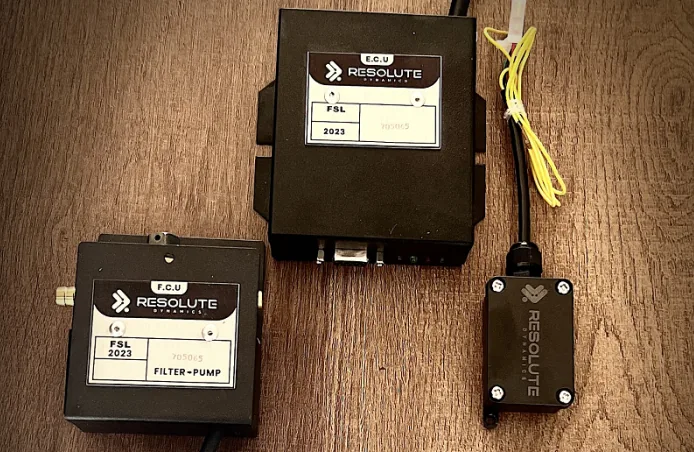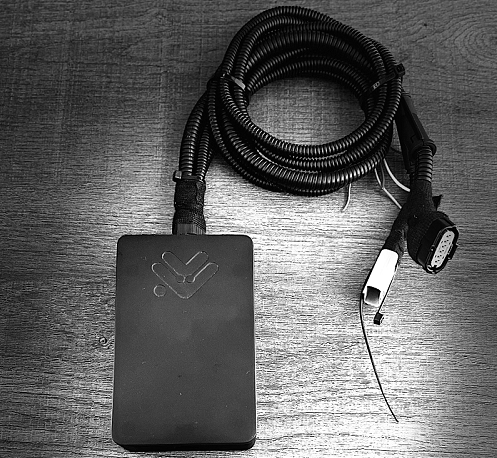
There is no federal speed limiter mandate in effect for US trucks in 2026. The long-running proposal that started back in 2016 was formally withdrawn on 27 June 2025, and as of today no replacement rule is moving forward. So why are so many American fleets still buying and fitting these devices? Because the math has not changed.
Speed limiters cut fuel burn, lower insurance exposure, protect CSA scores, and keep heavy tractors out of the high-speed crashes that wreck both lives and balance sheets. Many large carriers already govern their trucks somewhere between 62 and 68 mph by choice, mandate or not.
This guide is built for that decision. Once a fleet manager or owner-operator decides to add a limiter, two practical questions show up fast: who do I buy it from, and how does it actually get installed on a Class 8 tractor? Those are the questions I answer here.
I will leave the deep legal background to the FMCSA speed limiter mandate explainer and the crash-data debate to the piece on how speed governors affect US trucking safety. Here, the focus is sourcing and installation — the nuts, bolts, and contracts that turn a buying decision into a working, compliant truck.
How to Choose a Speed Limiter Supplier for US Trucking
A speed limiter supplier for US trucking earns its place on your shortlist by clearing six hard criteria: engine ECU compatibility, tamper-proof design, calibration and certification support, telematics integration, honest warranty terms, and real coverage across the states you run.
Get those six right and most of the buying risk evaporates. Get them wrong and you inherit downtime, voided warranties, and a device that fights your own drivers.
The American trucking environment is unusual. Tractors run hundreds of thousands of miles a year, cross dozens of state lines, and mix engine makes inside a single yard — Detroit, Cummins, PACCAR, Volvo, and International all sitting side by side.
A supplier that only understands one engine family, or one regional rulebook, leaves gaps. The right partner speaks fluent J1939, knows how an electronic limiter behaves on a 2019 tractor versus a 2024 one, and can document every calibration for a roadside inspector who asks.
Key Criteria for Vetting a Supplier
The strongest suppliers separate themselves on a handful of technical and operational signals. Weigh each one before money changes hands.
- ECU and J1939 compatibility — the device must talk to the truck’s engine control unit over the standard heavy-vehicle data bus, across the engine makes in your fleet.
- Tamper-proof architecture — sealed calibration and event logging so a governed speed cannot be quietly raised in a back lot.
- Calibration and certification support — the supplier sets the speed, locks it, and issues paperwork you can file.
- Telematics and ELD integration — clean data sync with the fleet platform you already run, not a closed box that hoards its own data.
- Warranty that survives installation — written terms confirming the limiter install does not break the engine OEM warranty.
- US service footprint — installers, replacement parts, and support reachable in the regions you operate, not an ocean away.
Questions to Ask Before You Buy
Smart procurement starts with sharp questions. Ask each vendor the following and listen for specifics, not slogans.
- Which engine makes and model years does the device support without extra hardware?
- How is the governed speed sealed, and what happens in the event log if someone tampers with it?
- Who performs the installation, and are those technicians certified on heavy commercial vehicles?
- What documentation comes with calibration, and is it accepted during DOT inspections and insurance audits?
- How does the limiter exchange data with my existing ELD and telematics stack?
- What is the recalibration process after an ECU swap or a tire-size change?
A vendor that answers these crisply has done the work before. One that dodges them will hand you the gaps later.
Specialist Manufacturer vs. Generalist Installer
A specialist manufacturer controls the device, the firmware, and the calibration standard, which shrinks your warranty and support risk; a generalist installer simply fits whatever box arrives. That difference matters most when something goes sideways. When the manufacturer owns the whole chain, a firmware quirk or a calibration dispute has one clear owner.
When three companies share the work, accountability scatters, and your truck sits idle while they argue. For a multi-truck fleet, single-source accountability is usually worth more than a slightly cheaper unit.
Which Speed Limiter Devices Suit Class 7 and Class 8 Trucks
Four device families cover almost every heavy-truck job: the electronic speed limiter, the dual or multi-speed limiter, the RPM regulator, and the GPS-based adaptive limiter.
The right pick depends on the engine, the route, and the kind of work the truck does. A long-haul sleeper tractor and a municipal vocational truck need different tools, even though both technically “limit speed.” The full breakdown of types of speed limiter devices goes deeper, but here is how each fits American Class 7 and Class 8 reality.
Electronic Speed Limiter (ESL) for ECU-Equipped Tractors
An electronic speed limiter is the default choice for modern Class 8 tractors because nearly every truck built in the last fifteen years already carries an engine control unit that can cap maximum speed. The ESL works with that brain rather than against it.
Instead of choking fuel lines or fighting the throttle mechanically, it sends the engine a precise instruction over the data bus, and the engine simply refuses to exceed the set figure.
The result is smooth, predictable, and invisible to the driver during normal operation. Because it leans on the ECU, it draws on the same logic explained in how the ECU powers speed limiting, making it the cleanest fit for late-model on-highway trucks.
Dual and Multi-Speed Limiters for Mixed-Route Fleets

A dual or multi-speed limiter holds two or more governed speeds that change based on conditions, which suits fleets that run both open interstate and tight urban or site environments.
Picture a tanker that cruises a highway at one ceiling, then drops to a far lower cap the moment it rolls onto a refinery or depot. One truck, two rulebooks, automatically enforced. This flexibility is why mixed-route and industrial operators lean on the dual and multi-speed limiter instead of a single fixed setting that is either too loose for the yard or too tight for the road.
RPM Regulator and PTO Control for Vocational Trucks
An RPM regulator controls engine revolutions rather than road speed, which is exactly what vocational trucks need when the real risk lives in the power take-off, not the highway.
Think dump trucks, mixers, vacuum tankers, and utility rigs where a screaming PTO at the wrong moment burns fuel, stresses components, and creates hazards while the vehicle barely moves. The RPM regulator caps that engine behavior so auxiliary equipment runs inside a safe, efficient band. For work trucks, this often matters more than the top speed on the freeway.
GPS / Adaptive (ISA-Style) Limiting for Geofenced Zones
A GPS-based adaptive limiter changes the governed speed automatically by location, using map data and geofences to enforce different ceilings in different zones. This is the intelligent-speed-assistance approach: the truck “knows” it has entered a school zone, a port, or a low-speed urban corridor, and tightens its limit without the driver lifting a finger.
The trade-offs between this style and a fixed electronic cap are worth understanding, and the comparison in speed limiters vs. ISA technologies for safer US roads lays them out. For fleets running fixed, repeatable routes through mixed speed environments, the adaptive speed limiter removes a lot of human guesswork.
How Speed Limiter Installation Works on a US Commercial Truck
Speed limiter installation on a US commercial truck follows five clear stages and usually takes a few hours per tractor, depending on the engine and how much telematics work rides along with it.
It is not a mysterious operation, but it is a precise one. A sloppy install creates fault codes, sync failures, and a device that disengages at the worst possible time. A clean install disappears into the truck and just works. The general workflow mirrors professional speed limiter installation practices, adapted to the heavy-truck context below.
Pre-Installation Vehicle Assessment
Every solid install begins with a vehicle assessment that captures four things: the engine make, the ECU type, the J1939 or CAN bus configuration, and the model year. These details decide which device variant fits and whether any adapter hardware is needed.
A 2024 PACCAR tractor and a 2016 Cummins-powered unit may both accept an electronic limiter, but the wiring map and calibration profile differ. Skipping this step is the single most common reason an install runs long. Done properly, it turns the actual fitting into a routine, repeatable job.
The Installation Process Step by Step
The fitting itself moves through a tight sequence, and each step builds on the last.
- Inspect the truck and confirm the assessment data against what is actually under the hood.
- Connect the limiter to the engine ECU through the J1939 data bus or the approved interface.
- Configure the governed speed and any secondary limits in the device firmware.
- Integrate the unit with the ELD and telematics platform so data flows cleanly.
- Seal and verify the calibration, then road-test to confirm the cap holds.
Following the steps in order keeps the work auditable. Each stage leaves a record, which matters later when an inspector or insurer asks how the device was set.
ECU Integration vs. In-Line Fuel/Throttle Limiting
ECU integration sends the speed instruction straight to the engine’s computer, while in-line fuel or throttle limiting physically restricts fueling or pedal input — and for modern trucks, the ECU route wins. ECU-based limiting is smoother, more accurate, and far easier to document and audit because the setting lives in software that logs changes.
In-line mechanical methods still have a place on older trucks without a capable ECU, but they tend to feel coarser to the driver and are harder to certify. For most American on-highway tractors, integrating with the existing engine brain is the cleaner path.
Telematics and ELD Integration During Install
Telematics and ELD integration during installation lets the limiter share its data instead of hoarding it, turning a standalone governor into a connected safety tool. When the device syncs with the fleet platform, managers see governed-speed events, tampering alerts, and calibration status alongside hours-of-service and location data.
That single pane of glass is where a limiter stops being a black box and starts paying for itself. Done at install time, the integration is painless; bolted on later, it usually means a second shop visit.
Tamper-Proof Sealing and Why It Matters
Tamper-proof sealing locks the governed speed so it cannot be quietly changed, and it is the feature that makes the whole device trustworthy to insurers and regulators. A limiter that any driver can override in a parking lot is decoration, not protection.
Sealed calibration paired with an event log means every attempt to alter the setting leaves a fingerprint. For insurance audits and litigation defense, that tamper record is gold — it proves the truck was governed and that the fleet enforced its own policy.
Calibration, Certification, and Compliance Documentation
Calibration sets the exact governed speed and locks it, and certification produces the paperwork that proves it — together they turn a fitted device into a defensible compliance record.
Installation puts the hardware on the truck; calibration and certification make it count. Skipping the documentation is like buying insurance and never filing the policy. When a DOT officer or an insurance adjuster asks how fast the truck could legally go, the certificate answers in writing.
Setting the Governed Speed
Setting the governed speed means choosing the maximum and writing it into the locked calibration, and many US carriers land between 62 and 68 mph by their own choice. There is no federal number to obey in 2026, so the figure becomes a business decision shaped by route mix, insurer preferences, and fuel targets.
The withdrawn federal proposal analyzed 60, 65, and 68 mph, which is why those values still anchor industry conversation. State-level nuances exist too, and the state-by-state speed limiter regulations overview is worth a look before settling on a fleet-wide ceiling.
Getting a Speed Limiter Certificate
Getting a speed limiter certificate gives you a dated, signed record of the governed speed and the calibration, ready to produce on demand. This document is the evidence trail.
It confirms the device was installed by a qualified party, set to a specific figure, and sealed against tampering. Fleets that treat the speed limiter certificate as a filing-cabinet afterthought regret it during an audit; fleets that keep it current sail through inspections.
Records for DOT Inspections and Insurance Audits
Strong records turn a speed limiter from a quiet feature into a documented risk-management asset during DOT inspections and insurance reviews. Keep three things on file: the calibration certificate, the install record, and the tamper/event log.
Together they tell a clean story — the truck was governed, the setting was sealed, and the fleet can prove it. That story lowers friction with inspectors and strengthens your position with underwriters who reward demonstrable safety controls.
How Long Does Installation Take and What Does It Cost
Speed limiter installation generally runs a few hours of shop time per tractor, and the total cost moves with the device type, the fleet size, and how much telematics work rides along.
Anyone quoting a single flat number without seeing your trucks is guessing. The honest answer is a range driven by real variables, so it helps to understand what pushes the figure up or down rather than chasing a headline price.
Installation Time and Fleet Downtime
Installation time per truck is usually measured in hours, not days, but the real cost is the downtime, so smart fleets batch the work. A tractor on a lift is a tractor not earning.
Scheduling installs during routine maintenance windows, or rolling through the fleet in planned waves, keeps trucks productive. The assessment step pays off here too — when the shop already knows the engine and ECU, the wrench time shrinks.
Cost Factors for US Fleets
Four factors move the price: the device type, the fleet size, the telematics add-ons, and the recalibration schedule. An electronic limiter on a modern ECU costs less labor than a mechanical workaround on an older truck. Larger fleets earn volume efficiency.
Adding deep telematics integration raises the upfront figure but often returns it through fuel and insurance savings. And ongoing recalibration is a small recurring line item, not a one-time charge. Reading the price as a system, not a sticker, leads to better decisions.
Lease vs. Buy Considerations
Leasing spreads the cost into predictable monthly payments, while buying locks in long-term ownership and lower lifetime cost for fleets that keep trucks for years. The right call depends on cash flow, fleet turnover, and how long each tractor stays in service.
A fast-cycling fleet that trades trucks every few years may prefer the flexibility of a lease; an operator running equipment a decade deep usually comes out ahead owning. Neither is universally “better” — the answer lives in your own numbers.
Verifying and Maintaining a Speed Limiter After Installation
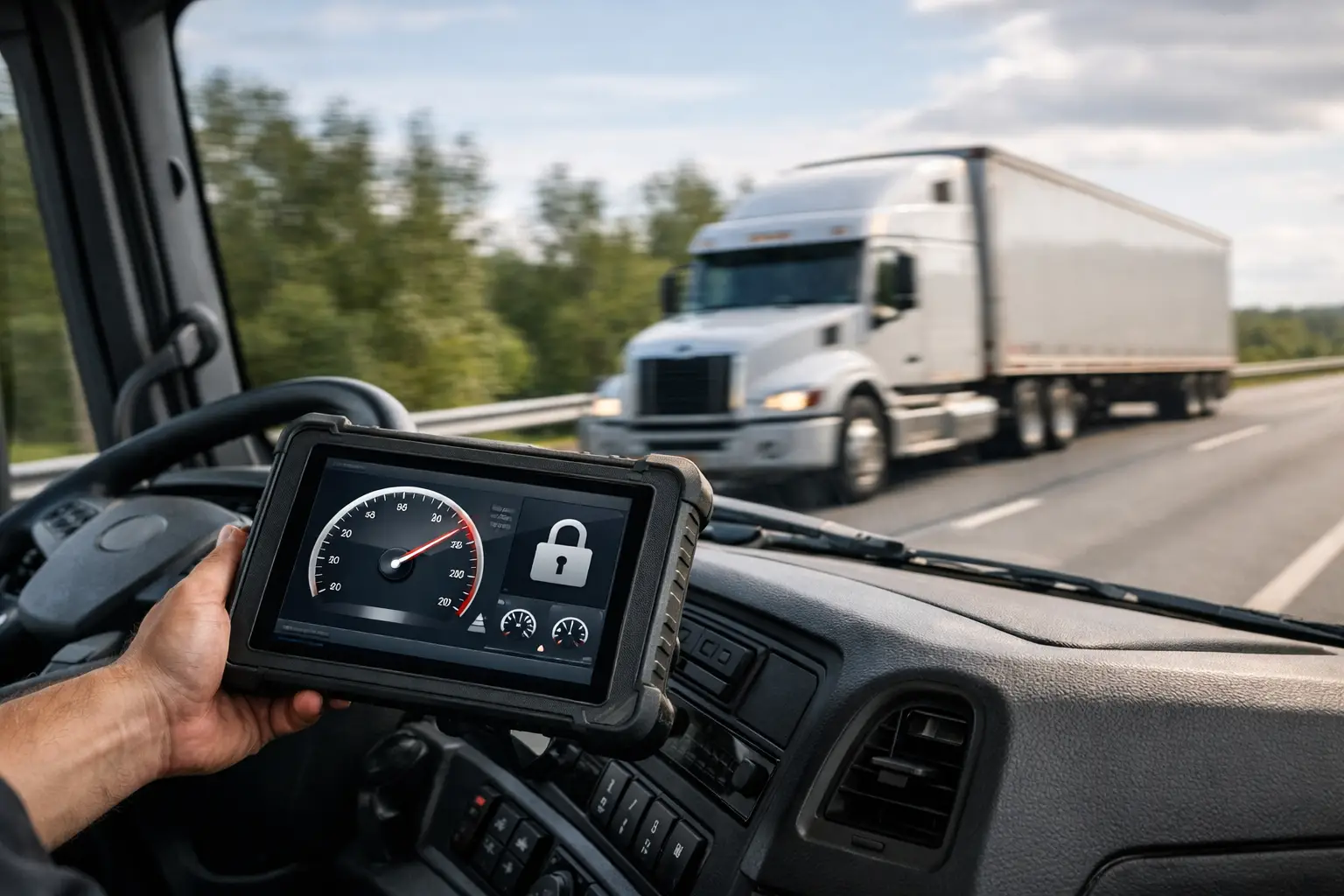
A speed limiter needs three things after installation to stay reliable: a post-install audit, a recalibration schedule, and a plan for diagnosing faults. Fitting the device is the start, not the finish. The limiters that keep saving fuel and protecting drivers years later are the ones that get checked, not the ones that get forgotten. A little structured maintenance keeps the technology honest.
Post-Installation Audit Checklist
A post-installation audit confirms the device works before the truck returns to service, and it covers five points. Run through them every time.
- Verify the governed speed holds during a road test.
- Confirm the calibration seal is intact and logged.
- Check that telematics and ELD data is syncing correctly.
- Review the event log for any fault codes thrown during install.
- File the calibration certificate and install record.
The structured walkthrough in the post-installation speed limiter audit guide expands each point, but those five catch the vast majority of early problems.
Recalibration Frequency and Triggers
Recalibration happens on a schedule and after specific events — most importantly an ECU replacement, a tire-size change, or a major engine repair.
Each of those can shift how the limiter reads and controls speed, which quietly drifts the truck away from its certified setting. Beyond event triggers, a periodic recalibration keeps the whole fleet aligned. The question of how often speed governors should be calibrated deserves a real policy, not a guess, because a drifted limiter undermines both safety and your paperwork.
Diagnosing a Limiter That Is Not Engaging
A limiter that is not engaging usually traces back to a wiring fault, a software glitch, an ECU communication error, or a tampering attempt — and the order you check them in saves time. Start with the connection and the data bus, move to the firmware, then review the event log for signs of interference.
Many “broken” limiters are simply out of sync rather than failed. The diagnostic path in speed limiter not engaging walks through the checks methodically so a truck is not pulled from service longer than it needs to be.
Why US Fleets Choose Resolute Dynamics
US fleets choose Resolute Dynamics because the device, the firmware, and the calibration standard come from one source, backed by a product range that fits every heavy-truck job and deployment experience across more than ten countries.
That single-source control is exactly the accountability that protects a fleet when something needs fixing fast. The lineup spans electronic, dual and multi-speed, RPM, and adaptive limiters, so a mixed fleet of long-haul tractors and vocational trucks gets matched hardware instead of compromises.
The full US product portfolio, built for American transport conditions, lives on the speed limiter devices in the USA page, and any fleet weighing a rollout can map devices to trucks directly with the team. Talking through your engine mix, route profile, and telematics stack before you buy prevents the expensive mistakes this guide is meant to help you avoid — contact Resolute Dynamics to scope a fit for your fleet.
Frequently Asked Questions
Is a speed limiter required for trucks in the US in 2026? No. There is no federal speed limiter mandate in effect in 2026. The 2016 proposed rule was withdrawn on 27 June 2025, and no replacement is currently advancing. Fleets that fit limiters today do so voluntarily for safety, insurance, fuel, and risk-management reasons.
What speed do US fleets govern trucks to? Many US carriers govern their trucks between 62 and 68 mph by choice. The withdrawn federal proposal analyzed 60, 65, and 68 mph, and those figures still shape how fleets set their own ceilings based on routes, insurers, and fuel targets.
Can a speed limiter be installed on any commercial truck? Almost any modern commercial truck can take one, because most tractors built in the last fifteen years carry an ECU that supports speed limiting. Older trucks without a capable ECU may need an alternative method, which is why a pre-installation assessment matters.
How long does speed limiter installation take? Installation usually takes a few hours of shop time per tractor. The exact figure depends on the engine, the ECU, and how much telematics integration is included. Batching installs into maintenance windows reduces fleet downtime.
Does a speed limiter void the truck warranty? A properly installed limiter that works through the ECU does not have to affect the engine warranty, but terms vary by OEM. Confirm warranty protection in writing with both the supplier and the engine maker before installation.
Can a driver override the limiter in an emergency? Modern electronic limiters cap maximum speed without disabling normal acceleration, so a driver retains full control for merging, climbing, and routine maneuvers. The device limits the top end; it does not take the truck out of the driver’s hands.
How is tampering prevented? Tampering is prevented through sealed calibration and event logging. The governed speed is locked, and any attempt to change it leaves a record in the event log — evidence that protects the fleet during inspections, insurance audits, and litigation.
US state pages: Ohio – Illinois – Pennsylvania – Georgia – ISA by state.

The Resolute Dynamics team designs and manufactures speed limiters (SLD), GPS tracking, and automotive safety systems used on 200,000+ vehicles across 20+ countries. We write about fleet compliance, road-safety regulation, and vehicle-safety technology, including Malaysia’s JPJ SLD mandate, UAE RTA rules, and global standards like UN R89, to help fleet operators and transport businesses stay safe and compliant.