If you run trucks in Ontario, the speed limiter on your engine is not a suggestion. It is the law, and it has been the law for well over a decade. We talk to fleet operators every week who think this rule is new, or that it only matters in British Columbia.
It isn’t, and it doesn’t. Ontario was one of the first places in North America to put a hard ceiling on truck speed, and that ceiling sits at exactly 105 km/h. Below, we break down what the law actually says, who it touches, who it skips, how officers catch a bad limiter at the roadside, and why the number landed on 105 in the first place.
What is the Ontario speed limiter law?
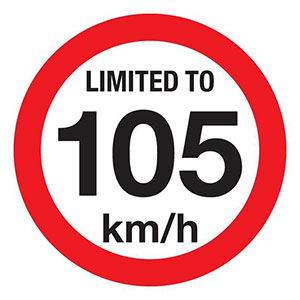
Ontario law requires most commercial trucks to carry a speed limiter that is switched on and set to a maximum of 105 km/h, and it has been in force since January 1, 2009.
The rule lives in Section 68.1 of the Highway Traffic Act, which was created through Bill 41, an amendment that the Ontario Trucking Association championed for years before it passed. In plain terms, a heavy truck on an Ontario highway is not allowed to physically exceed 105 km/h, because its engine control module holds it back.
This is what people mean when they say a truck is “governed.” The speed limiter, sometimes called a speed governor, talks directly to the electronically controlled engine and caps the top speed at the preset value. Drivers cannot push past it by flooring the pedal. The ceiling is baked into the engine’s software, not into the driver’s discipline, and that is precisely what the province wanted.
What does “mandatory activation” mean under Section 68.1?
Mandatory activation means the limiter must be switched on and working, not simply bolted into the truck. Section 68.1 states that no person shall drive, or permit the operation of, a commercial motor vehicle on a highway unless the vehicle is equipped with a speed-limiting system that is activated and functioning in accordance with the regulations.
The word “activated” is the part that trips people up. A dormant limiter, or one that was installed and then quietly disabled, puts the carrier in breach even though the hardware is technically present.
So what counts as “functioning”? Under the regulation, a speed limiting system is working properly if it prevents the driver from accelerating to, or holding, a speed greater than 105 km/h on level ground.
That last phrase matters. On a steep downhill grade, gravity can briefly carry a loaded truck past the cap, and the rule accounts for that by measuring against level terrain. The point is simple: on flat road, the truck should not be able to break 105.
Which vehicles must have a 105 km/h speed limiter in Ontario?
The rule applies to trucks manufactured after 1995, with a manufacturer’s gross vehicle weight rating of 11,794 kg or more, that are equipped with an electronically controlled engine. If your vehicle checks all three of those boxes, the limiter is mandatory and must be set to 105 km/h.
Here is the checklist we walk operators through:
- Confirm the model year. Anything built after 1995 falls inside the window.
- Check the gross vehicle weight rating, which is stamped on the manufacturer’s compliance label. The threshold is 11,794 kg, the metric equivalent of roughly 26,000 pounds.
- Verify the engine is electronically controlled, because the limiter works through the engine’s computer.
One practical note: if a truck has no manufacturer’s compliance label, or the label is no longer readable, the driver must carry a document from the vehicle manufacturer that states the vehicle identification number, the year of manufacture, and the gross vehicle weight rating.
Without proof, an officer has no easy way to confirm the truck is below the threshold, and that uncertainty rarely works in the driver’s favour.
Which vehicles are exempt from Ontario’s speed limiter rule?
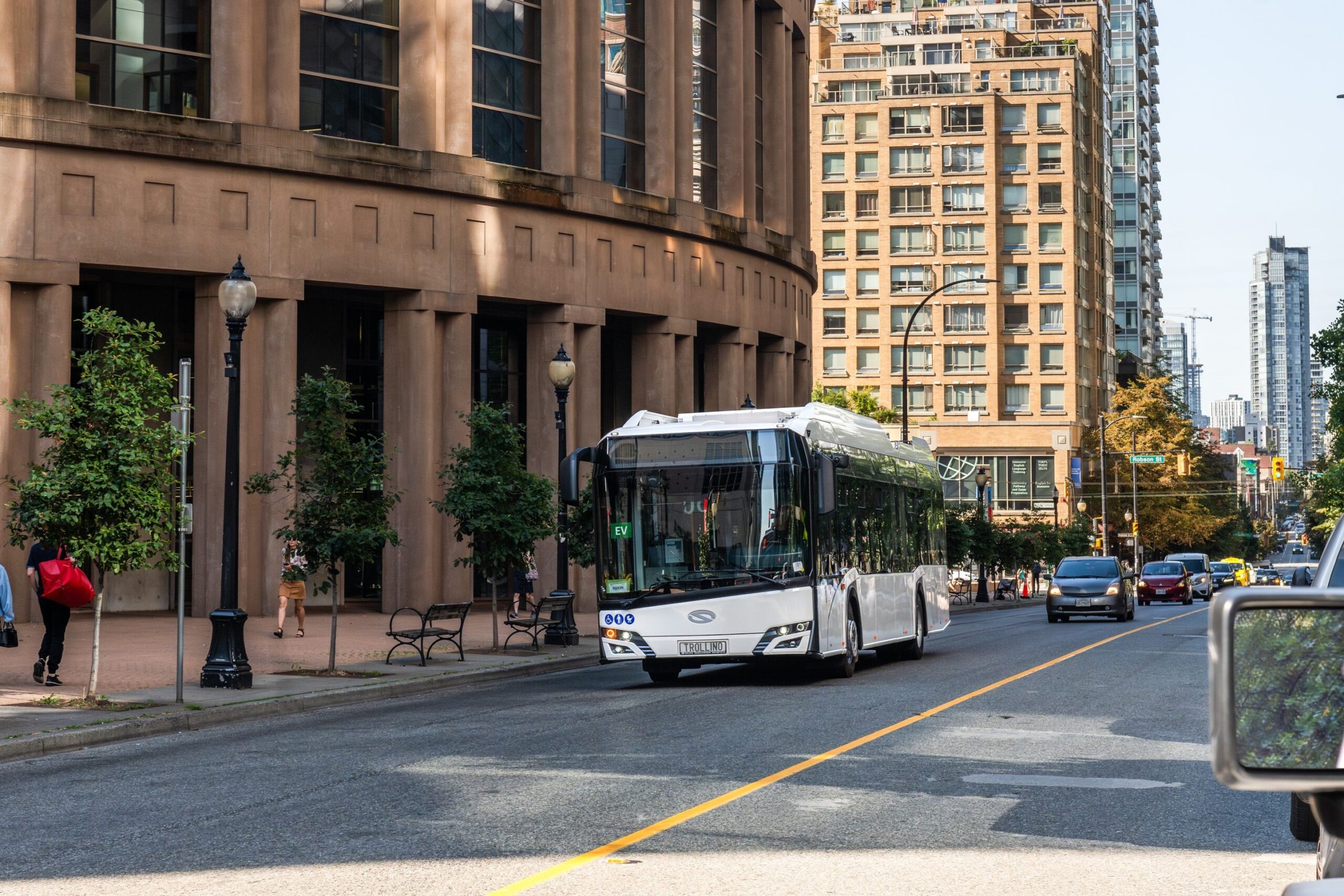
Several vehicle classes sit outside the mandate. Buses, mobile cranes, motor homes, and emergency vehicles are all exempt, and trucks fitted with mechanical engines are exempt too. The mechanical-engine carve-out exists for a logical reason: the limiter speaks to an electronic control module, and an older mechanical engine simply has nothing for it to talk to.
These exemptions catch a lot of people by surprise, especially owners of large motor homes who assume their gross weight automatically pulls them into the rule. It doesn’t. The law is aimed squarely at commercial freight trucks, not at passenger buses or recreational vehicles.
If your fleet mixes vehicle types, it is worth sorting each unit into “governed” or “exempt” so nobody gets charged for a limiter they were never required to run.
How is the 105 km/h speed limiter enforced in Ontario?
Enforcement now leans almost entirely on what officers call the deeming provision, and the trigger speed is 115 km/h or more. If an officer clocks a covered truck travelling at 115 km/h or faster, the law lets them deem the limiter non-functioning under Section 68.1, even without plugging into the engine.
Speeding itself becomes the evidence: a truck caught doing 110 km/h in a posted 100 km/h zone, for example, is treated as proof that the limiter is not doing its job.
This is a shift from how things worked at the start. In the early years, enforcement officers carried an EzTrac device that plugged into the truck’s engine control module to read the top-speed setting directly. The Ministry of Transportation discontinued that tool in 2019 because it was incompatible with certain engine models, and ever since, officers have relied on the deeming approach instead.
The result is a quieter form of enforcement that catches the obvious offenders without a roadside engine scan. The lesson for carriers is blunt: keep your trucks comfortably under 115, because that single number is the line officers watch.
What are the penalties for a non-functioning speed limiter in Ontario?
The set fine for a speed limiter offence in Ontario is $310, but the dollar figure is the smallest part of the cost.
A conviction lands on the carrier’s CVOR record, the Commercial Vehicle Operator’s Registration that the province uses to track safety performance, and accumulated points there can threaten a fleet’s operating standing. Insurance premiums climb with a poor safety record, and for individual drivers, a conviction on the abstract can follow them for years.
Think of it as a layered penalty. There is the ticket, there is the record, and there is the reputational weight that comes with both. A single fine is a nuisance; a pattern of limiter violations across a fleet signals to regulators and insurers that the operation cuts corners. That second-order damage is usually what ends up costing real money, not the $310 itself.
Why did Ontario set the truck speed limit at 105 km/h?
Ontario chose 105 km/h for two reasons that pull in the same direction: safety and fuel efficiency. The road-safety case is strong. When limiters were introduced in 2009, fatalities in collisions involving large trucks fell 24% from the year before, and the Ministry of Transportation has since credited the policy with a 34% reduction in fatalities involving large trucks over the longer run.
Slower top speeds give drivers more reaction time and shorten stopping distance, and for a fully loaded rig, that margin can decide whether a close call becomes a crash.
The efficiency case adds weight to the argument. Dropping a truck’s cruising speed from 110 km/h to 105 km/h can reduce fuel use by up to 5%, which sounds small until you multiply it across thousands of trucks and millions of kilometres. Lower fuel burn also means lower greenhouse gas output, which is why environmental policy sat near the centre of the original push.
The Ontario Trucking Association backed the mandate openly, framing the activation of speed limiters as a practical way for the industry to make highways safer while trimming operating costs. It is one of the rare regulations where the safety goal and the business goal line up.
Ontario vs. Quebec vs. British Columbia: speed limiter rules compared
All three provinces use the same 105 km/h cap, but they differ on timing, penalties, and how strictly they verify the hardware. Ontario and Quebec built the framework first, and British Columbia followed more than a decade later. Here is how they stack up:
| Province | In force since | Speed cap | Penalty / notes |
|---|---|---|---|
| Ontario | 2009 (Section 68.1) | 105 km/h | $310 set fine; deeming provision at 115 km/h; CVOR consequences |
| Quebec | 2008–2009 | 105 km/h | Fines range from $350 to $1,050 |
| British Columbia | 2024 mandate, 2025 enforcement | 105 km/h | Applies to vehicles over 11,794 kg; limiters must be tamper-proof and digitally verifiable; roadside checks by CVSE officers |
One detail trips up cross-border and interprovincial drivers more than any other. Ontario has raised the car speed limit to 110 km/h on certain highway stretches, but those increases do not apply to heavy commercial vehicles.
A loaded truck on a 110 km/h section is still capped at 105. The faster posted limit is for lighter traffic, not for governed freight, so do not let a roadside sign talk you into adjusting the limiter.
What Ontario’s 105 km/h rule means for fleet operators
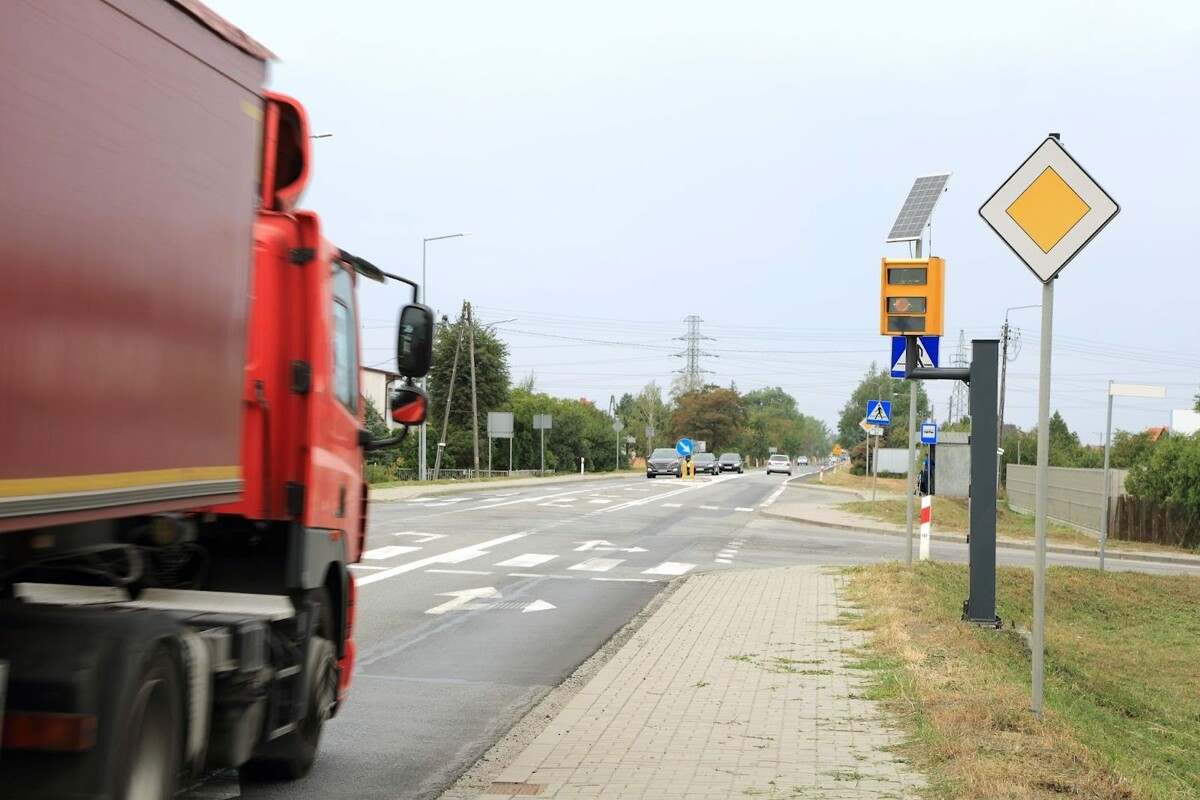
Any carrier that runs trucks into, within, or out of Ontario has to keep its limiters set and working at 105 km/h, full stop. Geography does not give you an exit: a truck registered in another province or another country is still bound by Ontario law the moment it rolls onto an Ontario highway.
For long-haul and interprovincial fleets, that means the 105 km/h ceiling effectively becomes the planning speed for any route that touches the province.
This is where compliance turns into a maintenance habit rather than a one-time install. Limiters can drift out of spec after engine work, software updates, or a swapped control module, and a setting that was correct last quarter is not guaranteed correct today.
Fleets that treat the limiter as a checkbox tend to be the ones surprised by a roadside charge. Fleets that fold a quick limiter verification into their regular service schedule rarely get caught out.
How Resolute Dynamics keeps your Ontario fleet compliant
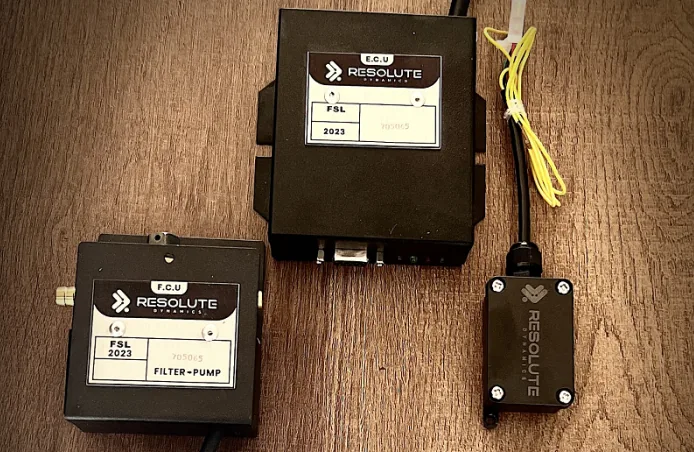
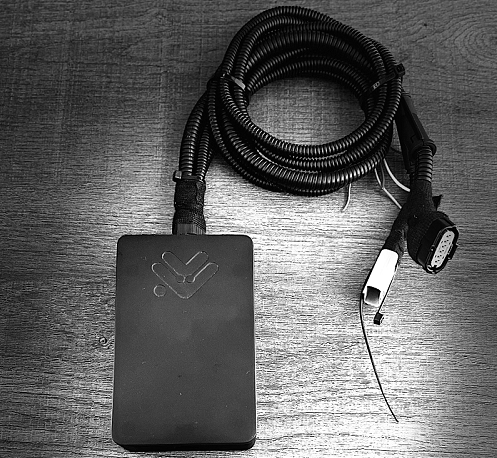
Our speed limiter is configurable to the exact 105 km/h ceiling Ontario requires, and it works with both newer and older electronically controlled engines.
We have installed governed-speed systems across multiple provinces and several climates, so the hardware is built for real Canadian conditions: cold starts, long highway runs, and heavy loads. The device holds its setting reliably, which is the whole point when an officer’s only test is whether your truck can break 115.
For fleets that move through changing speed zones, our dual and multi-speed limiter options let a vehicle switch between settings based on location, which suits operators who run city routes, school zones, and open highway in the same shift.
Whatever the configuration, the goal is the same one Ontario set back in 2009: keep the truck under the legal ceiling, every trip, without depending on the pedal foot of a tired driver. If you want help confirming where your current fleet stands against the rule, our team can walk through it with you.
Frequently Asked Questions
Is a speed limiter mandatory in Ontario? Yes. A speed limiter is mandatory for commercial trucks built after 1995, with a gross vehicle weight rating of 11,794 kg or more and an electronically controlled engine.
What speed are Ontario trucks limited to? Covered trucks are limited to a maximum of 105 km/h on level ground, as set out in Section 68.1 of the Highway Traffic Act.
What law requires speed limiters in Ontario? The requirement comes from Section 68.1 of the Ontario Highway Traffic Act, introduced through Bill 41 and in force since January 1, 2009.
What is the fine for not having a working speed limiter in Ontario? The set fine is $310, and a conviction also adds points to the carrier’s CVOR safety record.
At what speed is a truck deemed non-compliant in Ontario? A covered truck caught travelling at 115 km/h or more can be deemed to have a non-functioning limiter under the deeming provision.
Does the 110 km/h highway speed limit apply to trucks? No. The 110 km/h limit on certain Ontario highways applies to lighter vehicles. Heavy commercial trucks remain capped at 105 km/h.
Related Canada guides: British Columbia mandate – Canada fleet compliance service.

The Resolute Dynamics team designs and manufactures speed limiters (SLD), GPS tracking, and automotive safety systems used on 200,000+ vehicles across 20+ countries. We write about fleet compliance, road-safety regulation, and vehicle-safety technology, including Malaysia’s JPJ SLD mandate, UAE RTA rules, and global standards like UN R89, to help fleet operators and transport businesses stay safe and compliant.