If you run trucks, buses, or vans through Pennsylvania, you have probably heard chatter about speed governors and wondered whether the state is about to force one onto every vehicle in your fleet.
The short version surprises most fleet owners. Let me walk you through what the rules actually say in 2026, what changed at the federal level, and why plenty of smart operators still bolt a speed limiter onto their rigs even though nobody is making them.
Does Pennsylvania Require Speed Governors on Commercial Vehicles?
No. Pennsylvania does not have a state law that forces commercial vehicles to use a speed governor, and there is no federal mandate in effect either.
What Pennsylvania enforces instead is its posted speed limits, written into the Pennsylvania Vehicle Code (Title 75 of the Pennsylvania Consolidated Statutes), administered by the Pennsylvania Department of Transportation (PennDOT) and enforced by the Pennsylvania State Police.
So the rule a commercial driver actually has to obey is simple: keep the vehicle at or below the number on the sign. Whether you hit that number with a heavy right foot or with a factory-set electronic limit is your business, not the state’s.
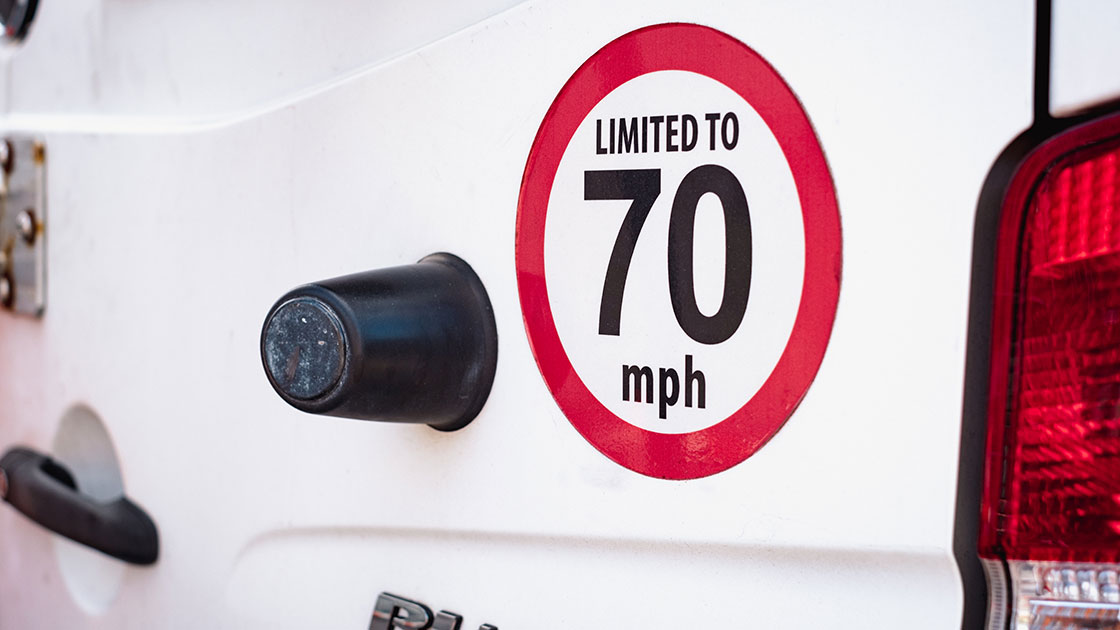
That distinction trips people up, because a speed limit and a speed limiter sound almost identical but mean very different things. A limit is a legal ceiling. A limiter is a device that physically stops the engine from pushing past a chosen speed. Pennsylvania regulates the first and stays quiet on the second.
Federal Speed Limiter Rule Status Affecting Pennsylvania Fleets
The federal speed limiter proposal was officially withdrawn on July 24, 2025, which means no nationwide governor requirement reaches into Pennsylvania today. This is the single biggest change fleet managers need to absorb, because the rule had been hanging over the industry for almost a decade.
Here is the timeline in plain order:
- September 2016 — The Federal Motor Carrier Safety Administration (FMCSA) and the National Highway Traffic Safety Administration (NHTSA) published a joint proposal to require speed limiting devices on heavy vehicles with a gross vehicle weight rating (GVWR) above 26,000 pounds.
- May 2022 — FMCSA issued an advance notice signaling its intent to push the rulemaking forward, aimed at commercial motor vehicles already fitted with an electronic engine control unit (ECU) capable of governing top speed.
- July 2025 — FMCSA and NHTSA scrapped the whole thing, citing policy concerns, safety debates, and unresolved data gaps about real costs and benefits.
The regulators had floated capping speeds somewhere in the 60 to 68 mph band, but none of that ever became binding. For a Pennsylvania carrier, the takeaway is clean: in 2026, running a speed limiter is a voluntary business decision, not a compliance obligation. Critics of the dropped rule argued that forcing trucks to crawl below the flow of traffic created its own hazards on fast highways, and that argument carried the day. Still, the conversation is not truly dead. Federal priorities swing with each administration, so the withdrawal is best treated as a pause in a long-running debate rather than a permanent burial.
Pennsylvania Commercial Vehicle Speed Limits: What Actually Applies
The enforceable rules sit in Title 75, Section 3362, which sets a default statutory limit of 55 mph and allows posted limits of 65 mph or 70 mph on qualifying freeways. Those higher numbers became legal after Act 89 of 2013 and Act 23 of 2014 amended the Vehicle Code to let PennDOT raise limits on roads that pass an engineering and traffic study.
One detail matters a great deal for truckers. Pennsylvania writes its freeway limits to apply “for all vehicles.” The state does not run a split speed limit that drops trucks to a slower number than cars, the way a handful of other states do. A loaded tractor-trailer and a sedan share the same legal ceiling on the same stretch of I-80. That keeps the math easy when you decide where to set a voluntary governor.
Maximum Speed Limits by Road Type
Here is how the common road categories break down under Pennsylvania law:
| Road type | Typical posted limit |
|---|---|
| Rural Interstates and qualifying freeways | 65 mph, with 70 mph on select rural stretches and much of the Pennsylvania Turnpike |
| Urban freeways | Often 40 to 65 mph, lower through downtown Pittsburgh and Philadelphia |
| Default statutory roads (no posted sign) | 55 mph |
| Residence districts | As low as 25 mph |
| Active school zones | 15 mph |
The Pennsylvania Turnpike carries 70 mph on roughly 396 miles of mainline, then drops back to 55 mph inside tunnels, construction zones, and toll plaza approaches. Because these numbers shift by corridor, the posted sign always wins over any general assumption.
Speed Limits for Trucks, Buses, and Work Zones
Trucks and buses obey the same posted maximums as everyone else, but two zones turn up the heat. In active work zones, traditional speeding fines double, and Pennsylvania runs automated speed cameras on federal-aid highways that trigger once a vehicle travels at least 11 mph over the posted work-zone limit.
In school zones, the 15 mph cap is strict, and exceeding it by more than 11 mph can draw a fine reaching up to $500. For a commercial driver, both zones are where a moment of inattention turns into an expensive, record-staining mistake.
It is also worth knowing that Pennsylvania uses an absolute speed limit doctrine. There is no built-in cushion or tolerance in the statute. Going one mile over is technically a violation, even if real-world enforcement usually focuses on larger gaps. For fleet drivers whose licenses are their livelihood, that absolute standard is a strong argument for governing road speed a few miles under the posted ceiling.
Which Commercial Vehicles Are Covered in Pennsylvania
The rules reach any vehicle that meets the federal definition of a commercial motor vehicle, which generally starts at a GVWR or gross combination weight rating of 10,001 pounds.
That sweeps in box trucks, tractor-trailers, dump trucks, motor coaches, transit buses, and school buses. The threshold that requires a commercial driver’s license (CDL) sits higher, at 26,001 pounds or for vehicles built to carry 16 or more passengers.
Two categories of operation also shape which regulations apply. Interstate carriers that cross state lines fall under the full weight of FMCSA’s Federal Motor Carrier Safety Regulations. Intrastate carriers that stay entirely inside Pennsylvania answer mainly to PennDOT and state rules, though Pennsylvania adopts much of the federal framework anyway.
School bus contractors sit in their own bucket, governed by added safety standards on top of the speed rules, which is exactly why so many bus operators voluntarily fit limiters.
How Pennsylvania Enforces Commercial Vehicle Speed
Enforcement runs through the Pennsylvania State Police and local police for citations, while PennDOT handles licensing consequences and the federal CSA program tracks the violation against the carrier. A speeding ticket for a commercial driver is rarely a one-and-done annoyance, because it echoes across several systems at once.
When an officer writes the ticket, the citation lands under Section 3362, with penalty brackets that scale by how far over the limit you were: 6 to 15 mph over, 16 to 25 mph over, and 26 mph or more over.
Beyond the fine, the conviction adds points to the Pennsylvania driving record, and accumulating points pushes a driver toward PennDOT actions like departmental exams or suspension. The dollar cost is honestly the smallest part of the damage.
Speeding Penalties and the CSA Score for Commercial Drivers
The bigger sting lands on the carrier’s safety profile. Speeding violations feed the Unsafe Driving BASIC inside FMCSA’s Compliance, Safety, Accountability (CSA) program, and a rising score there invites audits, raises insurance premiums, and scares off shippers who screen carriers before handing over freight.
For CDL holders, federal rules are tougher still. Under 49 CFR 383.51, excessive speeding of 15 mph or more over the limit counts as a serious traffic violation. Two serious violations within three years bring a 60-day disqualification, and a third within that window stretches it to 120 days.
A driver who loses their CDL for four months loses their income, and the carrier loses a seat it cannot easily refill. That cascade — ticket, points, CSA hit, disqualification risk, insurance bump — is the real reason fleets treat speed control as a financial issue, not just a safety slogan.
Why Pennsylvania Fleets Install Speed Governors Voluntarily
Even with no mandate on the books, five practical reasons push Pennsylvania fleets toward voluntary speed governors: crash severity reduction, insurance leverage, fuel economy, CSA score protection, and fleet standardization. Each one ties directly to money or liability, which is why the practice keeps spreading regardless of what the regulators decide.
Crash physics come first. The energy in a collision climbs sharply with speed, so a truck capped at 65 mph instead of 75 mph hits with meaningfully less force, and severity is what drives wrongful-injury lawsuits and nuclear verdicts. Insurance underwriters notice.
Many carriers find they can negotiate softer premiums when they document a governed road speed across the fleet, because a predictable top speed shrinks the insurer’s exposure. Fuel economy is the quiet winner — aerodynamic drag rises with speed, so trimming the ceiling a few miles per hour can cut diesel burn over thousands of miles, a saving that compounds across a year of duty cycles.
Then there is the compliance posture. A governed fleet rarely racks up excessive-speeding violations, which keeps the Unsafe Driving BASIC clean and the doors open with safety-conscious shippers.
Finally, standardization makes a fleet manager’s life simpler. When every vehicle tops out at the same number, dispatch planning, driver coaching, and telematics reporting all line up. None of this requires a law. It just requires a calculator and a clear head about risk.
Speed Limiter Options for Pennsylvania Commercial Fleets
Pennsylvania fleets generally choose from four limiter types, each matched to a different vehicle and route profile. The right pick depends on the engine, the terrain, and how much flexibility a route demands. Here is how I’d line them up.
Electronic Speed Limiter (ESL)
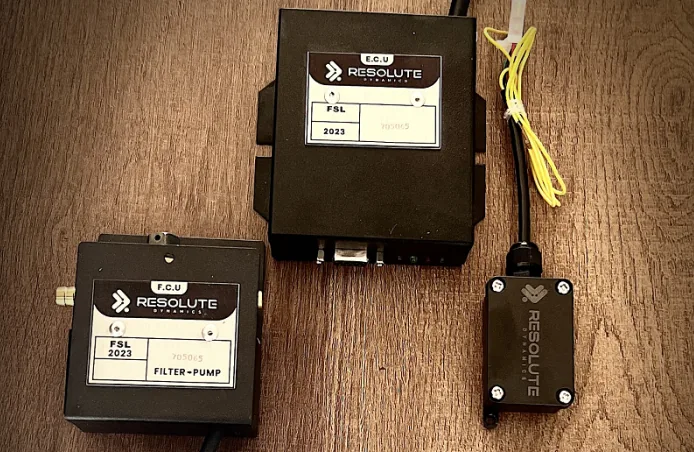
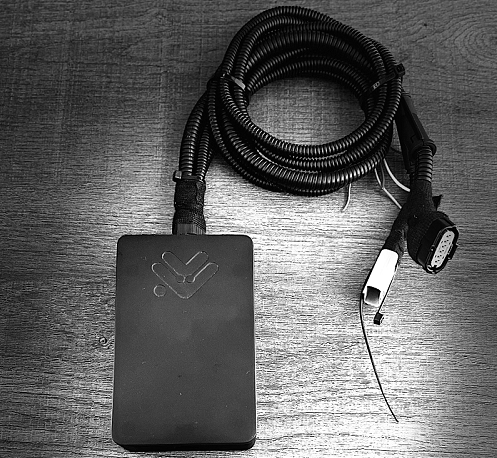
An electronic speed limiter caps top speed through electronic throttle intervention, talking directly to the modern engine’s ECU. It is the natural fit for newer trucks, buses, and vans that already run drive-by-wire throttles, and it holds a precise, tamper-resistant ceiling that lines up neatly with Pennsylvania’s posted maximums.
Fuel-Type, Dual, Multi-Speed, and Adaptive Limiters
For older or fuel-injected vehicles that lack a cooperative ECU, a fuel-type speed limiter governs speed by modulating fuel flow, which suits heavy-duty rigs working rural or mixed-use ground.
A dual or multi-speed limiter sets more than one threshold — say a low cap for urban and school-zone work and a higher one for turnpike running — which matches Pennsylvania’s mix of dense cities and long rural freeways.
And an adaptive speed limiter pulls in GPS and zone data to adjust the cap in real time as a vehicle moves between districts, an approach that pairs well with school transport, where the 15 mph school-zone rule demands precision. School bus operators in particular lean on these systems through dedicated school bus safety solutions.
How to Install a Speed Governor on a Commercial Vehicle in Pennsylvania
Installing a governor in Pennsylvania follows four steps: assess the fleet, pick the limiter type, fit and calibrate the device, then verify the setting against your route plan.
Start by cataloguing each vehicle’s engine type, age, and ECU capability, because that single factor decides whether an electronic or fuel-type unit is even an option. Next, match the limiter to the work the vehicle actually does, leaning on dual or adaptive systems for routes that swing between city and highway.
The fit and calibration step belongs with a qualified technician who can integrate the device cleanly and set the cap without throwing engine fault codes. After that, confirm the governed speed makes sense against your real corridors — a fleet that mostly runs the 70 mph Turnpike may set a different ceiling than one threading Philadelphia surface streets.
Pairing the limiter with a telematics or GPS tracking system closes the loop, giving you proof of governed behavior that insurers and shippers respect.
If you operate across the wider U.S. market, the same logic applies state by state, and you can explore the full speed limiter device lineup for the USA to see how the options scale. When you are ready to spec a system for your Pennsylvania fleet, reach out for a consultation and we will help you match the device to your vehicles and routes.
Frequently Asked Questions
Are speed limiters required by law in Pennsylvania in 2026? No. Neither Pennsylvania nor the federal government requires speed limiters on commercial vehicles in 2026. The federal proposal was withdrawn on July 24, 2025, so the choice is voluntary.
What is the speed limit for commercial trucks in Pennsylvania? Trucks follow the same posted limits as other vehicles: a 55 mph statutory default, with 65 mph or 70 mph on qualifying freeways. Pennsylvania does not use a separate, slower truck speed limit.
What happens if a commercial driver speeds in Pennsylvania? The driver faces a fine and points under Title 75, the carrier takes a hit in FMCSA’s Unsafe Driving BASIC, and excessive speeding of 15 mph or more over the limit counts as a serious traffic violation that can lead to CDL disqualification.
Which commercial vehicles fall under these rules? Generally any vehicle at or above 10,001 pounds GVWR, including trucks, buses, and school buses. A CDL is required at 26,001 pounds or for vehicles carrying 16 or more passengers.
Do speed governors lower insurance costs for fleets? Many carriers report better premium negotiations after documenting a governed road speed, because a predictable top speed reduces an insurer’s exposure. Savings vary by insurer, fleet size, and safety record.
Compare with: Ohio – Illinois – Georgia – US supplier guide.

The Resolute Dynamics team designs and manufactures speed limiters (SLD), GPS tracking, and automotive safety systems used on 200,000+ vehicles across 20+ countries. We write about fleet compliance, road-safety regulation, and vehicle-safety technology, including Malaysia’s JPJ SLD mandate, UAE RTA rules, and global standards like UN R89, to help fleet operators and transport businesses stay safe and compliant.