There is no federal speed limiter mandate for US trucks, and there isn’t one coming. After nine years of on-off rulemaking, DOT announced on 27 June 2025 that the proposal was being dropped, and FMCSA and NHTSA formally withdrew it as of 24 July 2025 (Federal Register notice 2025-13928). This article explains what the rule would have required, why it ended, and where that leaves fleets weighing up speed limiter solutions in the USA.
What the rule would have required
The mandate was never one document. It was two proposals, six years apart.
| 2016 joint NPRM | 2022 FMCSA follow-up (ANSPRM) | |
|---|---|---|
| Published | 7 September 2016 | 4 May 2022 |
| Agencies | NHTSA and FMCSA together | FMCSA alone |
| Vehicles | Heavy vehicles with a GVWR over 11,793 kg (26,000 lb) | Interstate commercial vehicles of 26,001 lb or more with an engine control unit that can govern top speed |
| Speed | Not chosen; 60, 65 and 68 mph were analysed | To be set in a later proposal |
| Who had to act | NHTSA: manufacturers fit and set the device on new vehicles. FMCSA: carriers keep it set for the vehicle’s life. | Carriers set the existing ECU limiter and keep it set for the vehicle’s service life |
| Status | Withdrawn as of 24 July 2025 | Withdrawn as of 24 July 2025 |
The 2016 proposal estimated that a 65 mph cap could save between 63 and 214 lives a year. The 2022 notice narrowed the plan to trucks that already have an ECU able to limit speed, and said a supplemental proposal with a specific speed would follow. It never did.
Why it was withdrawn
The withdrawal notice says the agencies dropped the plan because of “significant policy and safety concerns and continued data gaps” that left the costs, benefits and other effects too uncertain.
The decision was announced as part of Transportation Secretary Sean Duffy’s “Pro-Trucker Package” on 27 June 2025, alongside truck parking funding and other changes for drivers. Industry views were split. OOIDA welcomed the withdrawal, while the Truckload Carriers Association, the Trucking Alliance and the Institute for Safer Trucking had supported a mandate.
What it means for US fleets now
Nothing changes on paper: there was no federal requirement before, and there is none now. Setting a limiter is a fleet decision, and these are the usual reasons carriers make it anyway:
- Crash risk. According to the World Health Organization, every 1% increase in average speed raises the risk of a fatal crash by about 4%.
- Claims. A governed truck can’t be going faster than its set speed when something goes wrong, which limits how bad the crash can be.
- Fuel. Aerodynamic drag rises sharply with speed, so trucks held to a lower top speed use less fuel on long highway runs.
Trucks that run into Canada still need one
The US withdrawal doesn’t affect Canadian rules. Ontario and Quebec have required heavy trucks to be governed at 105 km/h (about 65 mph) since 2009, including US trucks driven there, and British Columbia brought in its own 105 km/h rule in April 2024. See our guide to Canada’s provincial speed limiter rules.
State rules
States set road speed limits, and some set lower limits for trucks than for cars. For how the main freight states handle truck speed, see speed limiter regulation in Texas, California, New York and Florida.
If you decide to govern your trucks
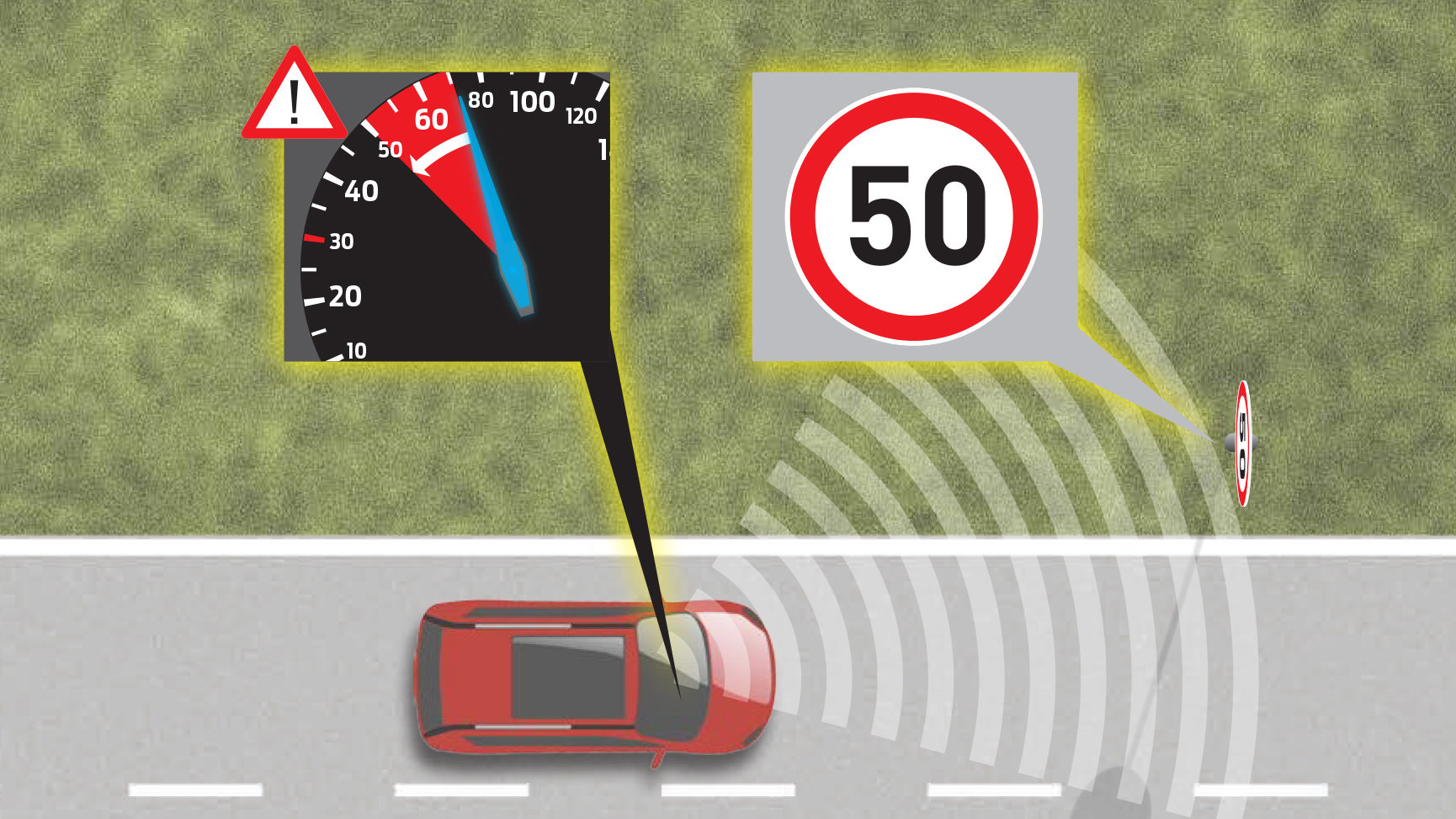
Trucks with an electronic engine control unit usually have a road speed limit setting built in; it just has to be set. A few practical points:
- Pick one maximum speed for the fleet and write it into your driver policy, so everyone knows the number.
- Record each truck’s setting and recheck it after ECU work or reprogramming, since a reflash can change it.
- Pair the limiter with GPS telematics so you can see if a truck runs above the set speed, which usually means the setting has changed or been tampered with.
- If your trucks cross into Canada, 105 km/h (65 mph) or lower keeps them legal in Ontario, Quebec and BC.
Frequently asked questions
Is the FMCSA speed limiter rule still coming?
No. Both the 2016 proposal and the 2022 follow-up were formally withdrawn as of 24 July 2025, and no replacement has been proposed.
Do I have to fit a speed limiter on my trucks in the US?
Not under federal law. It’s a fleet choice, unless another jurisdiction’s rules apply, such as Ontario or Quebec when your trucks run there.
What speed would the rule have set?
None was ever chosen. The 2016 proposal analysed 60, 65 and 68 mph, and the 2022 notice said the speed would be set in a later proposal.
Which agency regulates speed limiters?
Both were involved: NHTSA sets equipment standards for new vehicles, and FMCSA regulates how carriers operate. Our article on how FMCSA and NHTSA handled speed limiter rulemaking explains the split.

The Resolute Dynamics team designs and manufactures speed limiters (SLD), GPS tracking, and automotive safety systems used on 200,000+ vehicles across 20+ countries. We write about fleet compliance, road-safety regulation, and vehicle-safety technology, including Malaysia’s JPJ SLD mandate, UAE RTA rules, and global standards like UN R89, to help fleet operators and transport businesses stay safe and compliant.