When a fleet manager in Chicago or Springfield asks us what the law says about speed limiters, the honest answer surprises most of them. People expect a thick rulebook. What they get instead is a single, clean fact about how Illinois actually controls how fast a heavy vehicle goes.
Let’s walk through it together, because the difference between a “speed limit” and a “speed limiter” is exactly where most of the confusion lives.
Does Illinois Require Speed Limiters on Trucks and Buses?
Illinois requires no speed limiter device on trucks or buses. There is no statute on the books that forces a carrier to bolt an electronic governor onto a truck, a motor coach, or a school bus before it rolls onto an Illinois highway. Instead, the state controls speed the old-fashioned way: through posted statutory maximums written into 625 ILCS 5/11‑601, the speeding section of the Illinois Vehicle Code.
That distinction matters more than it sounds. A speed limit is a number you are legally bound to obey. A speed limiter is a piece of hardware that physically stops the engine from exceeding a set number.
Illinois mandates the first and stays silent on the second. So a driver is free to comply by simply lifting off the throttle — and a carrier is free to install a limiter as a tool to make sure that compliance happens every single trip, on every single vehicle, without depending on willpower alone.
Illinois Speed Limits for Trucks Over 8,001 lbs (Second-Division Vehicles)
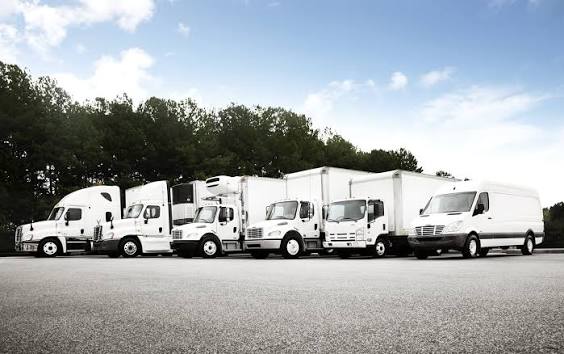
Heavy trucks weighing 8,001 pounds or more face a maximum of 60 miles per hour outside an urban district. In the language of the Illinois Vehicle Code, these are “second-division vehicles,” and they live under a tighter ceiling than the family sedan beside them. While a passenger car can legally run 70 mph on a rural interstate, a loaded freight truck on that same stretch of road is capped at a lower speed.
The gap exists for a simple reason: kinetic energy. A fully loaded Class 8 rig carries far more crash energy at speed, and a 60 mph cap is the state’s way of shaving that energy down.
Here is how the numbers break down by road type:
| Vehicle type | Interstate / 4-lane divided | All other roads |
|---|---|---|
| Passenger vehicle (rural) | 70 mph | 55 mph |
| Heavy truck (8,001+ lbs) | 60 mph | 55 mph |
| Bus (4-lane divided) | 65 mph | 55 mph (non-IDOT roads) |
Truck Speed Limits in Cook, DuPage, Kane, Lake, McHenry & Will Counties
In the six collar-and-Chicago counties — Cook, DuPage, Kane, Lake, McHenry, and Will — second-division vehicles over 8,001 pounds top out at 60 mph on interstate highways and 55 mph on every other road, highway, or street.
These counties carry the densest traffic in the state, so the Illinois General Assembly wrote them their own paragraph inside 625 ILCS 5/11‑601. If a route weaves through this region, that 60/55 split is the ceiling a dispatcher should plan around.
Truck Speed Limits on Downstate and Rural Highways
Downstate, the heavy-truck ceiling still lands at 60 mph for vehicles built to carry a gross weight of 8,001 pounds or more, even where lighter vehicles enjoy a 70 mph interstate limit.
The road may look wide open, but the legal number for the truck does not climb with it. This is the single most common spot where well-meaning drivers drift over the line — they match the flow of passenger traffic and quietly break their own limit. A correctly set governor erases that risk entirely.
Illinois Speed Limits for Buses
Buses reach a maximum of 65 mph on four-lane divided highways and 55 mph on roads not under the jurisdiction of the Illinois Department of Transportation (IDOT) or the Illinois State Toll Highway Authority.
A motor coach hauling passengers across a divided interstate gets a touch more headroom than a freight truck, but the moment it leaves a state- or tollway-managed road, that ceiling drops back to 55. For intercity bus lines and charter operators threading between highways and local streets, the practical takeaway is that the legal speed can shift mid-route — which is precisely the scenario a multi-zone limiter handles best.
School Bus Speed Rules in Illinois

School buses follow the same posted statutory ceilings, layered on top of the reduced-speed zones that surround every school in the state. A school bus is never chasing the top number on the sign; it is balancing route timing against the safety of children boarding and exiting.
That is why our School Bus Safety Solutions pair a firm top-speed cap with monitoring built specifically for student transport — so a driver physically cannot exceed the threshold, even on the open stretches between stops.
Federal Speed Limiter Rule Status for Heavy Trucks (FMCSA)
The Federal Motor Carrier Safety Administration (FMCSA) and the National Highway Traffic Safety Administration (NHTSA) withdrew the heavy-truck speed limiter mandate on July 24, 2025, recorded in Federal Register notice 2025‑13928. For nearly a decade, this proposal hovered over the trucking industry like weather that never quite breaks.
It traced back to a 2016 notice of proposed rulemaking and would have required commercial motor vehicles (CMVs) with a gross vehicle weight rating (GVWR) above 26,000 pounds to run an electronic governor capping top speed somewhere between 60 and 68 mph for the life of the vehicle.
That mandate is now gone. The agencies pointed to a few reasons: many states already allow heavy trucks to travel faster than the proposed cap, modern trucks increasingly carry automatic emergency braking (AEB) and forward collision warning, and the crash data was thin on predicting the rule’s real-world effect.
The result for carriers is straightforward — there is no federal requirement to install a speed limiter, and any use of the technology is voluntary. Plenty of large fleets keep their governors switched on anyway, because the fuel and safety math has favored limiting speed for years, mandate or no mandate.
How Speed Limiters Help Illinois Fleets Stay Within the Law
A speed limiter caps a vehicle’s top speed at the Illinois posted maximum, which removes the chance of an over-limit violation before it can ever happen. Think of it as compliance you set once and forget.
Rather than trusting that every driver, on every shift, in every weather condition, will hold to 60 mph, the engine itself enforces the number. For a safety director juggling a mixed fleet across multiple counties, that shift from “hope” to “hardware” is the whole appeal.
Electronic Speed Limiter (ESL) for ECU-Equipped Trucks and Buses
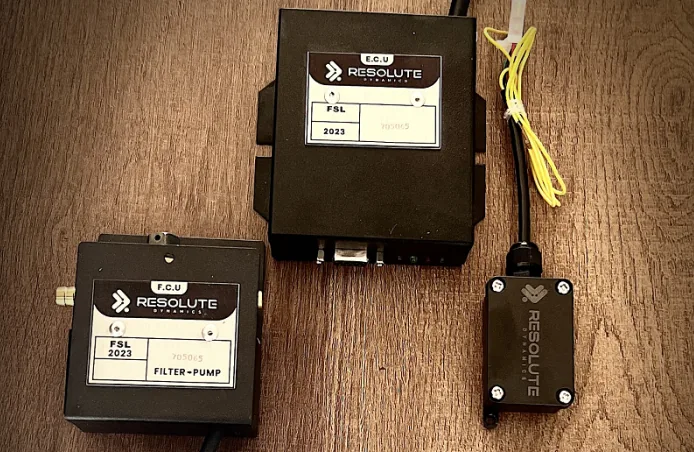
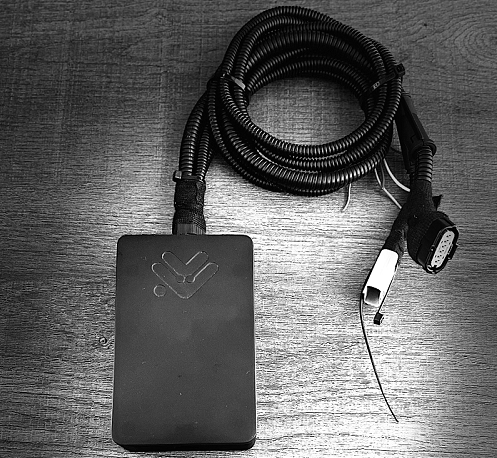
Our Speed Limiter / Speed Governor works through electronic throttle intervention, communicating directly with a vehicle’s engine control unit (ECU).
On modern trucks and buses already running an ECU, this is the cleanest path: the limiter reads the vehicle’s own electronics and caps maximum speed without touching mechanical components. It suits DOT-regulated fleets that want a tamper-resistant ceiling matched precisely to the Illinois 60 mph truck cap or the 65 mph bus cap.
Dual & Multi-Speed Limiters for Mixed Urban–Highway Routes
A Dual Speed Limiter Multi Speed Limiter holds more than one preset threshold, so a single vehicle can carry a lower cap for school zones and city streets and a higher cap for divided highways.
This is tailor-made for Illinois, where the legal number genuinely changes depending on whether a bus or truck sits on a tollway, a four-lane divided highway, or a local road. One vehicle, several legal ceilings, zero guesswork for the driver.
GPS Tracking and Speed Monitoring for Fleet Compliance Records
Our GPS Tracking Systems log speed, location, and route history, which turns compliance from something you claim into something you can prove. If an insurer, a safety auditor, or a client asks for evidence that a fleet held to posted limits, the data is already sitting in the record. Pairing a limiter with telematics gives a carrier both the prevention and the paper trail.
Speed Limiter Installation and Compliance Documentation
Our speed limiters install through ECU integration or fuel-flow control and ship with a tamper-proof Speed Limiter Certificate. The certificate documents the set speed and confirms the device was fitted and sealed to professional standards.
Because the proposed federal rule would have demanded that a limiter’s setting be maintained over the vehicle’s service life, a sealed, certified installation is the practice many forward-looking fleets adopt now — it future-proofs them against any return of regulation and satisfies cautious insurers today.
Benefits of Voluntary Speed Limiters for Illinois Trucks and Buses
Voluntary speed limiters deliver four main benefits for Illinois fleets:
- Accident prevention — capping top speed lowers crash impact energy and shortens stopping distance, the two factors that turn a fender-bender into a fatality.
- Fuel efficiency — holding a steady ceiling trims the fuel burned at the high end of the rev range, where engines drink the most diesel.
- Fleet standardization — every vehicle obeys the same number, which simplifies driver training, dispatching, and route planning across counties.
- Lower risk exposure — documented speed control strengthens a carrier’s safety profile, which can ease conversations with insurers and clients.
None of these depend on a government mandate. They are the practical reasons fleets across the country kept their governors switched on long before — and long after — the federal rule rose and fell.
Frequently Asked Questions
Is a speed limiter legally required for trucks in Illinois? No. Illinois mandates no speed limiter device. Trucks comply by obeying the posted statutory limits in 625 ILCS 5/11‑601, and any limiter installation is voluntary.
What is the truck speed limit in Illinois? Heavy trucks of 8,001 pounds or more are capped at 60 mph outside an urban district, and 55 mph on non-interstate roads, including all other roads in Cook, DuPage, Kane, Lake, McHenry, and Will counties.
What speed can buses travel in Illinois? Buses may travel up to 65 mph on four-lane divided highways and 55 mph on roads not managed by IDOT or the Illinois State Toll Highway Authority.
Did the federal speed limiter rule pass? No. The FMCSA and NHTSA withdrew the proposed heavy-truck speed limiter mandate on July 24, 2025, leaving the technology entirely voluntary.
What speed should we set a limiter to for Illinois compliance? A common approach is to set the cap at the lowest legal ceiling a vehicle will face on its routes — often 60 mph for heavy trucks — so the vehicle stays compliant across every county and road type it travels.
Compare with: Ohio – Pennsylvania – Georgia – US supplier guide.

The Resolute Dynamics team designs and manufactures speed limiters (SLD), GPS tracking, and automotive safety systems used on 200,000+ vehicles across 20+ countries. We write about fleet compliance, road-safety regulation, and vehicle-safety technology, including Malaysia’s JPJ SLD mandate, UAE RTA rules, and global standards like UN R89, to help fleet operators and transport businesses stay safe and compliant.