Speeding is not a small problem hiding in the corner of road safety reports. It sits right at the center. Speeding plays a role in nearly one-third of all traffic deaths in the United States, and a small group of extreme drivers causes a giant share of the damage. For years the only tools we had were tickets, fines, and license suspensions.
None of them physically stop a car from going too fast. That gap is exactly why Intelligent Speed Assistance is suddenly the most talked-about safety technology in American traffic policy. Let me walk you through what it is, which states already use it, and where the federal picture is heading.
What is Intelligent Speed Assistance (ISA)?
Intelligent Speed Assistance is a vehicle safety system that keeps a car at or below the legal speed limit by reading the road’s posted limit and managing the engine in real time.
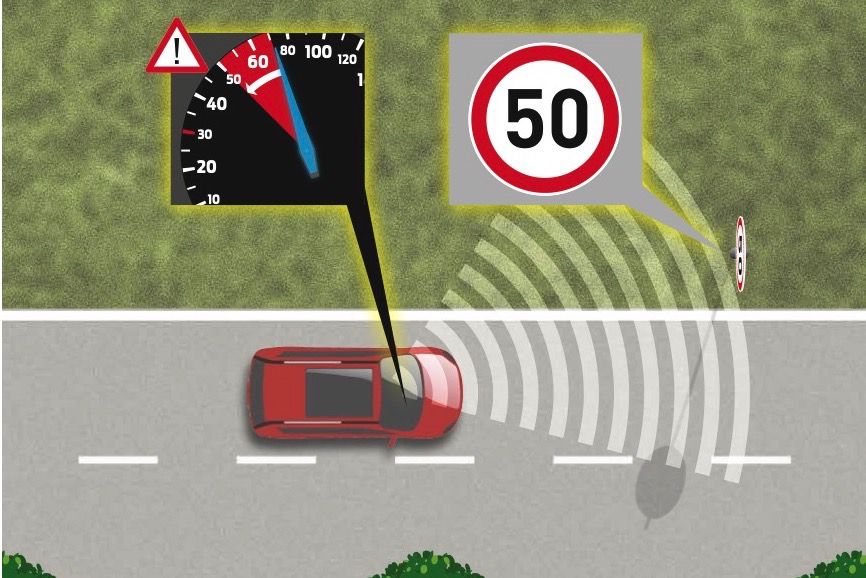
The technology pairs GPS positioning with digitally mapped speed-limit data, and in many systems a forward-facing camera that recognizes speed-limit signs. The vehicle always knows the limit for the exact stretch of road it is on, and it acts on that knowledge instead of trusting the driver to behave.
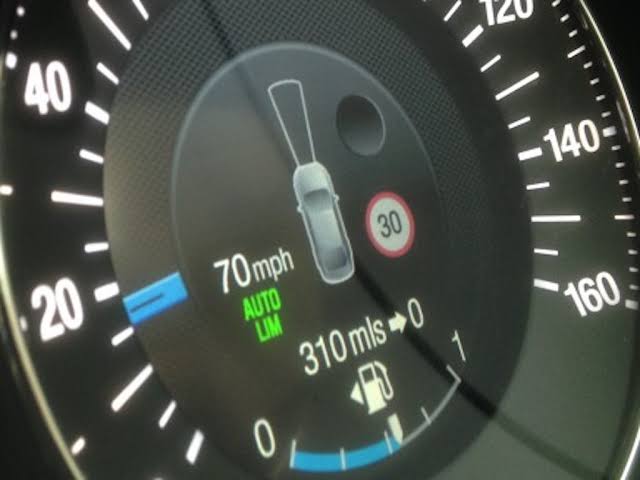
There are two broad flavors of this technology, and the difference matters a lot. The first is passive ISA, sometimes called advisory or “open” ISA, which only warns you with a beep or a flashing icon when you cross the limit.
The second is active ISA, which actually steps in and prevents the car from going faster. Every US state program so far uses the active form, because a warning that a reckless driver can ignore is not much of a countermeasure. Active ISA changes the equation from a polite suggestion into governed mobility.
How does an ISA device limit a vehicle’s speed?
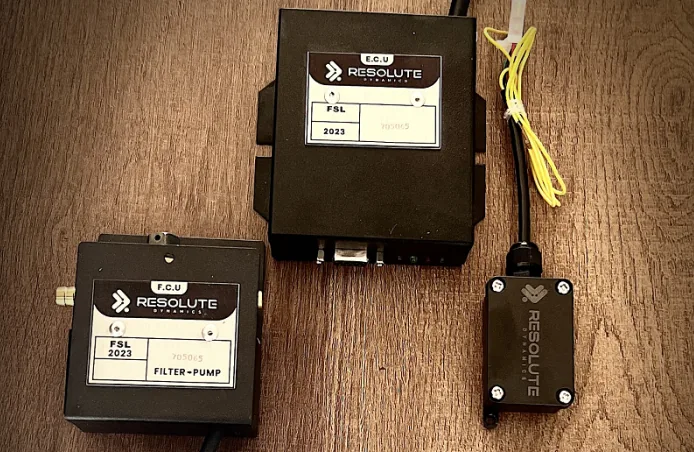
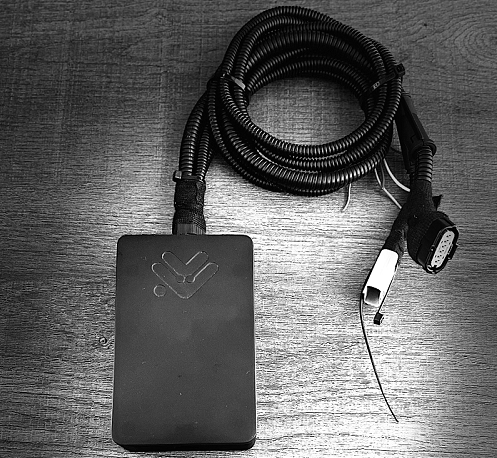
An active ISA device limits speed by connecting to the vehicle’s accelerator and engine control unit, then reducing throttle input once the car reaches the posted limit. It does not slam on the brakes.
Instead, it gently chokes off the fuel and air the engine needs to accelerate further, so the car eases up smoothly rather than lurching. If you press the gas to the floor in a speed-capped vehicle, the pedal simply stops responding past the limit. As one device maker demonstrated during a test drive, you can floor it and the car just will not go faster.
The system leans on three data sources working together: GPS location, a digital map of speed limits, and in newer units a camera that reads roadside signs. This layered approach handles the messy reality of American roads, where limits change block by block. Most programs also build in a safety valve.
Washington State’s design, for example, lets a driver override the cap up to three times a month for situations like passing a slower vehicle, after which the limiter snaps back on. That override exists because a car that cannot briefly speed up to merge or pass can create its own hazard through speed differential.
Active ISA vs. passive (advisory) ISA
The split between active and passive ISA comes down to one question: does the technology inform the driver or control the car? Here is the practical contrast.
| Feature | Passive (Advisory) ISA | Active ISA |
|---|---|---|
| What it does | Warns with sound or visual alert | Physically prevents exceeding the limit |
| Driver can ignore it | Yes | No |
| Used in US state programs | No | Yes |
| Typical setting | Optional feature on some new cars | Court-ordered for reckless drivers |
| Override option | Not needed | Limited, controlled exceptions |
Passive systems already exist quietly in plenty of new vehicles as a driver-assist convenience. Active systems are the ones reshaping law, because they target behavior that a warning chime was never going to fix.
Which US states have Intelligent Speed Assistance programs?
As of 2026, three US jurisdictions have enacted ISA laws: Washington, D.C., Virginia, and Washington State, with several more states pushing bills through their legislatures.
This is a brand-new policy area, so the map is changing almost every legislative session. The momentum has been driven heavily by advocacy groups like Families for Safe Streets, made up of people who lost loved ones to speeding crashes. Here is where each program stands.
Washington, D.C. — the STEER Act
Washington, D.C. became the first jurisdiction in the country to pass ISA legislation, doing so in 2024, with the law taking effect in October 2024. Known as the STEER Act, it requires ISA device installation for drivers whose licenses were suspended or revoked because of excessive speeding or reckless driving.
The District set a tiered structure: roughly a one-year program for a first qualifying conviction, scaling up to as long as four years for a fourth offense. The vote in D.C. was unanimous, which tells you how rare the bipartisan agreement on this issue has become.
Virginia — the first US state ISA Program
Virginia holds the title of first US state to enact an ISA law, signed by Governor Glenn Youngkin and set to take effect in July 2026. The Virginia program gives judges the discretion, not a blanket mandate, to order an ISA device for drivers convicted of extreme reckless driving, specifically those caught exceeding 100 miles per hour.
Enrollment also reaches drivers convicted four times of racing or exhibition driving, with a five-year device term, and drivers who rack up 18 demerit points within 12 months, with a nine-month term.
The teeth of the law sit in its anti-tampering rule: disabling or bypassing the device is a Class 1 misdemeanor punishable by up to 12 months in jail and a $2,500 fine. The Virginia Alcohol Safety Action Program, already experienced with ignition interlocks, is set to administer it.
The design is clever because it hands courts a middle path. Instead of choosing between a full license suspension and letting a dangerous driver roam free, a judge can grant governed mobility. The driver keeps access to work, school, and medical appointments, but the car physically cannot speed.
Washington State — Engrossed Substitute House Bill 1596
Washington State became the third jurisdiction to pass ISA legislation, with its House approving the bill 84 to 12. The law targets people with a history of excessive speeding, which it defines precisely: 20 miles per hour or more over the limit where the limit is above 40 mph, or 10 mph or more over where the limit is 40 mph or below.
Drivers who have their license suspended must use the device for 120 to 150 days. Participants cover their own costs, including a monthly fee reported around $21, with a portion funding device access for low-income drivers.
The program is scheduled to take effect in 2029, giving the state’s Department of Licensing time to build the framework. (Effective dates in newly passed laws sometimes shift, so the final enacted date is worth confirming against the signed bill text.)
Georgia — passed the legislature, then vetoed
Georgia came close but did not cross the finish line. The Georgia legislature passed an ISA-style speed-limiter bill, but Governor Brian Kemp vetoed it in 2025.
The measure would have let judges require speed-limiting technology in the vehicles of drivers whose licenses were suspended for egregious violations like street racing. Its bipartisan support showed the political appetite is real, even when a single executive signature can stall it.
States with pending ISA legislation
Beyond the three that crossed the line, a cluster of states keeps the bills alive. New York, California, Maryland, and Arizona have all advanced ISA legislation, though several need additional sessions to pass. New York is where the very first US ISA-related bill was introduced, planting the seed for everything that followed.
California’s governor previously vetoed a broader mandate, and the state’s assembly has since moved toward a more targeted “Stop Super Speeders” approach modeled on Virginia and Washington. Expect this list to keep growing.
How US state ISA programs compare
The fastest way to see the patchwork is to line the programs up side by side. Each state agrees on the core idea, using ISA as a substitute for license suspension, but they disagree on who qualifies and for how long.
| Jurisdiction | Status | Effective | Who Must Enroll | Program Length | Tampering Penalty |
|---|---|---|---|---|---|
| Washington, D.C. | Enacted (first) | Sept 2025 | Suspended/revoked for excessive speeding | ~1 yr first to 4 yrs fourth | Penalized under the act |
| Virginia | Enacted (first state) | July 2026 | 100+ mph reckless; 4× racing; 18 points/12 mo | 9 months to 5 years | Class 1 misdemeanor, up to 12 mo + $2,500 |
| Washington State | Enacted | 2029 | “Excessive speeding” thresholds | 120–150 days | Misdemeanor to tamper |
| Georgia | Vetoed | — | Suspended for racing/egregious offenses | Proposed | Proposed |
| NY, CA, MD, AZ | Pending | — | Reckless / repeat offenders (varies) | Varies | Varies |
There is no national standard yet, which is exactly why the American Association of Motor Vehicle Administrators formed an ISA Working Group, aiming to build reciprocity between states from the start rather than repeating the tangled, inconsistent rules that grew up around ignition interlocks.
Who is required to install an ISA device in the US?
The people facing an ISA mandate are mostly “super speeders” and repeat reckless drivers, ordered to install the device as an alternative to losing their license entirely.
This narrow focus is deliberate. Super speeders make up a small slice of all drivers, yet they cause a wildly disproportionate share of fatal crashes, so targeting them delivers a big safety return without touching ordinary motorists.
The policy logic gets sharper when you look at one stubborn statistic. According to data cited by NHTSA and motor vehicle administrators, around 75% of drivers with a suspended license keep driving anyway. A suspension on paper does little if the person ignores it and gets behind the wheel.
An ISA device flips that script: the driver may still drive, but the vehicle itself enforces the speed limit. Justice-reform advocates have warmed to the approach too, because it reduces tense roadside stops between motorists and armed officers, swapping enforcement after the fact for prevention built into the car.
What is the federal outlook for Intelligent Speed Assistance?
At the federal level, there is no nationwide ISA mandate for passenger vehicles as of 2026, and the action remains a mix of recommendations, studies, and a few reversals. Washington has been far more cautious than the states, and recent federal moves have actually pulled back from speed-limiter requirements rather than expanding them.
NTSB recommendations on ISA
The National Transportation Safety Board has been the loudest federal voice for this technology. After a 2022 crash in which a driver going 103 mph killed nine people, the NTSB called for industry-wide adoption of speed-limiting technology and urged NHTSA to incentivize ISA in new vehicles.
NTSB Chair Jennifer Homendy framed the issue bluntly, arguing that the country knows how to save these lives but lacks the collective will to act. The catch is that the NTSB only recommends; it cannot write binding rules.
NHTSA’s position and the New Car Assessment Program
The National Highway Traffic Safety Administration, which does have rulemaking power, responded to the NTSB in April 2024 and has explored ISA pathways, including the idea of an ISA interlock aimed at the worst repeat speeders.
Progress is slow, partly because of long-standing practical hurdles the agency has flagged for years: speed-limit maps in the US are not always current, owners do not reliably update them, and sign-reading cameras still need to be dependable across every road type. These data-quality questions keep a broad federal mandate stuck in the study phase.
Withdrawal of the federal heavy-truck speed limiter rule
A separate and often-confused thread involves big trucks, and here the federal government moved in the opposite direction. FMCSA and NHTSA formally withdrew the long-pending proposal to require speed limiters on heavy trucks over 26,000 pounds, effective 27 June 2025.
That proposal traced back to a 2016 rulemaking and a 2022 follow-up, and it drew tens of thousands of comments from carriers, drivers, and safety groups. The agencies cited unresolved data gaps about costs and benefits, especially the safety risk of speed differentials between governed trucks and faster passenger traffic. The withdrawal preserves the status quo: no federal speed-limiter mandate for commercial trucks.
The DRIVE Act and “Pathways to Safer Streets”
Federal politics keeps tugging in two directions. On one side, lawmakers introduced the DRIVE Act to bar federal agencies from imposing speed-limiter regulations at all.
On the other, the Department of Transportation’s “Pathways to Safer Streets” initiative, announced in April 2026, referenced intelligent speed-assist strategies as part of its safety toolkit. The net result is a federal landscape that talks about ISA, studies ISA, but leaves the actual mandates to the states for now.
How does US ISA policy compare to the European Union?
The contrast with Europe is stark. The European Union already requires ISA on all new cars, while the US relies on targeted, offender-based state programs.
Under the EU’s General Safety Regulation, ISA became mandatory for all new vehicle types from July 2022 and for every new car sold from July 2024. European systems work much like cruise control, limiting engine power to hold the posted speed rather than braking, and they come with an on/off switch to ease public acceptance, though the default status is “on” every time the car starts.
So Europe took the universal route, baking ISA into the entire fleet by law. America took the surgical route, aiming the technology only at the drivers who have already proven dangerous. Both paths chase the same goal of fewer speed-related deaths, but they reflect very different ideas about regulation, privacy, and personal mobility in a car-dependent culture.
ISA and speed limiters for commercial fleets and public vehicles in the US
While lawmakers debate consumer mandates, US fleets have already embraced speed-limiting technology voluntarily, far ahead of any legal requirement.
Benchmarking data from the National Private Truck Council shows that roughly 86% of private fleets already run speed limiters, set at speeds the carriers choose for safety and fuel efficiency. The technology is not experimental in commercial settings; it is standard practice.
Public fleets tell the same story. New York City began piloting electronically speed-limited vehicles in 2022 and has since expanded active ISA to more than 7,000 city vehicles, proving the approach scales. School buses are another natural fit, where a hard speed cap protects the most precious cargo on the road.
For operators, the appeal is simple math: lower top speeds mean less kinetic energy in a crash, fewer at-fault incidents, smoother insurance conversations, and better fuel economy from reduced hard acceleration. Fleet telematics ties it all together, letting managers see speed data alongside location and driver behavior.
How fleets can adopt ISA-grade adaptive speed limiters
For fleet and public-sector operators who want this capability now, the practical route is an aftermarket retrofit of an adaptive speed limiter rather than waiting for a federal mandate.
At Resolute Dynamics, we build adaptive speed limiter systems and speed governor hardware designed exactly for this purpose, using GPS-linked, geofenced speed thresholds that adjust the cap to the road instead of locking the vehicle to a single fixed number.
Our systems integrate with GPS tracking so managers see speed, location, and tamper alerts in one place, and we offer dedicated school bus safety solutions for operators carrying children. As the regulatory tide in North America keeps rising, we work with fleets through Resolute USA to retrofit vehicles ahead of the curve, so a changing law never catches an operation off guard.
The technology that states are now writing into criminal sentencing has been keeping commercial fleets safer for years, and adopting it early turns a future compliance headache into a present-day safety advantage.
Frequently Asked Questions
What does an ISA device do to a car? An ISA device reads the posted speed limit using GPS and mapped data, then limits the engine’s throttle so the car cannot exceed that limit. Active versions prevent speeding outright; advisory versions only warn the driver.
Which US states require Intelligent Speed Assistance? Washington, D.C., Virginia, and Washington State have all enacted ISA laws as of 2026. Georgia passed a bill that was vetoed, while New York, California, Maryland, and Arizona have legislation in progress.
Is there a federal law requiring ISA in the US? No. There is no federal ISA mandate for passenger vehicles, and federal agencies withdrew their proposed speed-limiter rule for heavy trucks in July 2025. Federal involvement is limited to recommendations and exploratory programs.
Who has to install an ISA device? Mainly super speeders and repeat reckless drivers, ordered by a court as an alternative to losing their license. Ordinary drivers are not affected by current US programs.
Can you disable or remove an ISA device? Tampering is illegal under these programs. In Virginia, disabling the device is a Class 1 misdemeanor carrying up to 12 months in jail and a $2,500 fine, and other states treat tampering as a misdemeanor as well.
How is US ISA policy different from Europe’s? The European Union requires ISA on all new cars sold since July 2024. The US instead targets only proven dangerous drivers through state-level court programs, leaving the general vehicle fleet untouched.
Related US state pages: US truck supplier & install – What is ISA (technical).

The Resolute Dynamics team designs and manufactures speed limiters (SLD), GPS tracking, and automotive safety systems used on 200,000+ vehicles across 20+ countries. We write about fleet compliance, road-safety regulation, and vehicle-safety technology, including Malaysia’s JPJ SLD mandate, UAE RTA rules, and global standards like UN R89, to help fleet operators and transport businesses stay safe and compliant.