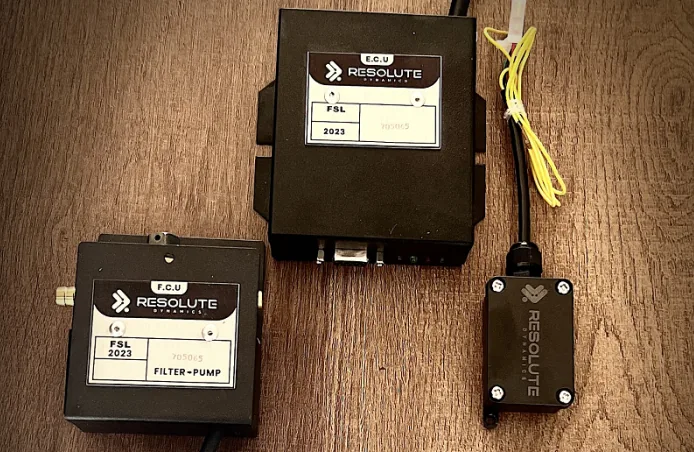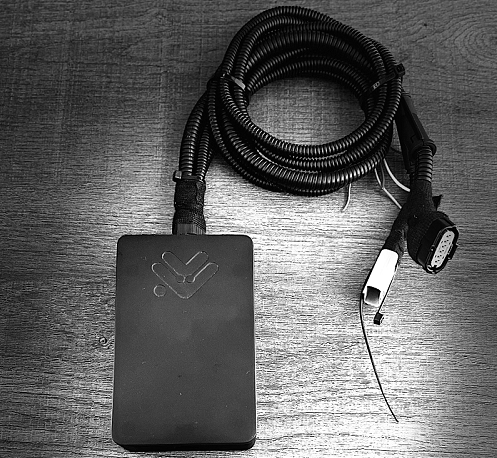
No state or federal law requires speed limiters on commercial trucks in Georgia as of 2026. A speed limiter, also called a speed governor, stays an optional safety device here, not a legal obligation.
This guide covers the US state of Georgia and its Department of Driver Services framework, not the country of Georgia in the Caucasus, which runs on a kilometre-per-hour system and an entirely separate legal code.
If you manage a fleet that rolls through Atlanta, Savannah, Augusta, or the I-75 freight corridor, the rules below shape how your trucks move, what your drivers face at a roadside inspection, and where a governed top speed quietly saves you money.
We build speed limiters and fleet safety technology, so we get this question almost weekly: “Do I have to install one in Georgia?” The short answer sits at the top of this page. The longer answer, and the part that actually affects your budget, lives in the sections below.
Are Speed Limiters Required for Trucks in Georgia?
Speed limiters are not mandatory for trucks in Georgia under either state or federal law in 2026. No Peach State statute forces a motor carrier to cap a truck’s top speed, and the long-running federal proposal that once threatened to do so has been pulled off the table. That leaves speed governance as a business decision, owned by the carrier, rather than a compliance checkbox handed down by a regulator.
This matters because the topic carried real momentum for nearly a decade. Fleet managers braced for a hard rule, budgeted for retrofits, and waited. The wait ended in 2025, and the outcome surprised plenty of people who assumed a mandate was inevitable.
Federal Speed Limiter Rule Status (FMCSA and NHTSA)
The federal speed limiter rule was withdrawn on July 24, 2025, through a notice published in the Federal Register by the Federal Motor Carrier Safety Administration (FMCSA) and the National Highway Traffic Safety Administration (NHTSA).
The proposal traced back to 2016, when both agencies floated a joint plan requiring heavy vehicles with a gross vehicle weight rating (GVWR) above 26,000 pounds to carry a speed limiting device tied to the engine control unit (ECU). The agencies requested public comment on a set speed somewhere between 60 and 68 miles per hour, and the carrier would have been required to maintain that throttle ceiling for the service life of the vehicle.
The proposal drew more than 15,000 comments, most of them opposed. Owner-operators and small carriers warned that capping truck speed below the flow of surrounding traffic creates dangerous speed differentials, which raises the odds of rear-end collisions.
In June 2025, the administration announced the rule’s cancellation, and FMCSA removed it from the regulatory agenda. As of 2026, no replacement proposal is advancing. The federal posture is settled, at least for now: speed limiting stays voluntary.
Georgia State-Level Requirements
Georgia imposes no state-level speed limiter mandate on commercial fleets. The Georgia General Assembly has not enacted any statute that orders motor carriers to govern engine speed, and no rule from the Georgia Department of Public Safety requires it.
State lawmakers could revisit the idea in a future session, since speed management remains a recurring theme in highway-safety policy, but nothing on the books today compels installation. A carrier that governs its trucks in Georgia does so on its own terms, for its own reasons.
Georgia Commercial Truck Speed Limits in 2026
Commercial trucks in Georgia top out at 70 miles per hour on rural interstates, the highest legal speed in the state. Posted signs always override the general defaults, but absent a different posting, these statutory maximums apply to every vehicle on the road.
| Road type | Maximum speed |
|---|---|
| Rural interstates and freeways | 70 mph |
| Urban interstates and freeways | 65 mph |
| Rural two-lane and undivided roads | 55 mph |
| Urban or residential districts | 30 mph |
These figures come straight from Georgia’s traffic code and the Department of Driver Services manual. Local jurisdictions and the Georgia Department of Transportation can lower a limit based on an engineering study, so a posted 45 mph zone near a school or work area carries the same legal weight as any statewide default.
Georgia Has No Split Speed Limit for Trucks
Georgia does not use a split speed limit, which means commercial trucks follow the exact same posted limits as passenger cars. This single fact trips up a lot of out-of-state carriers. A handful of states cap trucks lower than cars on the same stretch of highway, forcing an 18-wheeler to crawl at 55 while sedans cruise at 70.
Georgia rejects that approach. A tractor-trailer and a minivan share one number on the same road, which simplifies route planning and removes the differential-speed hazard that the federal limiter debate centered on. For a fleet that governs its trucks voluntarily, this is worth knowing: set your throttle ceiling too far below 70, and your drivers may sit in the right lane well under the prevailing flow.
What Counts as a Commercial Motor Vehicle in Georgia?
A commercial motor vehicle (CMV) in Georgia is any vehicle with a gross vehicle weight rating of 26,001 pounds or more, one designed to carry 16 or more passengers, or one hauling hazardous materials that require placarding under US Department of Transportation rules.
This definition, set out in the Official Code of Georgia Annotated (OCGA) Section 40-5-142, is the threshold that pulls a vehicle into the world of commercial driver’s license (CDL) rules, hours-of-service limits, and heightened liability.
The 26,001-pound line is the same threshold the withdrawn federal limiter rule used, which is no coincidence. Heavy vehicles carry more kinetic energy, take longer to stop, and inflict far worse damage in a crash, so regulators draw their brightest lines right around that weight.
If your fleet runs box trucks, dump trucks, tractor-trailers, or motor coaches, you are squarely inside the CMV category and every rule in this guide applies to you.
Speeding Penalties for Georgia Fleets and CDL Drivers
A speeding ticket of 15 miles per hour or more over the limit counts as a serious traffic violation in Georgia under OCGA Section 40-5-142. For a CDL holder, that label carries weight far beyond the fine itself. Two serious traffic violations inside three years can disqualify a driver from operating a commercial vehicle, which sidelines both the driver and the revenue their truck generates.
Speeding in Georgia is a misdemeanor. Fines generally land between $100 and $1,000, scaled to how far over the limit the driver was clocked and where the stop happened.
Beyond the courthouse, every speeding conviction feeds your federal safety record and nudges your Compliance, Safety, Accountability (CSA) score in the wrong direction, which is exactly the metric insurers and shippers scrutinize before they write a policy or hand you a contract.
The Georgia Super Speeder Fee
Georgia adds a $200 Super Speeder fee for any driver convicted of going 75 mph or faster on a two-lane road, or 85 mph or faster on any road in the state.
This state fee stacks on top of whatever local fine the court imposes, and it follows the driver, not the truck. Miss the payment deadline and the state suspends the license, then tacks on a $50 reinstatement charge. For a fleet, a single Super Speeder conviction means a sidelined driver, a parked truck, and a paper trail that surfaces in the next insurance renewal.
How Speeding Convictions Compound for a Fleet
A speeding conviction radiates outward through a fleet in ways a single fine never captures. The driver loses points and may face disqualification.
The carrier absorbs a higher CSA percentile, which raises the odds of a targeted roadside intervention. The insurer recalculates risk at renewal, and premiums climb. In litigation after a crash, opposing counsel treats a documented speed history as a gift. A governed top speed is one of the few levers a fleet can pull to shrink every one of those exposures at once.
Georgia Fleet Compliance Requirements Beyond Speed
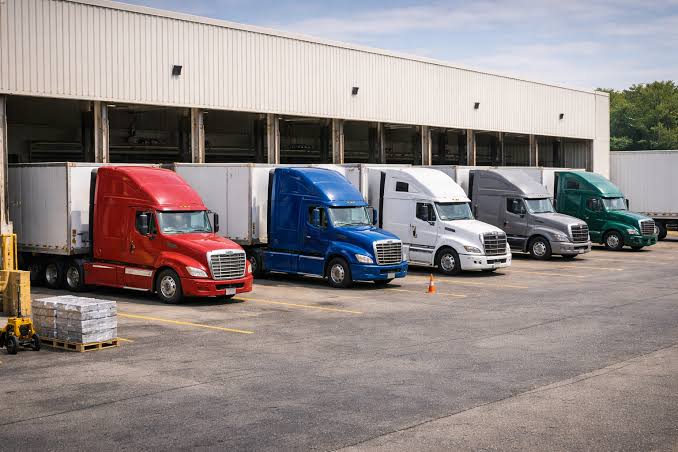
Six core obligations define commercial-fleet compliance in Georgia, and speed is only one of them. The rest govern insurance, recordkeeping, weight, training, driver hours, and licensing. A clean speed record means little if a truck rolls out overweight or a driver’s medical card lapsed.
- Insurance minimums. Georgia motor carriers must carry at least $100,000 per person and $300,000 per accident in bodily-injury liability, $50,000 in property-damage liability, plus cargo coverage of $25,000 per vehicle and $50,000 in aggregate per accident.
- Maintenance records. Carriers keep inspection and repair records for every vehicle, and retain them for six months after a truck leaves their control through sale or transfer.
- Weight cap. A truck and its cargo must weigh under 80,000 pounds on Georgia roads, subject to per-axle limits and the federal bridge formula, with oversize permits available for heavier loads.
- Entry-level driver training. New CDL drivers complete FMCSA-approved entry-level driver training before they test.
- Hours-of-service. Federal hours-of-service limits cap driving time and mandate rest, with a short-haul exemption inside a 150-air-mile radius.
- Commercial driver’s license. Georgia issues Class A, B, and C licenses, with endorsements for specific cargo such as tankers or hazardous materials.
Stack these together and a pattern emerges: Georgia leans hard on the federal FMCSA framework, then layers its own speed, weight, and insurance rules on top. A speed limiter touches several of these areas at once, which is why the voluntary case is stronger than the “no mandate” headline suggests.
Why Georgia Fleets Install Speed Limiters Voluntarily
Many Georgia fleets install speed limiters even without a mandate, treating governed speed as a risk-management and cost-control tool rather than a legal hoop.
The withdrawal of the federal rule removed the obligation, not the underlying math. A truck capped at a sensible top speed crashes less hard, burns less fuel, and hands a plaintiff’s lawyer less ammunition. Those benefits did not disappear when the rulemaking did.
Insurance and Liability Mitigation
A governed top speed gives an insurer a concrete, verifiable reason to view a fleet as lower risk. Telematics data showing trucks held to a firm ceiling supports a cleaner loss history, and a cleaner loss history shapes premiums at renewal.
In the courtroom, speed evidence often decides liability. When a limiter caps the truck and the data proves it, a carrier walks into negotiation with a defensible safety posture instead of a speed log that reads like an admission.
Fuel and Maintenance Savings
Fuel burn rises steeply with speed, so shaving a few miles per hour off a fleet’s top speed compounds across thousands of miles. Aerodynamic drag climbs with the square of velocity, which means the jump from 68 to 75 mph costs far more diesel than the seven-mile gap suggests.
A lower governed ceiling also eases wear on tires, brakes, and the driveline, stretching maintenance intervals and trimming the per-mile operating cost that defines a fleet’s margin.
CSA Score and Safety-Record Protection
A speed limiter attacks the unsafe-driving category that drives so many CSA points. Fewer speeding violations means a lower percentile, and a lower percentile means fewer targeted inspections and a stronger pitch to safety-conscious shippers. For carriers chasing freight contracts that screen on safety scores, a governed fleet becomes a selling point rather than a liability.
How Speed Limiters and Speed Governors Work
A speed limiter is a device that caps a vehicle’s maximum speed by managing fuel delivery, throttle response, or the engine control unit, so the truck physically cannot exceed a preset ceiling. The driver presses the accelerator as usual, but the system intervenes at the threshold and holds the line. The result is a hard top speed the driver cannot override on a whim.
The technology spans a range. A basic governor sets one fixed ceiling. A Vehicle Speed Limiter / Speed Governor restricts the top speed through a tamper-resistant connection to the engine. A Dual Speed Limiter / Multi Speed Limiter shifts the ceiling based on terrain or zone, which suits fleets that move between highways and tight job sites.
An Adaptive Speed Limiter reads the environment and adjusts the cap dynamically, blending governance with real-time road conditions. Pairing any of these with GPS Tracking Systems turns a static cap into a live telematics feed, so a fleet manager sees speed, location, and behavior on one dashboard.
Choosing a Speed Limiter for a Georgia Fleet
The right speed limiter for a Georgia fleet matches the truck’s duty cycle, integrates with existing telematics, and resists tampering. A long-haul tractor running I-75 has different needs than a municipal dump truck cycling through Fulton County job sites, so the device should fit the work, not just the weight class.
Certification and clean installation matter as much as the hardware itself, since a limiter that voids a warranty or fails an inspection creates more problems than it solves.
Three factors carry the most weight in the decision. First, integration: a limiter that feeds the same platform as your GPS and engine data spares you a second system to manage. Second, configurability: a governed ceiling near 68 mph keeps trucks within the flow of Georgia’s 70 mph rural interstates while still capturing the fuel and safety upside.
Third, support: installation, calibration, and documentation should come from a provider that understands fleet operations, not just electronics. We work with carriers across the United States, including through our Resolute USA operations, to match the device to the duty cycle and keep the paperwork clean.
Frequently Asked Questions
Are truck speed limiters required in Georgia? No. Speed limiters are not required for trucks in Georgia under state or federal law as of 2026. Installation stays a voluntary decision made by the carrier.
Did the FMCSA speed limiter rule pass? No. FMCSA and NHTSA withdrew the proposed speed limiter rule on July 24, 2025, and no replacement proposal is currently advancing.
What is the speed limit for trucks on Georgia interstates? Trucks may travel up to 70 mph on rural interstates and 65 mph on urban interstates, the same limits that apply to passenger vehicles.
Does Georgia have a separate speed limit for trucks? No. Georgia uses no split speed limit, so commercial trucks follow the same posted limits as cars on every road.
What happens if a fleet driver is caught speeding in Georgia? Speeding is a misdemeanor with fines generally between $100 and $1,000. Going 15 mph or more over the limit counts as a serious traffic violation, and convictions of 75 mph on a two-lane road or 85 mph on any road trigger a $200 Super Speeder fee on top of local penalties.
Why install a speed limiter if it is not required? A governed top speed lowers fuel costs, reduces wear, supports a cleaner CSA score, and strengthens a carrier’s position with insurers and in litigation. Those benefits hold regardless of whether a mandate exists.
Speed governance in Georgia comes down to choice, not compulsion. The mandate is gone, the speed limits are clear, and the math behind a voluntary limiter still favors fleets that care about safety records and operating costs. To match the right device to your trucks, Contact Us.
Compare with: Ohio – Illinois – Pennsylvania – US supplier guide.

The Resolute Dynamics team designs and manufactures speed limiters (SLD), GPS tracking, and automotive safety systems used on 200,000+ vehicles across 20+ countries. We write about fleet compliance, road-safety regulation, and vehicle-safety technology, including Malaysia’s JPJ SLD mandate, UAE RTA rules, and global standards like UN R89, to help fleet operators and transport businesses stay safe and compliant.