If you run trucks through Ohio, you have probably heard a lot of noise about speed limiters lately. Some of it is outdated, and some of it is flat-out wrong. For a consolidated look at how we support multi-state carriers, our USA speed limiter solutions for multi-state fleets page covers the bigger national picture.
This article zooms in on Ohio specifically — what the law actually says, what the federal government decided in 2025, and where a speed governor still earns its keep even when nobody is forcing you to install one.
Does Ohio Require Speed Limiters on Commercial Vehicles?
No state or federal law requires speed limiters on commercial vehicles operating in Ohio in 2026.
Ohio has never passed a statute that mandates a speed-limiting device on trucks, and the federal proposal that would have forced the issue was withdrawn by the Federal Motor Carrier Safety Administration (FMCSA) and the National Highway Traffic Safety Administration (NHTSA) on July 24, 2025.
There is an important difference here that trips up a lot of fleet managers. A speed limit and a speed limiter mandate are two separate things. Ohio absolutely sets posted speed limits your drivers must obey — that part is real and enforceable. What Ohio does not do is require the physical hardware that caps your engine.
So in plain terms, fitting a speed governor in the Buckeye State is a voluntary safety and risk-management decision, not a compliance box you are legally forced to tick. That single distinction shapes everything else in this guide.
Speed Limiter vs. Speed Governor: Terminology for Ohio Fleets
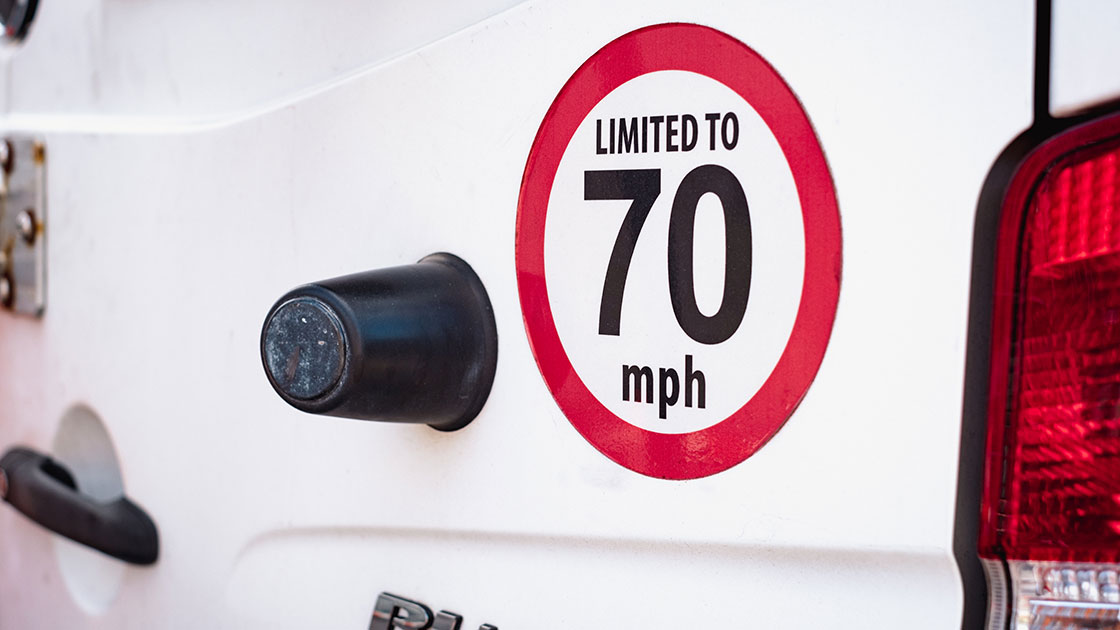
A speed limiter and a speed governor describe the same job — capping a vehicle’s top road speed — just from two different eras of technology. “Governor” is the older word, born in the days of mechanical engines, while “limiter” is the modern term for the same control handled electronically.
If you have wondered whether you needed one or the other, the honest answer is they are two names for one function, and our breakdown of the difference between a speed governor and a speed limiter walks through the finer points.
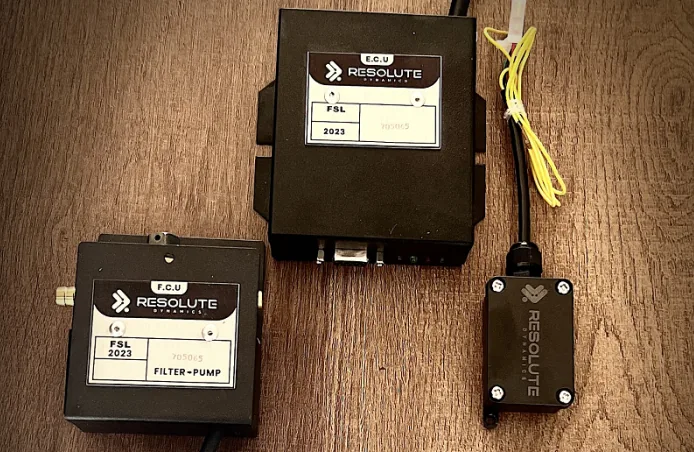
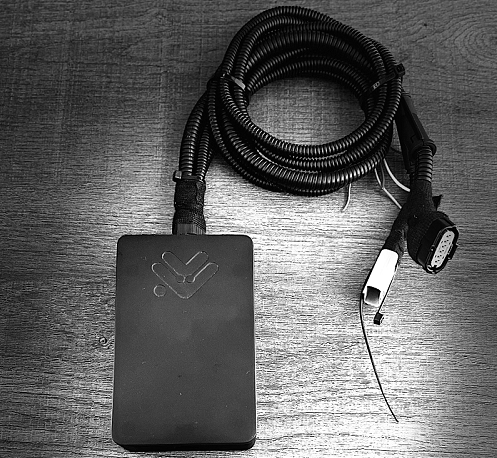
Mechanically, the device works through the engine control unit, or ECU. The ECU is the small computer that already manages fuel and throttle on every modern truck. A limiter simply tells that computer, “do not let road speed climb past this number.”
On older or specialized vehicles, a GPS-based system can do the same thing by reading satellite speed data and trimming power when the truck creeps over the set ceiling. Either way, the output is the same — a fixed top speed the driver cannot exceed. If you want to compare the hardware itself, the speed limiter / speed governor system page lays out the options.
Ohio Speed Limit Laws That Apply to Commercial Fleets (ORC 4511.21)
Ohio speed limits are set under Ohio Revised Code 4511.21, with a top legal limit of 70 mph on rural freeways. This statute is the backbone of every speeding rule in the state, and it applies to your trucks just as it applies to passenger cars. Knowing the numbers cold is the first step in any sensible Ohio fleet speed policy.
Ohio Interstate & Freeway Truck Speed Limits
The maximum truck speed on Ohio rural freeways is 70 mph, dropping to 65 mph on urbanized freeways without signals and 55 mph in congested municipal zones and outerbelts. Here is the quick reference your dispatchers will want pinned to the wall:
| Roadway type | Posted limit |
|---|---|
| Rural freeways and interstates | 70 mph |
| Urbanized freeways/expressways without signals | 65 mph |
| Congested freeways inside a municipality or outerbelt | 55 mph |
| Two-lane state routes outside towns | up to 60 mph |
| Urban districts (default) | 35 mph |
| Residential districts (default) | 25 mph |
These figures come straight from ORC 4511.21. A heavy truck rolling down I-70 outside the cities sees the same 70 mph ceiling a sedan does — there is no separate, slower number printed on the sign for commercial vehicles.
Why Ohio Uses Unified Car & Truck Speed Limits
Ohio applies one posted speed limit to both cars and trucks, with no split or differential limit for heavy vehicles. This catches out-of-state carriers off guard all the time, because several states do the opposite.
California and Oregon, for example, hold trucks to a 55 mph absolute ceiling no matter what the cars around them are doing. Ohio rejected that split-limit model years ago when it raised rural interstate speeds to 70 mph for both vehicle classes at once.
Why does this matter for a fleet? Because your speed policy in Ohio does not have to fight against a lower legal truck number. If you choose to govern your trucks at, say, 65 mph, you are making a business call about safety and fuel — not squeezing under a special truck-only rule.
Compare that to your runs in state-by-state speed limiter regulations across Texas, California, New York, and Florida, and you will see how much the ground rules shift from one state line to the next.
The Ohio Turnpike & Variable Speed Limits
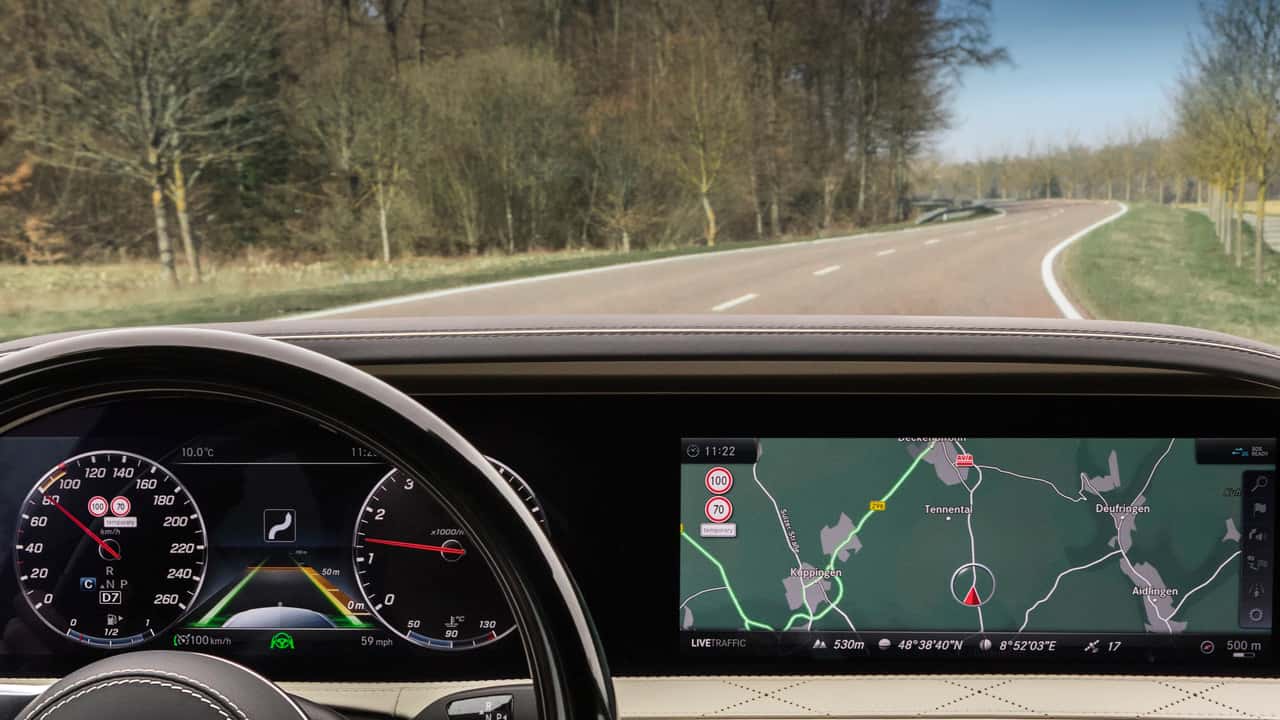
The Ohio Turnpike posts a uniform 70 mph limit for cars and trucks alike under its own authority in ORC 5537.16. The Turnpike Commission has held that power since 2011, which is why your drivers will not suddenly hit a lower truck-only sign when they merge onto I-80/90 across northern Ohio.
There is one more wrinkle worth knowing. The Ohio Department of Transportation (ODOT) can set variable speed limits on certain stretches — including parts of I-670, I-275, and I-90 toward the Pennsylvania border.
These limits change with traffic, weather, and crashes, and the number shown on the electronic sign is the one your drivers must follow at that moment. Train your people to treat those digital signs as gospel, because on Ohio freeways the posted limit is absolute, not merely a suggestion.
Who Sets and Enforces Ohio Speed Limits
ODOT sets the speed zones and the Ohio State Highway Patrol enforces them. Since July 19, 2024, ODOT has used a Federal Highway Administration tool called USLIMITS to decide where each limit lands, weighing factors like the 85th-percentile speed, crash history, traffic volume, and roadway design.
Local governments can ask for changes, but any drop below the statutory limit still needs ODOT sign-off.
Enforcement falls mainly to the Ohio State Highway Patrol on interstates and US routes, with city and village police covering local roads. For a commercial driver, a speeding stop is never just a ticket — it follows the truck into inspection records and your safety profile, which is exactly why a governed top speed quietly protects your operation.
How the Withdrawn FMCSA Speed Limiter Rule Affects Ohio Carriers
FMCSA and NHTSA withdrew the proposed heavy-truck speed limiter rule on July 24, 2025, so Ohio interstate carriers face no federal device requirement in 2026. The proposal had been circling the industry since 2016 and would have applied to commercial motor vehicles rated at 26,001 pounds or more that already carry a speed-capable ECU.
Regulators had floated set speeds of 60, 65, and 68 mph before shelving the whole thing over cost, data gaps, and heavy pushback from driver groups like the Owner-Operator Independent Drivers Association.
If you want the long version of how that fight played out, our coverage of the FMCSA speed limiter mandate and the related rundown of FMCSA and NHTSA speed limiter laws both trace the timeline.
Interstate vs. Intrastate Operations in Ohio
Federal rules govern interstate commerce while Ohio governs intrastate enforcement, and right now neither one mandates a speed-limiting device. If your trucks cross state lines, you answer to FMCSA on safety standards. If they stay entirely inside Ohio, you answer to state law.
The reason this distinction still matters is that whenever federal speed-limiter talk revives, it will hit interstate carriers first. Knowing which bucket your routes fall into tells you how exposed you are to any future rule.
What the Withdrawal Means for Fleet Planning
The withdrawal turns speed limiting back into a voluntary choice, even though many large carriers already govern their trucks between 62 and 68 mph on their own. Plenty of big fleets never waited for Washington — they capped their engines years ago because the math made sense.
On top of that, insurers and large shippers sometimes write speed-limiter use into their contracts, which means a “voluntary” device can still feel mandatory once a customer or underwriter asks for it. Smart planning treats the federal pause as breathing room to adopt on your own terms rather than a reason to do nothing.
Speeding Penalties & Points for Ohio Commercial Drivers
Ohio suspends a driver’s license once they reach 12 points within a two-year window, and it assigns no points for going 10 mph or less over a limit of 55 mph or higher.
That small grace zone matters for highway driving, but it disappears fast once a driver pushes well past the line. Speeding fines climb with the severity of the violation, and counties set their own court costs on top, so treat any posted dollar figure as a starting point rather than a fixed bill.
For a fleet, the bigger cost is not the ticket — it is the trail it leaves. Repeated speeding flows into your federal safety profile, and a pattern of violations can raise your insurance and invite roadside scrutiny. Work zones make this sharper still, since Ohio doubles fines for speeding through active construction. A governed top speed strips out the worst of this exposure because a driver simply cannot bury the needle in the first place.
Why Ohio Fleets Still Install Speed Limiters Voluntarily
Ohio fleets adopt speed governors for three commercial reasons — lower insurance and liability, real fuel and engine savings, and stronger crash and safety outcomes — none of which the law demands. With no mandate forcing the question, the decision comes down to cold return on investment, and for most multi-truck operations the numbers favor installing one.
Insurance & Civil Liability Reduction
A documented speed cap reduces an insurer’s exposure, and many underwriters reward that with better terms. When a fleet can prove every truck is electronically held to a safe ceiling, it changes the risk conversation, and it removes the “the driver was speeding” argument that plaintiff attorneys love after a crash.
We break the dollars down in our look at how speed limiter installation lowers fleet insurance costs.
Fuel Savings & Reduced Engine Wear
Capping top speed cuts fuel burn because aerodynamic drag and engine load rise sharply at higher speeds. A truck held at 65 mph instead of 75 mph sips noticeably less diesel over a long haul, and it spares the engine and brakes from the hardest part of their workload.
Over a full year and a full fleet, those savings compound into serious money — the full case sits in our piece on how speed limiters improve fuel efficiency.
Crash Risk & CSA Score Impact
Lower speeds shorten stopping distance and soften impact forces, which improves both crash outcomes and your federal safety scores.
Speed is one of the few crash factors a fleet can control with a single setting, and every speeding event you prevent is one that never lands on your safety record. Our overview of speed governors and US trucking safety covers the data behind that link.
Choosing the Right Speed Limiter or Governor for an Ohio Fleet
Ohio fleets pick from four main system types, and the right one depends on your route mix and vehicle class. A long-haul fleet pounding the interstates has different needs than a city delivery operation weaving through Columbus, so match the tool to the work.
ECU-Based vs. GPS-Based Speed Limiters
ECU-based limiters cap speed through the truck’s own engine computer, while GPS-based limiters use satellite speed data to do the same job.
ECU systems suit modern trucks that already run drive-by-wire throttle, and they react instantly because they live inside the engine’s control loop. GPS systems shine on mixed or older fleets and pair naturally with location features. The types of speed limiter devices guide compares them side by side, and our GPS tracking system page shows the location side of the equation.
Dual & Multi-Speed Limiters for Mixed Interstate/Urban Routes
Dual and multi-speed limiters let one truck hold different caps for different zones — a higher ceiling on the open interstate and a lower one in the city.
This is the sweet spot for Ohio fleets that run I-71 between Cleveland, Columbus, and Cincinnati in the morning and thread tight urban streets by afternoon. One vehicle, several safe speeds, all automatic. The dual and multi-speed limiter page explains how the zones are programmed.
Adaptive & Geofenced Limiting for Ohio Urban Corridors
An adaptive speed limiter changes the cap on its own based on location, using geofencing to enforce a lower speed inside marked areas.
Ohio’s variable-limit corridors and dense downtown cores make this a strong fit, because the truck quietly slows itself the moment it enters a school zone, work zone, or congested outerbelt without the driver lifting a finger. The adaptive speed limiter page details how the geofences are built.
How an Ohio Fleet Builds a Speed Policy (Step-by-Step)

Building a workable speed policy takes six clear steps, and each one stacks on the last. Follow them in order and you end up with a policy your drivers understand and your insurer respects.
- Map your operational geography first — decide which trucks run interstate and which stay inside Ohio, because that tells you who any future federal rule would touch.
- Select the limiter type that fits your fleet — ECU for modern trucks, GPS for mixed or older ones, multi-speed for routes that mix highway and city.
- Set a sensible top speed — many fleets land between 62 and 68 mph, matching what large carriers already use voluntarily.
- Integrate the limiter with your telematics so speed data flows into the same dashboard your dispatchers already watch.
- Document every setting in writing, since a clear record is what turns your speed cap into an insurance and liability shield.
- Train your drivers on why the cap exists, because a policy people understand is a policy people follow.
Frequently Asked Questions
Are speed limiters required by law in Ohio?
No — Ohio has no state speed limiter mandate, and no federal mandate applies after the FMCSA rule was withdrawn on July 24, 2025. Installing one is a voluntary fleet decision.
What is the truck speed limit on Ohio interstates?
The truck speed limit on Ohio rural freeways is 70 mph, the same limit that applies to passenger cars. Urbanized freeways without signals run at 65 mph, and congested municipal zones drop to 55 mph.
Did the FMCSA speed limiter mandate pass?
No, the FMCSA and NHTSA speed limiter proposal did not pass — it was formally withdrawn on July 24, 2025. The rule would have covered commercial vehicles rated at 26,001 pounds or more.
Do speed governors lower fleet insurance in Ohio?
A documented speed governor often improves insurance terms because it lowers the insurer’s risk. It is a voluntary signal, and underwriters frequently reward fleets that can prove every truck runs under a fixed cap.
Are adaptive or geofenced speed limiters legal in Ohio?
Yes, adaptive and geofenced speed limiters are fully legal in Ohio, since no rule prohibits voluntary speed limiting. They simply help a truck obey the posted limit on its own.
Key Takeaways for Ohio Fleet Managers
Ohio gives you freedom here, and that is the whole story. No state law and no federal rule forces a speed limiter onto your trucks in 2026, the posted limit tops out at 70 mph for cars and trucks alike under ORC 4511.21, and the federal proposal that loomed for years is off the table.
That leaves the choice in your hands — and for most fleets, the insurance, fuel, and safety math still points toward governing your trucks anyway. When you are ready to spec a system or arrange installation and certification, reach out through our speed limiter installation and certification team.
Compare with other US state pages: Illinois – Pennsylvania – Georgia – US supplier & install guide.

The Resolute Dynamics team designs and manufactures speed limiters (SLD), GPS tracking, and automotive safety systems used on 200,000+ vehicles across 20+ countries. We write about fleet compliance, road-safety regulation, and vehicle-safety technology, including Malaysia’s JPJ SLD mandate, UAE RTA rules, and global standards like UN R89, to help fleet operators and transport businesses stay safe and compliant.