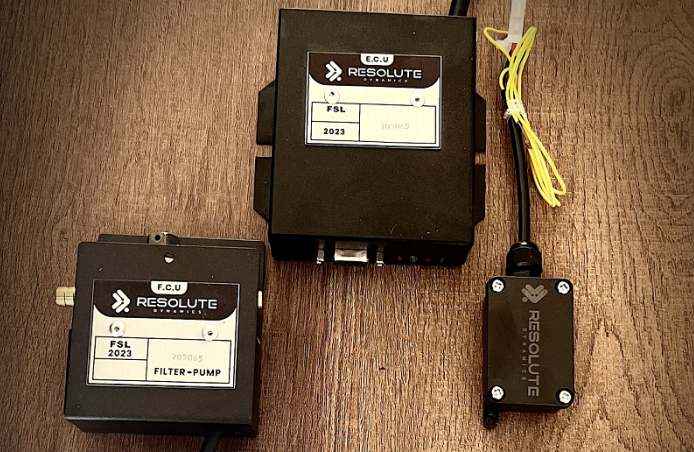
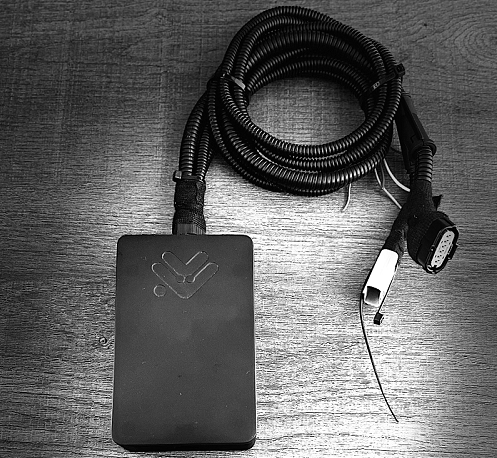
A speed governor is a device that prevents a vehicle from exceeding a preset maximum speed. On modern commercial vehicles it’s electronic, integrated with the engine control unit (ECU) or throttle system, and configurable to different speed caps per vehicle class. This guide covers what a speed governor is, how it works, and the main types in use across fleets today.
Looking for the safety-outcome view (accident data and prevention)? See our companion piece: How Speed Governors Prevent Road Accidents.
How a Speed Governor Works
An electronic speed governor monitors vehicle speed in real time. When the preset threshold is reached, the device intervenes in one of three ways:
- Throttle intervention — the governor caps the fuel or electronic throttle signal so the engine cannot deliver enough power to exceed the cap.
- ECU-level speed cap — the governor communicates directly with the engine control unit, which enforces the limit natively.
- Fuel-injection cutoff — older designs briefly interrupt fuel delivery when the vehicle nears the cap, holding the top speed steady.
Modern devices use a smooth approach curve so the driver feels a gradual resistance rather than an abrupt cut-off, keeping the vehicle stable during the transition.
Types of Speed Governors
Mechanical Governors
The original design — centrifugal weights that respond to engine RPM and physically restrict the throttle linkage. Still found on older equipment, but rare on modern road vehicles.
Electronic Speed Governors
The current standard for commercial vehicles. Small electronic units that read wheel-speed or engine-speed signals and intervene through throttle, ECU, or fuel management. Configurable, tamper-resistant, and typically log speed events for compliance audit.
GPS-Based Speed Governors
The newest category. GPS location is used to apply different speed caps in different zones — for example, a lower cap inside school zones or camp areas, higher cap on highways. Ideal for fleet operators with mixed operating environments.
Speed Governor vs Speed Limiter — Is There a Difference?
The terms are usually interchangeable. Historically, speed governor referred to mechanical devices on engines, while speed limiter is the more current term for electronic speed-cap devices on modern vehicles. On today’s commercial fleets the two words describe the same product category. When comparing suppliers, focus on device certification, calibration accuracy, and fleet-integration options rather than the label.
Where Speed Governors Are Used
Speed governors are mandatory on many commercial vehicle categories worldwide:
- UAE — required on school buses, taxis, passenger transport, and heavy goods vehicles under RTA and ECAS.
- Malaysia — JPJ SLD mandate for commercial vehicles.
- European Union — UN R89 standard for heavy commercial vehicles.
- Canada — Ontario and Quebec require 105 km/h speed limiters on heavy trucks over 11,794 kg.
- Philippines — RA 10916 mandates limiters on public utility and specified commercial vehicles.
What to Look For in a Speed Governor
- Certification for your jurisdiction — ECAS/EQM for UAE, UN R89 for EU, DTI DAO for Philippines, etc.
- Calibration accuracy — devices must hold the cap within a tight tolerance under varying loads and gradients.
- Tamper resistance — sealed housing, event logging, and technician-only reconfiguration.
- Fleet integration — ability to feed data to your telematics or dispatch system.
- Local warranty and support — in-country service to avoid overseas RMA cycles.
Need a Certified Speed Governor for Your Fleet?
Resolute Dynamics manufactures certified speed governor devices used on 200,000+ vehicles across 20+ countries. We handle device supply, calibration, fitment, and compliance certification.
→ Request a quote or call +971 50 213 0225
→ Prefer email? sales@resolute-dynamics.com

The Resolute Dynamics team designs and manufactures speed limiters (SLD), GPS tracking, and automotive safety systems used on 200,000+ vehicles across 20+ countries. We write about fleet compliance, road-safety regulation, and vehicle-safety technology, including Malaysia’s JPJ SLD mandate, UAE RTA rules, and global standards like UN R89, to help fleet operators and transport businesses stay safe and compliant.