Petroleum Development Oman (PDO) operates one of the largest oilfield transport ecosystems in the Middle East, with hundreds of contractor fleets running through Oman’s interior and Empty Quarter perimeter. Multi-speed limiter technology — a device that switches between preset speed caps based on GPS location — has become standard equipment on those fleets. This article covers why, how the technology works, and what PDO-standard fleet safety requires today.
What a Multi-Speed Limiter Does Differently
A conventional speed limiter caps top speed to a single preset value. A multi-speed limiter switches between multiple preset caps based on the vehicle’s current location. In an oilfield operation this matters because the speed limits vary sharply by zone:
- Highway approach roads — higher speed cap for productive transit.
- Unsealed access tracks — lower cap for gravel and rough-terrain safety.
- In-camp roads and process areas — lowest cap, often 20–30 km/h, to protect personnel and equipment.
- Restricted zones — specialised caps for tank farms, wellheads, or process facilities.
The transition between zones happens automatically as the vehicle crosses a geofenced boundary — no driver action, no manual switch.
How Fleet Deployments Are Configured
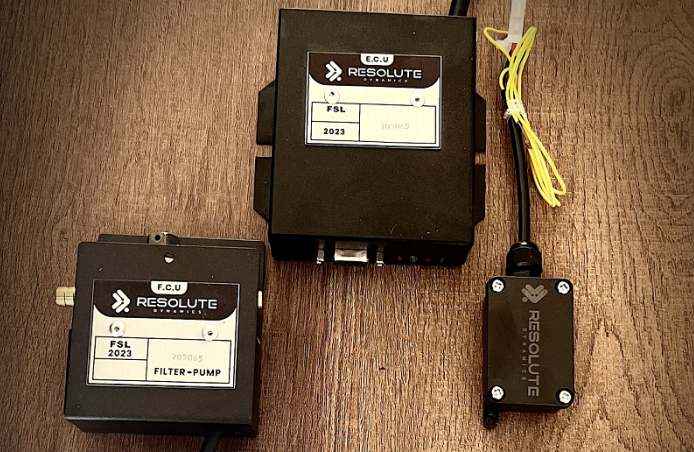
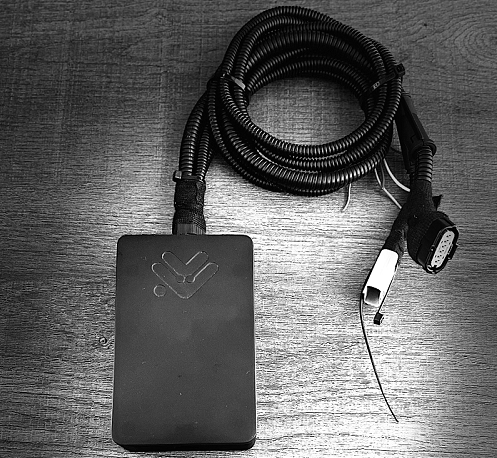
Electronic Control Unit
The core device installed on each vehicle. Reads GPS location, matches to the active geofence, and applies the corresponding speed cap through throttle or ECU-level intervention.
Speed Indicator Unit
A driver-facing display showing current speed, current cap, and active zone. Removes ambiguity about which cap is in force.
Location Scan System
Manages the geofence library on the device. Fleet-level deployments typically support 25+ distinct speed zones and 25+ stored geofences, with radius management out to 100+ km for cross-region operations.
Reporting and Event Logs
All overspeed events, zone transitions, and cap engagements are logged with timestamp and driver ID for compliance audit.
PDO Fleet Safety Standards — What They Require
PDO’s contractor-fleet safety expectations are among the strictest in the region. Devices deployed on PDO-serving fleets typically must meet:
- Speed cap by terrain and zone — configurable per road category and per restricted area.
- Automatic geofence enforcement — no reliance on driver action.
- Tamper resistance and sealed installation — certified installers only.
- Event logging and audit trail — overspeed events attributable to driver.
- Retrofit compatibility — devices must work across mixed-age contractor fleets, from new heavy trucks to older light vehicles.
Why Standard Speed Limiters Aren’t Enough for Oilfield Operations
A single-cap limiter set to the highest allowable speed leaves the vehicle unsafe in in-camp zones. Set to the lowest cap, it destroys productive transit time on the highway approach. Neither compromise works for a real oilfield operation, which is why dual and multi-speed limiter technology became the standard.
The Broader Oman Fleet Context
Beyond PDO, multi-speed limiter technology now appears on other Oman heavy-fleet operations — municipal transport, cement and aggregate haulage, and long-distance logistics into the interior. Our Oman fleet solutions cover the full range of vehicle categories and operating environments across the sultanate.
Need Multi-Speed Limiter Fitment for Your Oman Fleet?
Resolute Dynamics manufactures the multi-speed limiter devices deployed on contractor fleets across Oman. We handle geofence configuration, fitment through authorised installers, and ongoing calibration support.
→ Request a fleet quote or call +971 50 213 0225
→ Prefer email? sales@resolute-dynamics.com

The Resolute Dynamics team designs and manufactures speed limiters (SLD), GPS tracking, and automotive safety systems used on 200,000+ vehicles across 20+ countries. We write about fleet compliance, road-safety regulation, and vehicle-safety technology, including Malaysia’s JPJ SLD mandate, UAE RTA rules, and global standards like UN R89, to help fleet operators and transport businesses stay safe and compliant.