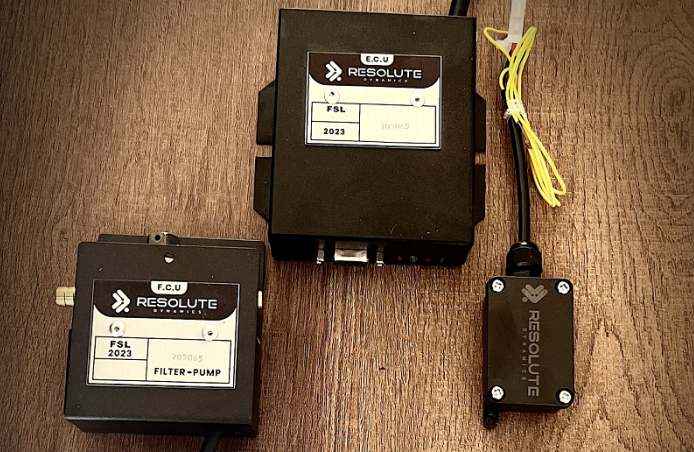
Speed is the single most common contributing factor in fatal road crashes worldwide. Speed governors address this directly by preventing a vehicle from exceeding a preset maximum. This guide covers the mechanism, the global statistics, and the real-world impact of governor fitment on commercial fleet safety outcomes.
For the mechanical / educational view — what a speed governor actually is and how it works — see our companion piece: What Is a Speed Governor? How It Works, Types & Uses.
The Global Speeding Fatality Picture
According to the World Health Organization’s Global Status Report on Road Safety, approximately 1.19 million people die on the world’s roads each year, and speed is a factor in a large proportion of those fatalities. The WHO reports:
- A 1% average increase in vehicle speed produces roughly a 4% increase in fatal-crash risk.
- Reducing average speeds by even 5% can prevent a significant number of fatal crashes on commercial routes.
- Commercial-vehicle crashes at high speed produce disproportionately severe injuries to other road users because of vehicle mass.
The pattern is consistent across jurisdictions: speed reduction is the single most effective infrastructure-free intervention for lowering road death.
How Speed Governors Prevent Accidents
Removing the High-Speed Tail
A speed cap doesn’t change average vehicle speed by much. What it changes is the tail of the distribution — the small percentage of time vehicles spend at the highest speeds. That tail is where the highest-risk crashes happen, so removing it produces disproportionate safety gains.
Reducing Impact Energy
Kinetic energy scales with the square of speed. A collision at 120 km/h releases 44% more energy than the same collision at 100 km/h. Speed governors don’t prevent every crash, but they reduce the energy of those that do happen — which is what determines injury severity.
Cutting Reaction-Time Failures
Higher speed means less time to react to hazards. At 100 km/h a vehicle covers 28 metres per second; at 120 km/h it covers 33 metres per second. That 5-metre gap is often the difference between avoiding a hazard and hitting it.
Reinforcing Safer Driver Behaviour
Drivers who know their vehicle cannot exceed a cap stop trying. Over time, behaviour normalises around the cap, and fleets see fewer speeding incidents, fewer disciplinary events, and lower churn from stress-related departures.
Vehicle Categories Where Governor Fitment Has the Highest Impact
- School buses — where the passengers are children and any incident is a public event. See our school bus safety solutions.
- Heavy goods vehicles — where mass makes any crash disproportionately damaging to other road users.
- Passenger transport buses — long-haul coaches and staff-transport vehicles.
- Taxis and rideshare — where high urban-mileage operators face compounded exposure.
Real-World Adoption Patterns
Jurisdictions that have mandated speed limiters on heavy commercial vehicles report measurable safety improvements after mandate. Ontario and Quebec (105 km/h since 2009), the EU (UN R89 for heavy trucks), the UAE (RTA-mandated categories), and the Philippines (RA 10916) all show the same directional pattern: governed vehicles are involved in fewer high-severity incidents per kilometre travelled.
Challenges and Considerations
Speed governors are not a complete solution. They address top-speed accidents but not:
- Distraction and fatigue-related incidents at normal speeds.
- Weather and road-surface incidents where any speed is unsafe.
- Following-distance and lane-discipline issues.
For a comprehensive safety programme, speed governors work best combined with driver training, fatigue management, and telematics-based coaching.
Ready to Reduce Fleet Accident Rates?
Resolute Dynamics manufactures certified speed governor devices used on 200,000+ vehicles across 20+ countries. We help operators baseline current incident rates, install and calibrate devices, and measure the safety outcomes.
→ Talk to our safety team or call +971 50 213 0225
→ Prefer email? sales@resolute-dynamics.com

The Resolute Dynamics team designs and manufactures speed limiters (SLD), GPS tracking, and automotive safety systems used on 200,000+ vehicles across 20+ countries. We write about fleet compliance, road-safety regulation, and vehicle-safety technology, including Malaysia’s JPJ SLD mandate, UAE RTA rules, and global standards like UN R89, to help fleet operators and transport businesses stay safe and compliant.