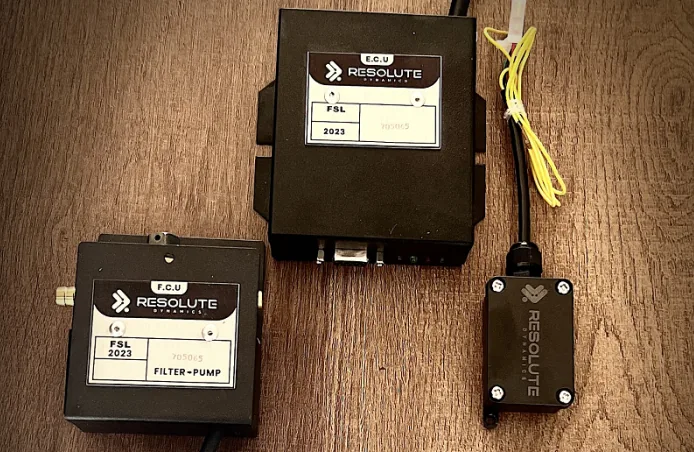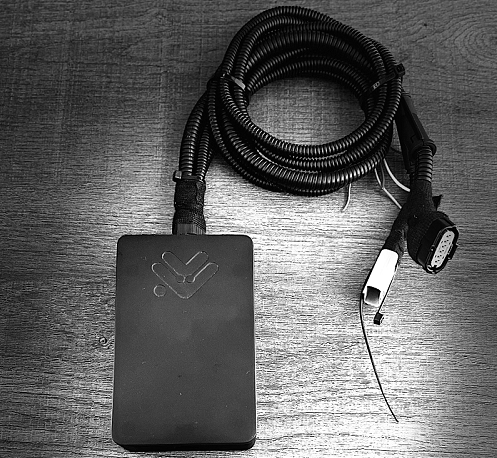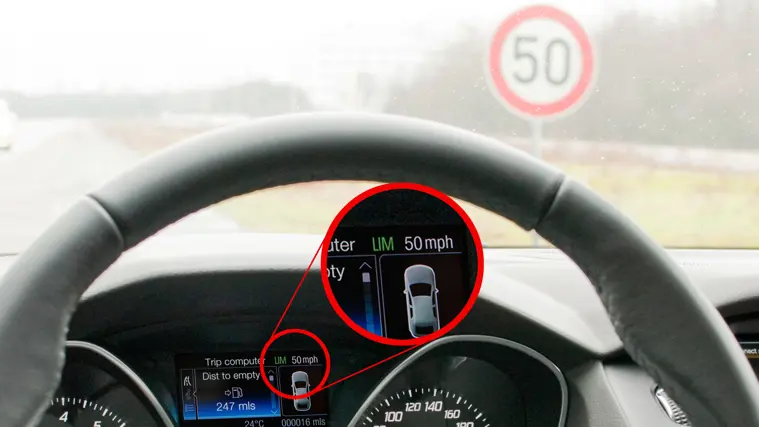
Running a fleet in British Columbia means living by a clear set of rules, and over the past two years those rules have tightened around two pieces of technology: the speed limiter and the telematics system inside the cab. We work with carriers across the province every week, and the same questions keep coming up.
Does my truck need a limiter? What happens if it isn’t set right? Do I also need an electronic logging device? This guide answers all of it in plain language, with the real numbers and the real laws behind them, so you know exactly where your fleet stands.
Does British Columbia require speed limiters on commercial trucks?
British Columbia requires speed limiters on most heavy commercial trucks as of April 5, 2024. The mandate was announced by the Province in December 2023 and brought into force through amendments to the Motor Vehicle Act Regulations (MVAR), explained in detail in CVSE Bulletin 05-2024 from the British Columbia Commercial Vehicle Safety & Enforcement branch.
The reasoning behind the rule is straightforward. Heavy trucks travel long distances at high speed, and a crash at 120 km/h carries far more force than the same crash at 105 km/h.
By capping the top speed of these vehicles, the Province aims to cut both the number and the severity of speed-related collisions, lower greenhouse gas emissions, and bring British Columbia in line with the rest of the country’s freight corridors. For a fleet owner, the practical message is simple: if your trucks operate in British Columbia, the limiter is no longer optional equipment.
Which vehicles must comply
The mandate applies to heavy commercial vehicles with a gross vehicle weight rating of more than 11,793 kilograms (about 26,000 pounds) that were manufactured after 1994 and carry an electronically controlled engine.
All three conditions have to be true at once. A truck that weighs over the threshold but rolled off the line in 1992 falls outside the rule, and so does a heavy vehicle without an electronically controlled engine, because the limiter works by communicating with that engine’s control module.
This weight class covers the bulk of working freight equipment on provincial highways: tractor units, heavy straight trucks, dump trucks, tankers, and most class 8 vehicles. If you manage a mixed fleet, the safest move is to check the GVWR plate and engine model of each unit rather than guess, since the line sits at a specific number and enforcement officers check it precisely.
The 105 km/h maximum speed setting
Every covered vehicle must have its speed limiter activated, set, and accurately programmed to a maximum of 105 km/h (65 mph). That figure is the legal ceiling, not a suggestion. The device communicates directly with the engine and prevents it from accelerating past that point, no matter how hard the driver presses the throttle.
It helps to put that number in context. Highway and expressway speed limits across British Columbia generally range between 110 and 120 km/h, so a properly programmed limiter sits a notch below the posted maximum on the fastest roads.
The limiter doesn’t just need to exist in the vehicle; it has to be kept in good working order and programmed to the exact figure, and tampering with the technology is prohibited under the same regulation.
Who is exempt from the BC speed limiter mandate?
Three main categories are exempt from the British Columbia speed limiter mandate: emergency vehicles, motorhomes, and vehicles whose electronic control module is incapable of meeting the speed limiter requirement. These exclusions are written directly into the regulation, so they are not a matter of interpretation.
Emergency vehicles are exempt for obvious operational reasons, since restricting a fire engine or ambulance to 105 km/h would work against its purpose. Motorhomes fall outside the rule because they are personal recreational vehicles rather than commercial freight equipment, even when they cross the weight threshold.
The third category is more technical: some older or specialized engines simply cannot be programmed to hold the limit, and where the electronic control module is genuinely incapable of meeting the requirement, the vehicle is excused. That exemption is narrow, though, and it is not a loophole for fleets that would rather skip the upgrade.
Out-of-province and cross-border carriers
Operators based outside British Columbia are not off the hook. Carriers from other provinces, territories, and the United States must have their speed limiters activated before entering British Columbia. The rule follows the road, not the licence plate, which means a truck registered in Alberta or Washington State is held to the same 105 km/h ceiling the moment it operates within the province.
This is where the cross-country consistency really matters. Because heavy commercial vehicles routinely run between British Columbia, Ontario, and Quebec, where the same requirement already exists, a fleet that programs its trucks to 105 km/h can move across all three provinces under one consistent setting.
For long-haul operators, that uniformity removes a lot of guesswork and keeps the whole fleet on the right side of the law no matter which corridor a load travels.
What are the penalties for non-compliance in British Columbia?
Non-compliance carries a fine of $368, which includes a victim surcharge, along with 3 driver penalty points on the driver’s record. The penalty applies to several distinct contraventions, and an enforcement officer can issue the ticket at a roadside inspection.
The violations that trigger the fine include the following:
- Operating without a speed limiter when the vehicle is required to have one.
- Failing to activate or accurately program the limiter to the 105 km/h maximum.
- Tampering with the speed limiter technology, which the regulation specifically prohibits.
The dollar figure is only part of the cost. Penalty points sit on a driver’s profile, repeated violations draw closer scrutiny from safety enforcement, and a contravention recorded against a carrier’s National Safety Code profile can affect its overall safety standing. For a working fleet, the indirect costs of a compliance failure, from inspection delays to insurance questions, often outweigh the ticket itself.
How does BC compare to Ontario and Quebec speed limiter laws?
British Columbia is the third Canadian province to mandate speed limiters on heavy commercial trucks, joining Ontario and Quebec, and all three cap the top speed at the same 105 km/h. The shared ceiling is the reason a single limiter setting now works across the country’s busiest freight provinces.
| Province | Effective year | Speed cap | Governing authority |
|---|---|---|---|
| Ontario | 2008 | 105 km/h | Highway Traffic Act |
| Quebec | 2009 | 105 km/h | Highway Safety Code |
| British Columbia | 2024 | 105 km/h | Motor Vehicle Act Regulations |
The results from the provinces that moved first are part of why British Columbia followed. According to figures cited by the British Columbia Ministry of Transportation and Infrastructure, Ontario recorded a 73% reduction in speed-related crashes involving commercial vehicles after its mandate took effect.
That kind of measurable safety gain, combined with the practical benefit of one consistent rule from Ontario through to the West Coast, made the case for bringing British Columbia into alignment with its eastern neighbours.
What telematics and ELD rules apply to BC fleets?
Federally regulated carriers operating in British Columbia must use a Transport Canada-certified electronic logging device (ELD), and that requirement has been under full enforcement since January 1, 2023.
The ELD rule comes from the federal Commercial Vehicle Drivers Hours of Service Regulations, which came into force on June 12, 2021 and then moved through a progressive enforcement period before penalties began.
An electronic logging device is a tamper-resistant unit that syncs with the engine and automatically records driving time, which makes a driver’s Record of Duty Status (RODS) far harder to fudge than a paper logbook. Unlike the United States system, where manufacturers self-certify, Canadian ELDs must be tested and certified by a third-party body accredited by Transport Canada before they can be used.
That extra certification step is worth keeping in mind when you shop for a device, because only the units on Transport Canada’s certified list count as compliant.
Federal carriers versus provincial carriers
The single most important distinction in telematics compliance is whether your operation is federally or provincially regulated. Federally regulated carriers, meaning those that cross provincial, territorial, or international boundaries, must run a certified ELD.
Carriers whose vehicles operate solely within British Columbia are not currently required to use an ELD, and that holds until the Province amends its own regulations.
This split is exactly where many fleet owners get tripped up. A truck that stays inside British Columbia and a truck that runs a regular route into Alberta look identical in the yard, but they sit under different rules.
If even part of your operation crosses a provincial line, the federal ELD mandate likely applies to those drivers, so it pays to sort your fleet into intra-provincial and extra-provincial groups before assuming you are exempt.
The 160 km home-terminal exemption
There is one widely used exemption that applies regardless of jurisdiction: the 160-kilometre rule. A driver who operates within a 160 km radius of the home terminal and returns to that terminal each day is not required to complete a Record of Duty Status, and therefore does not need an ELD.
This exemption fits local and regional operations well, such as a delivery fleet that works a metropolitan area and parks at the same depot every night. The condition is strict, though. The driver has to stay inside the radius and return to the home terminal within the day, so a single long run outside that circle can pull the trip back under the logging requirement.
How telematics goes beyond ELD
Hours-of-service logging is the legal floor, but modern telematics covers far more ground. A connected device today does much more than record driving time, and the broader data is what turns a compliance tool into a fleet management advantage.
A full telematics platform can track location through GPS, set geofences around school zones and depots, monitor engine performance and fault codes, watch fuel consumption, and flag risky driver behaviour such as harsh braking or speeding.
When that data is tied back to your maintenance and inspection routines, problems get caught before they become roadside failures, which protects both your safety record and your uptime. In other words, the same hardware that keeps you legal can also lower your operating costs.
How to make your BC fleet compliant with Resolute Dynamics
Getting a British Columbia fleet fully compliant comes down to five practical steps: confirm which trucks are covered, install a speed limiter and program it to 105 km/h, add adaptive or dual control where routes vary, integrate GPS and telematics for record-keeping, and secure the documentation that proves it all.
We handle each of these stages so a fleet can move from uncertainty to road-ready without juggling several vendors.
Speed limiter and speed governor installation
We install a speed limiter and speed governor on each covered vehicle and program it to the exact 105 km/h ceiling the regulation demands.
The device connects to the engine’s electronic control module and holds the limit consistently, so the truck cannot exceed it even on a long downhill highway stretch. Our units are compatible with both newer and older electronically controlled engines, which matters for mixed fleets that run a range of model years.
Adaptive and dual limiters for mixed routes
Some vehicles move between very different environments in a single shift, and a fixed setting is not always the best fit.
For those operations, an adaptive speed limiter uses GPS and geofencing to adjust the cap automatically by location, while a dual and multi speed limiter lets you switch between preset speeds for school zones, city streets, and open highway. A transit vehicle might hold 30 km/h near a school and open up to the legal maximum on the highway, all without driver input.
GPS tracking and telematics integration
We pair the limiter with GPS tracking systems so your fleet’s speed compliance, location, and engine data all live in one place.
For carriers that cross provincial lines and need hours-of-service logging, this integration supports the record-keeping side of compliance and gives dispatch a live view of the whole fleet. The same data feeds fuel monitoring and maintenance scheduling, turning a regulatory requirement into day-to-day operational insight.
Speed limiter certification and audit-ready records
Compliance is easier to prove when you hold the paperwork to back it up. We provide a speed limiter certificate confirming that each device is installed, activated, and programmed to the required setting, which gives drivers and fleet managers a clear document to present during an inspection or safety audit.
Keeping these records organized alongside your telematics data is the simplest way to stay audit-ready every day rather than scrambling when an officer asks.
Frequently Asked Questions
When did BC’s speed limiter law take effect? The British Columbia speed limiter mandate took effect on April 5, 2024, after being announced by the Province in December 2023.
What speed must a BC speed limiter be set to? Every covered vehicle must have its limiter programmed to a maximum of 105 km/h (65 mph) and kept in good working order.
Which trucks need a speed limiter in British Columbia? The rule applies to heavy commercial vehicles with a gross vehicle weight rating over 11,793 kilograms, manufactured after 1994, and fitted with an electronically controlled engine.
What is the fine for not having a speed limiter in BC? Non-compliance carries a $368 fine, including a victim surcharge, plus 3 driver penalty points.
Do out-of-province trucks need speed limiters in BC? Yes. Carriers from other provinces, territories, and the United States must have their speed limiters activated before operating within British Columbia.
Are ELDs required for fleets operating only inside BC? Not at present. Only federally regulated carriers that cross provincial, territorial, or international boundaries must run a certified ELD; vehicles operating solely within British Columbia are not yet required to.
What is exempt from the BC speed limiter mandate? Emergency vehicles, motorhomes, and vehicles whose electronic control module is incapable of meeting the requirement are exempt from the mandate.
Related Canada guides: Ontario 105 km/h mandate – Canada fleet compliance service.

The Resolute Dynamics team designs and manufactures speed limiters (SLD), GPS tracking, and automotive safety systems used on 200,000+ vehicles across 20+ countries. We write about fleet compliance, road-safety regulation, and vehicle-safety technology, including Malaysia’s JPJ SLD mandate, UAE RTA rules, and global standards like UN R89, to help fleet operators and transport businesses stay safe and compliant.