
TL;DR: For real-world safety and compliance, school bus speed limiters should be tested at least quarterly, even if your local rulebook sounds softer. In many regions, student transport authorities expect a layered approach with daily driver checks, scheduled bench/road tests, and mandatory post-maintenance re-tests.
That rhythm keeps children protected and your school transport compliance certificates defensible if anything goes wrong.
Key Takeaways
- School buses need stricter speed limiter testing than general freight or staff buses because they carry children every day on fixed, highly visible routes with very low tolerance for risk.
- Common regulatory patterns: UAE – quarterly; India – bi‑annual plus pre‑school-year; EU – annual plus post‑maintenance, while serious operators worldwide treat quarterly testing as the baseline even where law is vague.
- A proper test is not just a quick drive. It includes visual and electronic inspection, a controlled road test at governed speed, GPS verification of true speed, and signed documentation with tamper seal verification.
- Drivers should run a daily pre-trip speed governor check, watching the indicator lights during self-test and doing a short governed-acceleration feel check before picking up students.
- Skipping or failing tests is not paperwork trivia. It can trigger fines, license restrictions, loss of school transport contracts, and heavy liability exposure if a crash or complaint surfaces.
- Testing must be documented and retained for 3–7 years. Digital logs tied to each bus and route are the easiest way to satisfy school transport compliance certificate audits or insurance reviews.
- Tools like Resolute Dynamics’ school bus platform take much of the strain off staff by automating self-tests on ignition, pushing remote reports to a central dashboard, and generating compliance certificates.
- Any maintenance that touches the engine, ECU, throttle, or speed governor wiring should be closed out with a post-maintenance re-test. No “we’ll check it next quarter” shortcuts.
What Is a School Bus Speed Limiter?
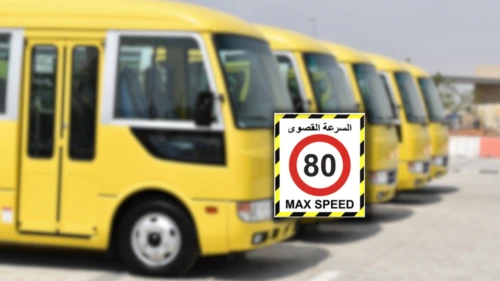
A school bus speed limiter (often called a speed governor) is an electronic control device that caps the maximum road speed of a school bus. It usually works through the engine control unit (ECU) or an add-on control module. Once the school bus speed cap is set, the bus will not exceed that speed, even with the accelerator flat to the floor.
For example, a school bus might be governed to 80 km/h even though the same chassis in freight service is allowed 90 km/h or more. In a lot of jurisdictions, that limiter is mandated by student transport safety regulation and checked as part of the annual vehicle inspection for school buses.
Inspectors treat that governor the same way they treat brakes or steering: if it is missing, tampered, or out of spec, the bus does not pass.
Why School Bus Speed Limiters Need Stricter Testing Than Regular Fleet

With school buses, you are not just hauling cargo. You are hauling kids who often stand up, turn around, or forget their seatbelts the second the driver looks away. They have almost no control over their own safety in a crash. That is why regulators tighten the screws on speed limiter testing for these vehicles.
Regulatory bodies now push for more frequent checks, lower governed speeds, and detailed records for every bus. A faulty school bus governor is treated as a child safety emergency, not a minor maintenance note. I have seen operators lose entire contracts because an investigation revealed that the governor had not been properly tested in months.
School buses also work differently than most mixed-use fleets. They run the same routes every school day, at the same times, through high-risk environments like school zones, busy intersections, and dense urban traffic. That predictability makes any overspeed event easier to spot, and it puts a spotlight on operators who slack on testing.
A failure of the speed limiter directly raises risk for young, belt‑inconsistent passengers and all the pedestrians gathered around stops and school gates.
Student transport authorities now rank the speed limiter as a critical safety system. So policies often demand:
- More frequent inspections than those applied to freight trucks or staff buses.
- Lower governed speed caps for school buses compared with coaches or goods vehicles running the same highways.
- Formal testing protocols and tamper detection, documented in the same file that holds the school transport compliance certificate.
- Recorded testing frequency that matches what the operator committed to in their student transport license or safety plan.
From a risk and legal point of view, a school bus speed limiter that is out of calibration is not a minor defect. It can void parts of your insurance coverage, open school boards and contractors to lawsuits, and call into question your entire student speed governance program. Regulators remember the fleets that let this slide, and so do parents.
Testing Frequency Requirements by Region

Every jurisdiction writes its rules a little differently, but they are all walking the same path: more frequent and traceable testing for school bus speed limiters compared with ordinary commercial fleets.
Summary: In the UAE, student transport and traffic authorities usually lean on quarterly school bus speed governor testing. India often requires bi‑annual tests plus a pre‑school-year check.
Across the EU, most countries tie limiter checks to the annual inspection requirement plus post‑maintenance verification. If you want a simple global rule, treat quarterly testing as the minimum even if your local law sounds looser on paper.
Typical Testing Frequency by Jurisdiction
The table below is a simplified snapshot of how different regions typically approach school bus speed limiter testing. Local details vary, but the pressure points are similar everywhere.
| Region | Regulating / Student Transport Authority | Minimum Testing Frequency | Penalty for Missed Test (Indicative) |
|---|---|---|---|
| UAE | Local student transport authority / traffic police | Quarterly speed limiter inspection plus checks at annual vehicle inspection | Vehicle grounding and fines often in the range of USD 275–550 per vehicle, with the added risk of losing the school route permit for repeated non-compliance. |
| India | State Transport Departments / School Bus Safety Committees | Bi‑annual testing (every 6 months) plus pre‑school‑year testing before term start. | Fines often around USD 60–120 equivalent, and in serious cases seizure of the fitness certificate and prohibition from school transport duty until the defect is fixed. |
| EU (general pattern) | National road safety authorities, sometimes education ministries for school vehicles | Annual verification during periodic inspection plus post‑maintenance re-tests after any governor-related or ECU work. | Inspection failures, retest fees, and fines that can exceed USD 200–400, along with blocked renewal of roadworthiness and school transport compliance certificates. |
| Global Best Practice | Fleet / school board internal policy | Quarterly technical tests plus daily driver checks, regardless of legal minimum. | Internal safety policy violations, greater liability and insurance risk, and potential penalties if auditors uncover gaps during a regulatory review. |
Those numbers are only indicative. They bounce around by emirate, province, or member state. The pattern is what matters: skipped or late testing ends in grounded buses, fines, and sometimes the loss or suspension of student transport licenses. I have watched operators scramble mid-term to replace grounded buses because a paperwork check uncovered stale limiter tests.
If your fleet works in more than one region, the easiest rule is to follow the strictest requirement across your footprint. Build your school bus testing schedule around a quarterly rhythm, then layer term-start testing for any bus dedicated to student routes. That keeps you ahead of inspectors instead of constantly catching up.
If you are wrestling with how to line up these visits without overwhelming your mechanics, this guide on calibration scheduling for large fleets is a good place to start.
School Bus Speed Limiter Testing Procedure
Testing a governor properly is not just driving down the road and “feeling” that the bus slows down. A good school bus speed limiter inspection follows a clear governor testing protocol carried out by a trained, certified technician. The driver’s daily check is your early warning system, but it is not enough for formal school bus speed limiter testing.
In short: a full procedure blends a thorough visual inspection, an electronic self-test or diagnostic scan, a controlled road test or dynamometer bench test, GPS cross-verification of actual road speed, brake interaction checks, and final documentation with tamper seal verification. Every step should be recorded in a way that stands up during a school transport audit.
Visual & Electronic Inspection
The visual and electronic checks make sure the hardware is present, correctly installed, and talking to the ECU before you ever take the bus onto the road. Skipping this is how people miss a bypass switch or a half-unplugged connector.
Key steps:
- Confirm installation identity: Match the speed limiter make, model, and serial number to the records for that vehicle and its school transport compliance certificate. If the hardware on the bus does not match the paperwork, stop and find out why.
- Check wiring and harnesses: Inspect looms and connectors for loose plugs, chafing, exposed copper, and any hint of tampering such as hidden switches, strange splices, or connectors that look newer than the rest of the harness.
- Inspect tamper seals: Confirm that manufacturer or authority seals are intact, in the right locations, and properly crimped. Missing or damaged seals should be treated as a red flag. For details on layout and seal patterns, see the article on tamper seal verification.
- Run electronic self-test: Hook up OEM diagnostic software or a capable scanner to the ECU and limiter module to:
- Read the current governed speed setpoint.
- Check for stored or pending speed limiter fault codes.
- Confirm that the ECU and limiter module are communicating without errors or intermittent dropouts.
- Compare setpoint to regulation: Make sure the configured value matches the local school bus speed cap. For example, in regions where freight is capped at 90 km/h, the school bus might legally need to sit at 80 km/h or lower.
On more modern setups, including Resolute Dynamics’ school bus solution, the system can run a self-test on ignition and push the results straight into your fleet platform. That does not replace the workshop visit, but it can cut diagnostic time and build an automatic log of pass/fail events between formal tests.
Road Test Protocol
The road test is where you find out if the configuration holds up under real-world driving. On paper, everything may look perfect. On the road, a marginal sensor or poorly calibrated governor will usually show its hand.
| Road Test Attribute | Typical Target / Practice |
|---|---|
| Test route length | 3–5 km on a safe, low‑traffic road or, ideally, a controlled test track with room to brake safely. |
| Governed speed tolerance | Within ± 3 km/h of the setpoint. For an 80 km/h cap, you are usually aiming for something like 77–83 km/h at full throttle. |
| Brake interaction test | Mandatory check that the governor never degrades brake performance and that the bus decelerates cleanly and predictably from governed speed. |
| Test duration | Roughly 10–20 minutes, including several acceleration runs and planned braking events. |
Typical steps:
- Pick a safe test route. Confirm the bus is mechanically sound first by checking tires, steering, and base brake performance. Never use the limiter test to discover that your brakes are fading.
- On level ground, accelerate steadily up to the governed speed. Use smooth throttle so you can feel the governor transition instead of confusing it with gear changes or hills.
- With the accelerator fully depressed, confirm that:
- The bus stops gaining speed at or below the allowed limit.
- There is no surging, on-off cycling, or overspeed spikes, which are common signs of weak calibration or intermittent sensor issues.
- Carry out at least two governed-speed to full stop braking runs. Check that:
- The braking feels smooth and straight with no pulling or pulsing linked to engine power.
- The governor does not fight against engine braking or introduce odd behavior if the driver hits the brakes hard in an emergency stop.
In some locations, finding a safe road for these checks is a battle. In those cases, a good dynamometer bench test can stand in, simulating load and speed while you watch the governed behavior through sensors and telemetry. Regulators often accept dyno results if they are properly documented.
GPS Cross-Verification
I have seen more than one fleet fail an audit because they trusted dash speedometers alone. Those gauges are often a few kilometers per hour off, especially on older buses or after tire changes. That is why any serious test includes a GPS cross-check of the governed speed.
- Install an external GPS data logger for testing or pull data from the built-in GPS in your school bus fleet management system.
- During the governed-speed portion of the road test, capture:
- The indicated dashboard speed at steady-state.
- The GPS-calculated speed over the same stretch of road.
- Time and distance driven under governed conditions, so you can prove the reading was stable, not a brief spike.
- Compare the two. The difference between indicated speed and GPS speed should fall within your accepted tolerance, often ± 3 km/h at the governed cap. If you are outside that window, investigate calibration or instrument errors.
Modern telematics platforms can go a step further and automatically overlay speed traces with RFID student tracking integration. That lets safety officers verify that every trip that had children on board stayed under the governed cap, not just the test runs. In a dispute or complaint, that data is gold.
Documentation & Certification
Solid documentation is what saves you in a regulatory audit of school transport or an insurance investigation. Inspectors and lawyers will care less about how confident your drivers felt and much more about what is written, signed, and stored.
| Compliance Certificate Attribute | Typical Value / Practice |
|---|---|
| Issuing authority | Certified technician or an approved testing center, with signature, stamp, and contact details. |
| Validity period | Often 3–12 months, aligned to whatever the region mandates for limiter checks. |
| Retention requirement | Records maintained for 3–7 years per vehicle, according to local rules and insurance expectations. |
| Digital vs paper | Strong trend toward digital records stored centrally rather than relying on individual depots and filing cabinets. |
| Audit access | Quickly accessible to the student transport authority, internal safety teams, and insurers whenever they request them. |
A complete test record should cover more than just a tick in a box. At minimum it usually includes:
- Date, time, and location of the test, including which facility or depot handled it.
- Technician’s name, signature, and certification ID or testing center approval number.
- Vehicle identifiers such as VIN, registration, fleet number, and route designation.
- Measured governed speed, target setpoint, and the tolerance band achieved.
- A GPS printout or exported file clearly linking the run to that specific bus.
- Notes on tamper seal verification, wiring inspection, and any repairs or adjustments carried out.
- A clear pass/fail decision and the next scheduled test date, so there is no debate about when it is due again.
Some advanced solutions can automatically create a school transport compliance certificate entry each time a test passes. With platforms like Resolute Dynamics’ solution, those certificates integrate neatly with your broader compliance audit routine, so fleet managers do not have to chase paper across multiple depots.
Daily Pre-Trip Speed Governor Check (Driver Responsibility)
Quarterly or bi‑annual workshop tests catch slow-burn problems. The daily safety net is the driver behind the wheel. A lot of major incidents trace back to warning lights that were ignored on a busy morning. A short, disciplined daily pre-trip speed governor check closes that gap.
In essence: before students climb aboard, the driver should watch how the dashboard indicators and warning lights behave during self-test, then carry out a quick governed-acceleration feel test in a safe area. Any odd behavior must be reported immediately so the bus can be checked or swapped.
| Daily Pre-Trip Check Attribute | Typical Practice |
|---|---|
| Check duration | About 2–5 minutes as part of the standard pre-trip inspection routine. |
| Driver responsibility | Mandatory in most student transport safety policies and training programs. |
| Indicators checked | Speed limiter status light, general fault light, ABS/ESC, and engine warning indicators. |
| Failure reporting | Immediate report to the depot or transport supervisor, with a clear rule that a bus with serious faults is not dispatched. |
| Documentation | Marked on a digital log or pre-trip checklist and stored in a central system for later review. |
Recommended driver steps:
- On ignition:
- Watch the speed limiter and engine warning lights as the ignition is turned on. They should come on during self-test, then go out once the system checks itself.
- Pay attention to any persistent fault indicators or strange text messages on the display. “Limiter fault” or similar warnings should never be ignored to stay on schedule.
- Low-speed feel test:
- In a safe low-speed area such as a yard or access road, accelerate smoothly up to a moderate speed, not the full governed cap.
- Check that throttle and engine response feel normal. No sudden cut-outs, surging, or hesitation that could point to a misbehaving governor or sensor.
- Report anomalies:
- If any warning light stays on or the acceleration feels wrong, the driver should log the defect and inform the depot right away.
- Fleet policy should spell out that drivers will not be punished for reporting issues, even if it causes a delay. That is how you build a genuine safety culture instead of quiet corner-cutting.
- Digital logging:
- Use a mobile app or onboard terminal to tag the governor portion of the check as a clear pass or fail.
- Feed that record into the broader school bus speed compliance database so managers can see patterns and take action early.
These daily checks are not a substitute for proper school bus speed governor testing. They give you a narrow window of risk between tests instead of months where a hidden fault or tamper could go unnoticed.
How Resolute Dynamics Simplifies School Bus Testing
Once you get beyond a handful of buses, trying to manage limiter tests with spreadsheets and memory gets messy fast. As testing intervals get tighter and documentation demands grow, manual tracking alone almost always leads to missed dates. Resolute Dynamics’ school bus solution is built to turn speed limiter compliance into a repeatable, largely automated workflow.
In brief: the platform coordinates an automated self-test on ignition, pushes remote test results into a central fleet dashboard, generates digital compliance certificates, and links all that to RFID student tracking. That way, you can tie governor health directly to live student journeys and show regulators that your controls work in practice, not just at inspection time.
Self-Test on Ignition
| Self-Test Attribute | Typical Value / Function |
|---|---|
| Test duration | Roughly 5–15 seconds every time the ignition is switched on. |
| Systems checked | Speed limiter module status, ECU communication channel, key sensors, and dashboard indicator circuits. |
| Pass/fail indicator | A clear symbol or message on the dash; in a failure, often paired with an audible tone that is hard to ignore. |
| Fleet reporting | Automatic upload of the event and result to the fleet dashboard, usually in real time or near real time. |
| Failure action | Configurable vehicle hold status plus SMS or email alerts to operations and maintenance staff. |
With a system like this, every key-on becomes a mini governor health check. The driver still has responsibility, but they are backed up by electronics that shout if there is a problem. That cuts the chance of a quiet, chronic failure sneaking through weeks of routes.
Remote Test Result Reporting
Resolute Dynamics plugs into your existing school bus fleet management tools or can sit as the backbone itself. The idea is to get all limiter-related information onto one screen instead of scattered across depots.
- Pools self-test results, formal workshop limiter tests, and any road test logs into a single profile for each vehicle.
- Highlights buses that are sliding past their quarterly or bi‑annual limiter test windows so you can book them before they go out of compliance.
- Supports exports and reports that satisfy a regulatory audit of school transport without two weeks of frantic paperwork chasing.
That central view makes it easier for maintenance planners to line up test appointments without choking the workshop. For very large fleets, pairing the system with disciplined calibration scheduling can cut downtime and keep calibration and testing in sync.
Automated Compliance Certificate Generation
After each successful test, whether it is a complete road test verification or a dynamometer bench test, the platform can auto-build a digital testing documentation certificate. That keeps your records consistent and reduces the chance of human error on forms.
- Vehicle and limiter identifiers, including serials and module versions.
- Measured governed speed, the setpoint used, and confirmed tolerance window.
- Technician ID, time stamp, and test location.
- Next due test date with any jurisdiction-specific comments or conditions.
Those certificates slot into each bus’s digital file and feed into its school transport compliance certificate renewal. During inspections or legal reviews, administrators can pull years of limiter test history in seconds instead of digging through storage boxes at every depot.
RFID Integration for Student-Governor Safety Correlation
One of the smarter moves fleets can make is tying student presence to limiter behavior. RFID student tracking integration is how you do that in a clean way. Every time a student scans on or off, that event can sync with GPS and limiter data from the same trip.
- Prove that every journey with students aboard stayed within the governed speed cap, not just the ones you sampled on test days.
- Record any exception, such as a temporary override by an authorized supervisor, with a timestamp, reason, and responsible person.
This link between student presence and speed governance gives operators a strong defense against complaints, near-miss reports, or media attention after a viral video. You are not just saying “we train our drivers to slow down,” you are showing hard data that the bus was physically incapable of exceeding the limit during those runs.
Common Mistakes in School Bus Speed Limiter Testing (and How to Fix Them)
Even fleets that genuinely care about safety stumble on the same speed limiter issues again and again. Most of these problems are avoidable with clearer rules and better habits.
- Relying only on annual inspection:
- Mistake: Treating the annual vehicle inspection as the only official check of the limiter, with no in-house program in between.
- Fix: Commit to at least quarterly technical tests, plus daily driver checks and post‑maintenance re-tests. If regulators see that calendar, they will usually look far more kindly on you.
- No documented testing schedule:
- Mistake: Sending buses for tests “when there is time,” which often turns into missed windows and last-minute chaos before audits.
- Fix: Build a calendar-based limiter testing program and drive it through your fleet software or a structured calibration scheduling tool so nothing slips.
- Skipping GPS cross-verification:
- Mistake: Trusting the dash speedometer alone and ignoring the fact that tire sizes, instrument aging, or past repairs can skew readings.
- Fix: Use GPS data from telematics or portable gear on every formal test and keep that output with the certificate.
- Ignoring tamper indicators:
- Mistake: Glancing at the module, seeing “something” wired, and calling it good without checking seals or unexplained wiring changes.
- Fix: Make tamper seal verification part of every test checklist. Photograph and log any change. For process detail, use the guide on tamper-proof seals.
- Not re-testing after maintenance:
- Mistake: Completing engine, ECU, or throttle work and sending the bus straight back into school service without a limiter re-test.
- Fix: Treat post-maintenance re-test as a mandatory final step on any job that touches speed-related systems or wiring, the same way you would road test after brake work.
- Weak daily driver checks:
- Mistake: Assuming the governor is “a workshop item” so drivers get no training on its indicators or symptoms.
- Fix: Build a short, clear pre-trip speed limiter procedure into driver induction and refresher training. Include it in the digital checklist so it is not forgotten on busy mornings.
- Poor documentation retention:
- Mistake: Storing paper certificates in depot offices, where they get lost, water damaged, or filed under the wrong bus.
- Fix: Move to digital certificates and a central system. That way, an auditor can stand in your office and see five years of history on a single screen.
In highly regulated markets, building a regular compliance audit process around speed limiters will flag these gaps early, before a regulator or parent does it for you.
FAQ: School Bus Speed Limiter Testing Frequency
This section answers questions fleet managers, safety officers, and school administrators often ask about how often to test school bus speed limiters and what regulators typically expect.
1. How often should school bus speed limiters be tested?
Most student transport authorities want to see formal testing at least once every 6–12 months on the record, along with daily driver checks. In the UAE, quarterly tests are standard. In India, bi-annual plus pre‑school-year checks are widely used. Across many EU states, you will see at least one annual test tied to inspection plus post‑maintenance checks when something is repaired. From a best-practice standpoint, treat quarterly testing as your starting point everywhere.
2. Who is allowed to perform school bus speed governor testing?
Regulators usually insist that formal speed governor testing be done by a certified technician or at an approved testing center. Drivers can and should do daily pre-trip checks, but those checks are not enough on their own to support your school transport compliance certificate. For audits and courtrooms, only tests signed off by authorized personnel really count.
3. How much does school bus speed limiter testing typically cost?
Costs vary by country, workshop rate, and whether you combine it with other maintenance tasks. As a rough range, a formal limiter test with a road run and full documentation often runs between USD 25–100 per vehicle per visit. Scheduling tests alongside other service work and using systems that automatically capture data can bring your overall cost per bus down by cutting repeat visits and paperwork time.
4. How long must we keep test records?
Many regulators ask for records covering the last 3–7 years, and insurers can request the full run of data for as long as a policy or claim is active. A safer approach is to keep digital archives for the entire service life of each bus, then retain them for several extra years after the vehicle is retired from student duty. Storage is cheap. Missing records get expensive quickly.
5. What happens if a bus fails a speed limiter test?
If a bus fails, it should be pulled from student service immediately. There is no safe way to “use it for one more day” on a school route. The technician must record the failure, identify whether it is a calibration problem, wiring fault, tampering case, or outright device failure, and then fix it. Once the repair is complete, a post-maintenance re-test needs to confirm that the limiter is back in spec before the bus carries students again.
6. How should we handle mid-term governor failures between scheduled tests?
Mid-term failures are common in the real world. They show up as new warning lights, weird driving symptoms, or alerts from telematics. Treat them the same as any critical defect:
- Immediately ground the bus from student service until you know what is wrong.
- Investigate and repair the root cause rather than just clearing fault codes.
- Carry out a full speed limiter re-test, including road verification, before returning it to route work.
- Record the entire episode in your school bus failure documentation system, following the process outlined in school bus failure documentation.
7. Are daily driver checks really necessary if we have quarterly tests?
Yes, they are. Quarterly tests catch slow drift and long-term issues. Daily checks are the only way you will spot sudden faults, fresh tampering, or a module that failed overnight. Regulators and courts look for that continuous safety culture, not just a stamp every few months. In incident reviews, operators who can show consistent daily check records have a much stronger position.
8. Does adjusting the governed speed require a new test?
In most places, yes. Any change to the school bus speed cap or limiter configuration should be followed by a documented test with GPS cross‑verification and updated certificates. Treat it like a new installation from a compliance point of view. If you are unsure how to handle the calibration itself, the calibration procedure for fleet technicians walks through that step-by-step.
Final Summary: Build a Safe, Auditable Testing Rhythm
School bus speed limiter testing frequency has moved far beyond a simple yearly tick in a box. Modern expectations combine several layers: daily driver checks, quarterly or bi‑annual technical testing, mandatory post‑maintenance re-tests, and tight documentation for every single bus on student routes.
If you adopt a quarterly minimum, enforce disciplined daily checks, and lean on tools like Resolute Dynamics’ school bus solution for automated self-tests and digital certificates, you will usually sit comfortably ahead of whatever your regulator or insurance carrier requires, while making your mechanics’ lives easier instead of harder.
Start by laying out your current schedule on paper. Compare it to your jurisdiction’s rules and to what your contracts promise schools and parents. Patch the gaps, then tie that updated plan into your wider calibration scheduling so limiter testing is baked into your maintenance cycle, not forgotten until audit season.
Next step: Pull the testing records for the last 12 months. If you cannot quickly answer, for every bus, “when was it last tested, what speed was confirmed, and who signed it off,” then it is time to formalize your program and look hard at digital tools that make fleet compliance for student vehicles automatic, auditable, and hard to ignore.