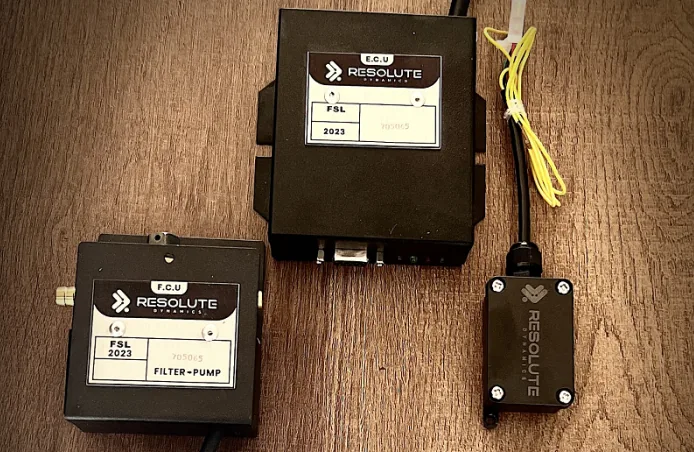
In today’s connected mobility landscape, speed limiters are no longer simple mechanical restrictions—they are intelligent systems powered by embedded software. Whether used in school buses, logistics fleets, or commercial vehicles, these devices rely on firmware to operate accurately and safely. Compare our electronic and fuel-type speed limiters for trucks and buses.
But here’s the key point many fleet operators miss:
Without regular firmware updates, even the best speed limiter can become unreliable.
With the rise of OTA (Over-the-Air) technology, updating these systems has become faster, safer, and far more scalable than ever before.
What Is Firmware in a Speed Limiter?
Firmware is the internal software that controls how a speed limiter behaves. It defines the logic behind:
- Speed detection and limitation
- Engine/throttle response
- Communication with the vehicle’s ECU
- GPS-based or terrain-based speed adjustments
Think of firmware as the decision-making layer of the device. While the hardware executes commands, firmware decides when and how those commands should be applied.
In modern electronic and GPS-based speed limiters, firmware plays an even bigger role by enabling features like dual-speed modes, remote configuration, and real-time adaptability.
Why Firmware Updates Matter More Than You Think
Speed limiter firmware isn’t something you install once and forget. Real-world driving conditions, regulatory changes, and system improvements make updates essential.
Safety Isn’t Static
Over time, edge cases emerge—like inconsistent speed limiting on inclines or delayed throttle response. Firmware updates address these issues, ensuring the system reacts correctly in all driving conditions.
Even small improvements in response timing can significantly impact road safety, especially in high-load or high-speed environments.
Compliance Is Always Evolving
Transport regulations are not fixed. Speed limits, enforcement mechanisms, and compliance requirements change across regions and industries.
Firmware updates allow speed limiters to adapt without replacing hardware. Instead of recalling vehicles or manually reconfiguring systems, fleets can stay compliant with minimal disruption.
Performance and Efficiency Gains
Updated firmware often improves:
- Speed control precision
- Engine efficiency
- Smoothness of limiter engagement
This translates into better fuel economy and reduced mechanical stress—both critical for large fleets.
Fixing Real-World Issues
In practical deployments, issues like firmware mismatch or communication errors between the limiter and ECU can occur. These aren’t theoretical problems—they directly impact performance.
If you want to understand how such issues show up in real installations and how they’re resolved, this guide explains it clearly:
👉 DIY Speed Limiter Troubleshooting Guide
What Happens If You Don’t Update Firmware?
Ignoring firmware updates can lead to more than just minor inefficiencies.
- Incorrect or inconsistent speed limiting
- Increased risk of compliance violations
- Device malfunction or instability
- Higher maintenance costs over time
In some cases, outdated firmware can cause the limiter to behave unpredictably—either limiting too early or failing to limit when required.
For fleet operators, this isn’t just a technical issue—it’s a liability.
What Is OTA (Over-the-Air) Firmware Update?
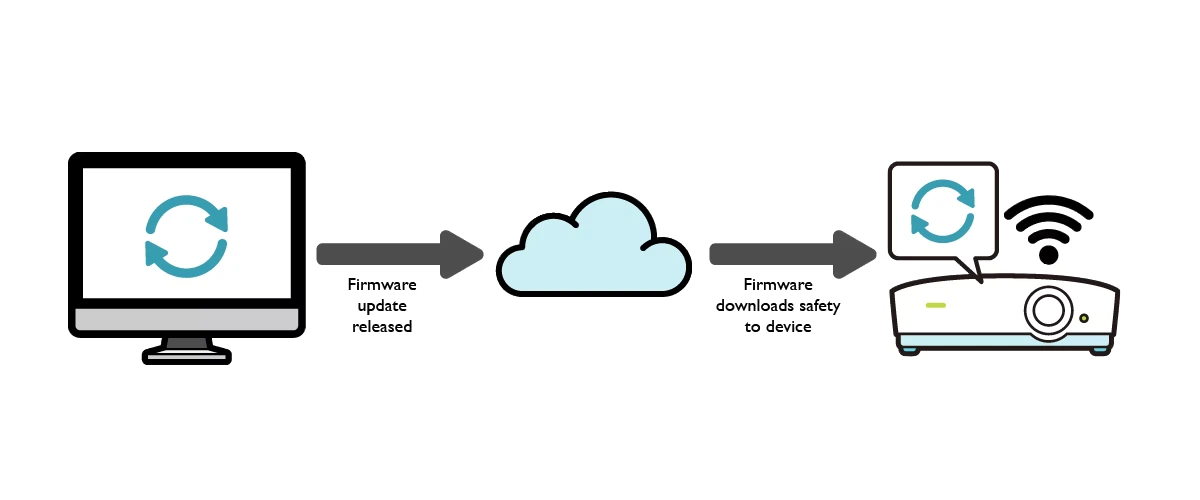
OTA (Over-the-Air) updates allow firmware to be updated remotely, without physically accessing the device.
Instead of bringing each vehicle into a workshop, updates are delivered wirelessly through a connected network—similar to how smartphones receive software updates.
This shift eliminates one of the biggest bottlenecks in fleet management: manual intervention.
How OTA Updates Work in Speed Limiters
While the technology behind OTA can be complex, the process itself is straightforward.
First, the speed limiter connects to a cloud platform using a built-in communication module (typically GSM or IoT-based connectivity). When a firmware update is available, it is securely transmitted to the device.
The device then downloads the update, verifies its integrity, and installs it—either immediately or at a scheduled time. Once completed, the system restarts with the updated firmware in place.
What makes this powerful is scale. Instead of updating one vehicle at a time, entire fleets can be upgraded simultaneously.
OTA vs Manual Updates: Why the Shift Matters
Manual updates require physical access, technician time, and operational downtime. For fleets with dozens or hundreds of vehicles, this quickly becomes inefficient.
OTA updates, on the other hand:
- Reduce downtime significantly
- Eliminate human error during installation
- Enable simultaneous fleet-wide updates
- Lower operational costs
This is why OTA is rapidly becoming the standard in modern vehicle systems.
Which Speed Limiters Support OTA Updates?
Not all speed limiters are built for OTA functionality. Traditional systems often lack connectivity, making remote updates impossible.
OTA-compatible devices typically include:
- IoT-enabled electronic speed limiters
- GPS-based speed limiting systems
- Telematics-integrated fleet devices
These systems are designed with connectivity in mind, allowing continuous monitoring, diagnostics, and firmware updates.
To explore how modern speed limiter systems are evolving with connected capabilities, you can review:
👉 Advanced Speed Limiter Solutions Overview
Real-World Use Cases of OTA in Fleet Operations
The impact of OTA updates becomes clearer when applied to real scenarios.
School Transportation
Speed limits can be updated across all buses instantly, ensuring compliance with safety regulations without manual adjustments.
Logistics & Delivery Fleets
As vehicles move across regions with different speed rules, firmware updates help maintain consistent compliance without operational delays.
Construction and Off-Road Vehicles
Terrain-based adjustments can be fine-tuned through firmware updates, improving both safety and equipment longevity.
Government & Regulated Fleets
OTA ensures that policy changes are implemented immediately, reducing administrative overhead and enforcement risks.
Security in OTA Firmware Updates
OTA security in vehicle systems is governed internationally by standards such as ISO/SAE 21434 (cybersecurity engineering for road vehicles) and UN-ECE WP.29 R155/R156 (cybersecurity and software updates). These frameworks set the baseline for how compliant speed-limiter OTA implementations are designed today.
One common concern with OTA updates is security—and rightly so.
Modern OTA systems address this through:
- Encrypted data transmission
- Secure authentication protocols
- Firmware integrity checks
- Safe rollback mechanisms in case of failure
These measures ensure that updates are not only convenient but also safe and reliable.
Common Firmware Update Issues (and How to Avoid Them)
Even with advanced systems, certain issues can occur if updates aren’t handled properly.
Some of the most common include:
- Interrupted updates due to power loss
- Connectivity failures during download
- Incorrect firmware versions
- Misconfiguration after installation
Best practices include scheduling updates during downtime, ensuring stable connectivity, and always using verified firmware sources.
How to Roll Out a Speed Limiter Update After a Rule Change
When a speed limit rule changes, the same steps work in any market:
- Pin down what changed: the new speed setting, the vehicle classes and weights affected, the start date, any grace period and any new paperwork.
- Find the affected vehicles: filter your fleet by country, vehicle class, limiter model and firmware version.
- Choose the update method by group: use OTA where the device is connected and the change is a setting; book a depot visit where a technician, a seal or a new certificate is needed.
- Test on a few vehicles first, then roll out in batches.
- Verify and record: confirm each vehicle holds the new limit and file the evidence before the enforcement date.
Repeating the same process every time a rule changes is what stops a vehicle from being missed.
The Future of OTA in Speed Limiter Technology
OTA updates are not just about fixing problems—they are enabling continuous improvement.
In the near future, we can expect:
- Predictive updates based on usage patterns
- AI-driven optimization of speed control
- Real-time compliance adjustments based on location
- Deeper integration with smart city infrastructure
This transforms speed limiters from static safety devices into dynamic, adaptive systems.
Why OTA Firmware Updates Are Essential for Modern Fleets
For fleet operators, the benefits go beyond convenience.
OTA firmware updates deliver:
- Improved safety across all vehicles
- Faster compliance with regulations
- Reduced maintenance and downtime
- Better return on investment
In a competitive and regulated industry, these advantages are not optional—they’re necessary.
Final Thoughts
Speed limiter technology has evolved significantly, but firmware remains at its core. Keeping that firmware updated ensures the system performs as intended—safely, efficiently, and reliably.
With OTA updates, the process is no longer a challenge. It becomes an opportunity—to improve performance, reduce risk, and future-proof fleet operations.
Related deeper reading: GPS Limiter Troubleshooting Guide.

The Resolute Dynamics team designs and manufactures speed limiters (SLD), GPS tracking, and automotive safety systems used on 200,000+ vehicles across 20+ countries. We write about fleet compliance, road-safety regulation, and vehicle-safety technology, including Malaysia’s JPJ SLD mandate, UAE RTA rules, and global standards like UN R89, to help fleet operators and transport businesses stay safe and compliant.