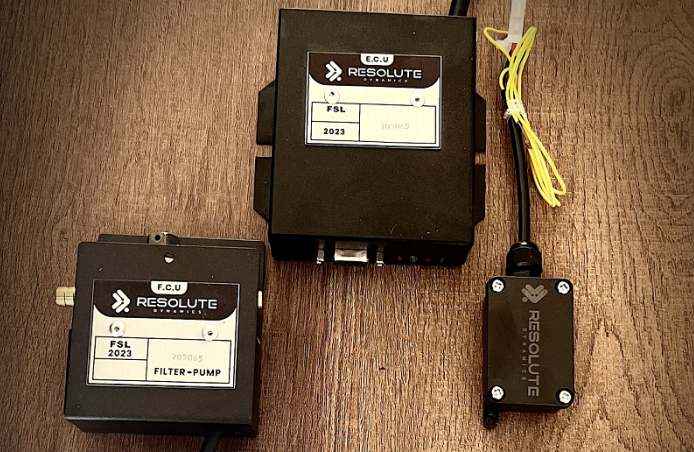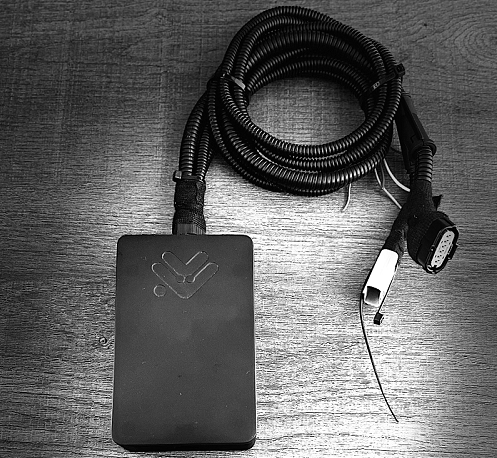
If you run a truck, a bus, or any commercial vehicle in the capital, a valid speed limiter certificate is not optional paperwork — it is a hard requirement for vehicle registration and the annual inspection in Abu Dhabi, issued in line with the rules set by the Integrated Transport Centre (ITC), now operating as Abu Dhabi Mobility.
Skip it, and your vehicle simply does not pass. Over the years I have watched fleet owners lose days at the inspection lane over this one missing document, so let me walk you through exactly how the certification works, who governs it, and how to stay on the right side of the rules.
What Is a Speed Limiter Certificate in Abu Dhabi?
A speed limiter certificate is an official document that confirms your vehicle has a working, tamper-free speed limiter device fitted and calibrated to the approved threshold. Think of it as the proof, not the part.
The device — also called a speed governor — is the hardware that physically caps how fast the engine lets the vehicle travel. The certificate is the signed validation that an authorized center checked that hardware and found it genuine, sealed, and functioning. You need both, but only the certificate goes into the inspection file.
People often mix the two up. The limiter is the muscle; the certificate is the medical report saying the muscle is healthy. When an inspector asks for your paperwork, they want the report.
Which Authority Regulates Speed Limiters in Abu Dhabi (ITC / Abu Dhabi Mobility)?
The Integrated Transport Centre (ITC) — rebranded as Abu Dhabi Mobility — is the authority that regulates commercial transport across the emirate, and it sits under the Department of Municipalities and Transport (DMT). Its mandate covers land, marine, and aviation transport, plus driver and vehicle licensing.
So when a rule about heavy-vehicle speed or fleet permits surfaces in Abu Dhabi, this is the entity behind it.
This matters because many operators assume the Dubai-based Roads and Transport Authority (RTA) runs the whole country. It does not. Dubai has the RTA; Abu Dhabi has Abu Dhabi Mobility. The certificate concept is shared nationwide, but the enforcement body and the digital systems are emirate-specific.
ITC vs. Dubai RTA: One Big Difference
Abu Dhabi applies no speed buffer, which is the single most important distinction for any driver. In most emirates you get roughly a 20 km/h cushion above the posted limit before a camera fines you.
In Abu Dhabi the number on the sign is the number enforced — go 1 km/h over an 80 km/h limit and the radar can flag you. That zero-tolerance design is exactly why a correctly calibrated limiter is so valuable here: it keeps drivers honest without them having to constantly watch the speedometer.
The Role of the ASATEEL Platform
ASATEEL is the ITC’s digital backbone for commercial transport, and it ties your certificate to live monitoring. It is the portal where companies, vehicles, drivers, and permits are all registered and linked. A speed limiter certificate in isolation is no longer enough for many commercial categories — the vehicle’s compliance has to live inside this system, where the authority can see it.
Who Needs a Speed Limiter Certificate in Abu Dhabi?
Commercial and heavy vehicles are the core group that must carry this certificate. The list includes heavy trucks and freight lorries, tankers, buses and minibuses, school buses, taxis, and delivery or cargo vans operating under a transport license. If your vehicle moves goods or paying passengers, assume the requirement applies to you.
Private family cars are generally outside this regime. The rules are built around vehicles whose size, weight, or passenger load makes a speed cap a genuine safety control rather than a formality.
Abu Dhabi Speed Limiter Settings & Heavy Vehicle Speed Limits
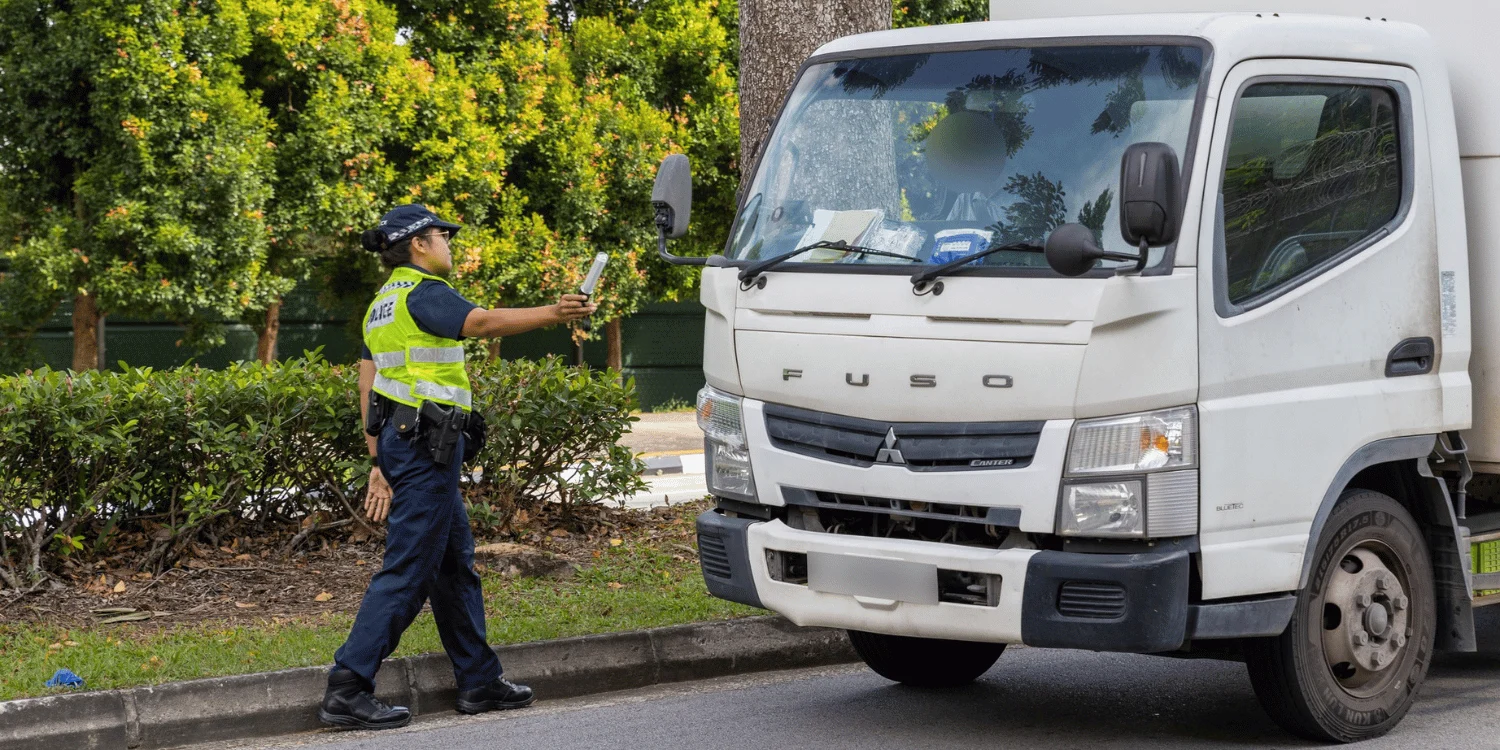
Heavy trucks in Abu Dhabi are typically capped at 80 km/h on highways, while buses and minibuses are set around 100 km/h, with the exact figure tied to the vehicle class and the posted road limit. These are not arbitrary numbers. A loaded 40-tonne truck needs far more distance to stop than a sedan, so the lower ceiling shrinks the stopping gap and the damage a collision can cause.
A recent shift worth knowing: the minimum-speed rule that once forced drivers to hold 120 km/h in the left lanes of Sheikh Mohammed bin Rashid Road (E311) was removed in 2025. Heavy vehicles were always meant for the right-hand lane anyway, so the maximum limit — not a minimum — is the figure your limiter needs to respect.
How the Limiter Is Calibrated
Calibration locks the device to the threshold the authority approves for your vehicle category. A technician sets the cap, road-tests it, then seals the connection so the setting cannot be quietly raised later. That seal is what the inspector hunts for. A broken or missing seal reads as tampering, and tampering fails the check on the spot.
ASATEEL Registration & Speed Limiter Compliance
ASATEEL works on four pillars — company registration, vehicle registration, driver registration, and permit issuance — and a certified device sits underneath all of them.
The platform will not issue a vehicle permit unless an approved tracking and limiting setup is installed and verified. In practice, the speed limiter and an ITC-approved GPS tracking system are treated as one compliance package, because the authority wants to see both the speed cap and the live location data.
Permit validity then leans on connectivity. If the device stops transmitting, the permit can lapse, so the system rewards equipment that stays online and accurate around the clock.
How to Get Your Speed Limiter Certificate in Abu Dhabi (Step-by-Step)
Getting certified follows a clear sequence, and each step has to be done in order:
- Book a slot at a fitment center authorized to install and certify limiters.
- Install the speed limiter device on the vehicle.
- Calibrate the device to the approved speed for your vehicle category.
- Test the unit for tampering, secure wiring, and correct cut-off behavior.
- Register and link the vehicle on the ASATEEL platform under your company profile.
- Receive the certificate once every check clears.
Rush a step and the whole chain stalls — an uncalibrated device cannot be certified, and an uncertified device cannot be linked to a permit.
Documents Required for Certification
Keep a tidy folder, because the center will ask for several papers at once. You will usually need the vehicle registration card (Mulkiya), the company trade license, the owner’s or driver’s Emirates ID, driver permit details, and an active ASATEEL company profile. Missing one of these is the most common reason a first visit turns into a second visit.
Speed Limiter Certificate Cost & Validity in Abu Dhabi
The certificate is valid for one year and is renewed on the same cycle as the vehicle’s annual inspection. Costs cover the device, the installation labor, the calibration, and the certification itself, so the total varies by vehicle type and the package you choose.
Rather than quote a single figure that shifts between centers and categories, the smarter move is to confirm the all-in price with your authorized provider before you book.
Annual Renewal & Vehicle Inspection
Renewal is yearly, and it is a real re-check, not a rubber stamp. At renewal the center re-verifies that the device still functions, that the seal is intact, and that the wiring has not been touched.
The certificate then feeds straight into the inspection record. A lapsed certificate means a failed inspection, and a failed inspection means the registration cannot be renewed — which is how one overlooked date can pull a vehicle off the road.
Fines & Penalties for Non-Compliance
Running a commercial vehicle outside the rules gets expensive fast. Operating without proper ASATEEL registration can draw a fine in the region of AED 1,000 per vehicle, and speeding violations in Abu Dhabi start from around AED 400 with no buffer to soften them.
Beyond the cash, repeat or serious breaches risk permit suspension and even blacklisting, which can knock a company out of contention for transport contracts. For a fleet, the reputational hit often costs more than the fine.
Cross-Emirate Operation: Abu Dhabi vs. Dubai, Sharjah & Other Emirates
A speed limiter certificate is recognized for inspection across all seven emirates, but Abu Dhabi adds its own ITC and ASATEEL layer on top. So a truck registered in Sharjah or Dubai that regularly enters Abu Dhabi for freight still has to meet the capital’s compliance rules — the national certificate alone does not exempt it.
If your routes cross the emirate line, treat Abu Dhabi’s requirements as a separate checklist. The shared, nationwide picture is covered on the main Speed Limiter Certificate page, which is a useful companion to this one.
Why Choose Resolute Dynamics for Speed Limiter Certification in Abu Dhabi
Resolute Dynamics builds the full range of limiting hardware — the standard speed governor, the dual and multi-speed limiter for terrain-based fleets, and the adaptive limiter — and certifies through a network of trained, authorized fitment dealers. That single-source setup matters, because the device, the calibration, and the certificate all need to agree with each other and with the ASATEEL record.
Real deployment experience backs this up; the Ajman Transport case study shows how a transport authority fleet was equipped and kept compliant at scale. If you are sizing up a fleet or a single vehicle, the team can map the right limiter to your category — just reach out through the contact page.
Frequently Asked Questions
Is a speed limiter mandatory for all vehicles in Abu Dhabi, or only commercial ones? It applies to commercial and heavy vehicles — trucks, buses, school buses, taxis, and freight vans. Standard private cars sit outside this requirement.
What speed is a heavy vehicle limiter set to in Abu Dhabi? Heavy trucks are commonly capped at 80 km/h on highways, and buses around 100 km/h, with the exact setting decided by the vehicle category and posted limits.
Is the ITC the same as Abu Dhabi Mobility? Yes. The Integrated Transport Centre was rebranded as Abu Dhabi Mobility and continues to operate under the Department of Municipalities and Transport.
Does a Dubai RTA speed limiter certificate work in Abu Dhabi? The certificate is recognized nationwide for inspection, but vehicles operating in Abu Dhabi must still satisfy the emirate’s ITC and ASATEEL rules.
What happens if my speed limiter fails inspection? The vehicle does not pass, and registration cannot be renewed until the device is repaired or recertified at an authorized center.
How long does certification take? Most single-vehicle jobs are completed in a single visit once installation, calibration, testing, and ASATEEL linking are done — provided your documents are in order.
Related UAE guides: Dubai RTA – Sharjah SRTA – UAE fines.

The Resolute Dynamics team designs and manufactures speed limiters (SLD), GPS tracking, and automotive safety systems used on 200,000+ vehicles across 20+ countries. We write about fleet compliance, road-safety regulation, and vehicle-safety technology, including Malaysia’s JPJ SLD mandate, UAE RTA rules, and global standards like UN R89, to help fleet operators and transport businesses stay safe and compliant.