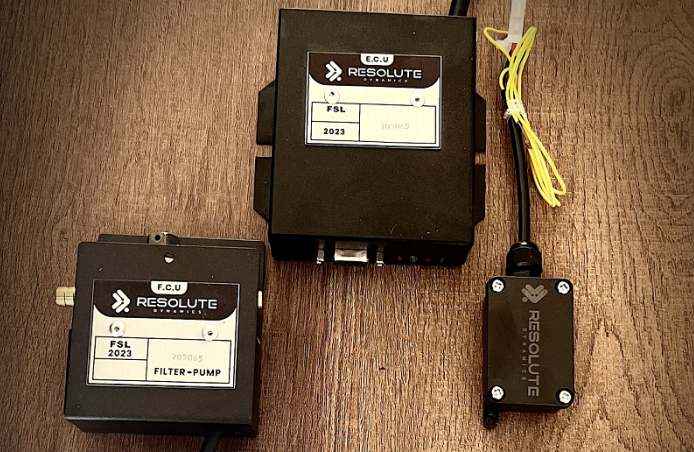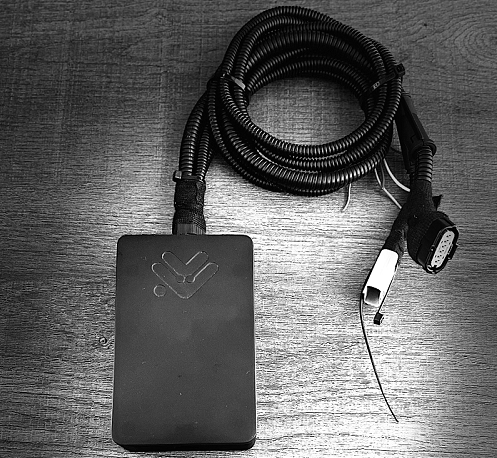
Speed limiter non-compliance in the UAE is treated as a serious traffic and vehicle-modification offence, and it carries real financial pain: fines, black points on the driver’s licence, and vehicle impoundment under Federal Decree-Law No. 14 of 2024.
The device you fit also has to be approved by ESMA (the Emirates Authority for Standardization and Metrology, now folded into the Ministry of Industry and Advanced Technology).
So this isn’t a “nice to have” box you tick once and forget. It’s an ongoing rule that the Roads and Transport Authority (RTA) and the police actively check. Let me walk you through exactly what happens when a vehicle falls out of line, who ends up paying, and how a fleet keeps its trucks and buses on the road instead of in an impound yard.
What Are the Penalties for Speed Limiter Non-Compliance in the UAE?
Speed limiter non-compliance can cost you a fine, black points, and a vehicle impoundment that pulls the vehicle off the road for weeks. The exact penalty depends on the kind of violation — a missing device is handled differently from a tampered one, and driving above your capped speed is treated as plain speeding.
Across all of these, three levers do the damage. First, a cash fine. Second, demerit points added to the driver’s licence. Third, the vehicle gets seized, and you pay a release fee to get it back.
Here’s the part fleet owners underestimate: the penalty rarely lands in one place. A single bad inspection can trigger a fine and block your registration renewal and leave a truck idle for 30 to 60 days.
For a logistics company running tight delivery windows, the lost operating time often hurts more than the fine itself. That’s why the smart move is to treat compliance as a daily habit, not a yearly scramble before the inspection date.
Speed Limiter Fines in the UAE: Full Penalty Schedule
There are six common ways a vehicle ends up on the wrong side of the speed limiter rules, and each one is penalised through a different part of the UAE traffic system. The table below maps the violation to how it’s actually treated under the law.
| Violation | How it’s penalised | Likely consequence | Authority |
|---|---|---|---|
| No limiter on a vehicle that legally needs one | Failed inspection + traffic fine | Registration blocked until fixed; fine and black points | RTA / Tasjeel |
| Uncertified (non-ESMA) device | Treated as non-approved equipment | Device rejected; vehicle fails inspection | ESMA / MoIAT |
| Tampered or disconnected limiter | Unauthorised vehicle modification | Fine, black points, possible impoundment | RTA / Police |
| Limiter bypass or unapproved modification | Modification offence (Cabinet Resolution No. 117 of 2024) | Fine + 30-day impound + release fee | RTA / Police |
| Driving above the capped speed | Standard speeding schedule | AED 300–AED 3,000 + black points + impound | Police radar / AI cameras |
| Expired or invalid calibration certificate | Inspection failure | Registration renewal refused | RTA / Tasjeel |
A few of these deserve hard numbers, and the UAE schedule is clear on them. Severe speeding — going more than 80 km/h over the limit — brings an AED 3,000 fine, 23 black points, and a 60-day impoundment. Crossing the limit by more than 60 km/h pulls a 30-day seizure.
These figures matter for capped vehicles because a tampered or removed limiter is exactly what lets a heavy truck reach those speeds in the first place. Take away the limiter, and you don’t just risk the modification penalty — you open the door to the full speeding schedule on top of it.
Which Vehicles Must Have a Speed Limiter in the UAE?
Speed limiters are mandatory for several commercial and passenger vehicle classes in the UAE. The list includes heavy goods vehicles over 3.5 tons, commercial buses, school transport, taxis, logistics and courier vans, and construction and waste-management trucks.
Private cars, motorcycles, and most emergency vehicles sit outside the core requirement, though full exemption lists come from the federal authorities.
If you want the full picture of which classes are covered and the 2026 expansion to heavy vehicles, that lives on the UAE Speed Limiter Rules page. The short version: if your vehicle moves goods or people for money, assume it’s in scope until you confirm otherwise.
Black Points, Vehicle Impoundment, and Licence Suspension
Black points are the quiet penalty that stacks up and eventually costs a driver their licence. They’re demerit points the RTA adds for traffic offences, and they follow the driver, not the vehicle. The cash fine stings once; the points keep building until they hit a threshold.
How Black Points Accumulate (24-Point Suspension, 36-Point Revocation)
Reaching 24 black points within two years suspends the licence for three months, and hitting 36 points leads to revocation, which means retaking the driving test from scratch.
A serious speeding hit from a disabled limiter can add 23 points in a single stroke — almost the entire suspension threshold from one violation. Drivers do have a release valve: an approved Safe Driving Course removes 8 points for AED 810, but only once per year. That’s a slow way to dig out of a hole you could have avoided by leaving the limiter alone.
Vehicle Impoundment and Release Fees
Impoundment takes the vehicle off the road and adds a release fee on top of the original fine. For serious offences the release fee can climb steeply — recent rules introduced charges reaching up to AED 100,000 for the most severe cases.
For a fleet, an impounded truck is a double loss: you pay to free it, and you lose every day of revenue it would have earned. This is where compliance pays for itself many times over.
Operating-Licence and Registration Consequences for Fleets
Fleet operators carry exposure that goes beyond individual fines. A vehicle that fails its limiter check can’t renew registration, and a pattern of violations puts the operating licence itself at risk. In a market like Dubai, where corporate clients audit their transport partners, a poor compliance record can quietly cost you contracts long before the regulator ever does.
Penalties for Tampering With or Disconnecting a Speed Limiter
Tampering with a speed limiter is treated as an unauthorised vehicle modification, which is one of the more serious categories in the UAE system. Disconnect the device, reprogram it, or fit a bypass, and you’ve changed the vehicle’s certified safety setup without approval — the same legal bucket that covers illegal engine and exhaust work under Cabinet Resolution No.
117 of 2024 and standard UAE.S 5014. The thinking is simple. A limiter exists to cap risk; defeating it deliberately is a worse act than simply forgetting to install one. Expect a fine, black points, and impoundment, and in aggravated cases the matter can go further. The cleaner path is a tamper-resistant device that integrates with the vehicle’s ECU, so there’s nothing loose to quietly unplug.
Who Is Liable — Driver, Fleet Operator, or Vehicle Owner?
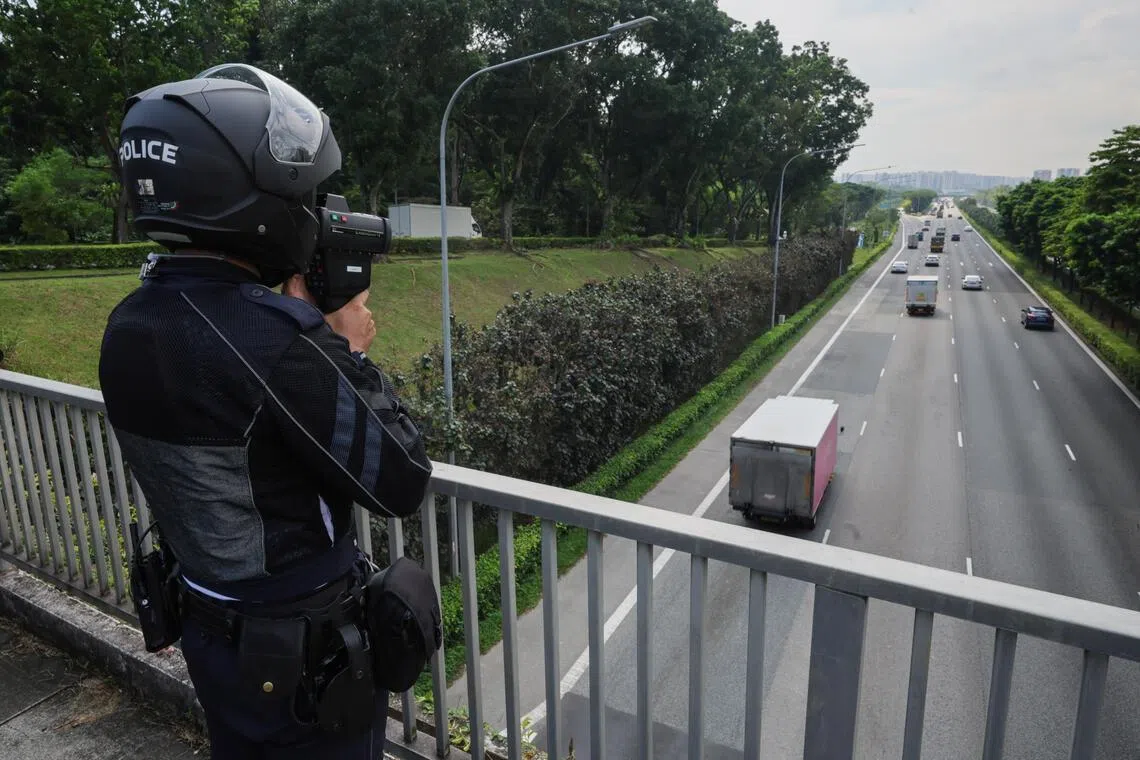
Liability for speed limiter non-compliance spreads across three parties, and each one faces a different kind of penalty. Knowing who carries what helps you close the gaps before an inspector finds them.
- The driver absorbs the black points and the on-the-spot traffic fine, since the points attach to a licence.
- The fleet operator faces commercial fines, blocked registrations, and the risk of suspended operations across multiple vehicles.
- The vehicle owner hits a wall at Tasjeel — no valid limiter, no registration renewal, no legal road use.
In practice the lines blur, because the operator usually owns the vehicles and employs the drivers. That’s the point: when one weak link triggers a violation, the cost ripples through the whole operation.
How the UAE Enforces Speed Limiter Compliance
UAE enforcement runs on three layers — periodic inspection, smart monitoring, and roadside checks — so a non-compliant vehicle gets caught from more than one direction. Gone are the days when a limiter was checked once and ignored. The system now assumes continuous compliance and tests for it repeatedly.
Tasjeel / Shamil Annual Inspection Checks
During the annual vehicle test at Tasjeel, Shamil, or Wasel centres, inspectors confirm the limiter is present, certified, and working. Fail this check and the registration simply won’t renew, which freezes the vehicle’s legal status until the issue is resolved.
RTA Smart Platforms and Remote Monitoring
The RTA increasingly links fleet data to central monitoring systems built on connected-vehicle infrastructure. This lets authorities verify limiter status remotely, without flagging down every truck. For operators, it means a problem can surface in a dashboard before it ever shows up at a checkpoint.
Roadside Audits and ESMA Spot Checks
Roadside inspections and ESMA-aligned spot checks add the unscheduled layer. A patrol can pull a commercial vehicle aside and verify the device on the spot, which is why “I’ll fix it before the next test” is a risky bet. To see how the UAE’s enforcement rigour compares with neighbouring markets, the breakdown in Speed Limiter Rules in UAE, Oman, India & Zimbabwe is a useful reference.
How Repeat and Aggravated Violations Escalate Penalties
Repeat violations don’t just repeat the penalty — they amplify it. Commit the same offence again within one year, and the impound duration and release fee can double. Aggravated cases, where non-compliance contributes to dangerous driving or an accident, move into court territory, and the published fines are floors rather than ceilings: a judge can impose more.
The lesson is that the UAE system is built to make a second mistake far more expensive than the first, which rewards operators who fix the root cause instead of paying the fine and moving on.
How to Avoid Speed Limiter Fines in the UAE
Avoiding speed limiter fines comes down to five habits, and every one of them is cheaper than a single impoundment. Build these into your fleet routine and the penalties above stop being a worry.
- Install an ESMA-approved limiter on every vehicle that legally needs one, fitted by a certified installer.
- Calibrate the device correctly to the vehicle’s capped speed and keep the certificate valid.
- Choose a tamper-resistant, ECU-integrated system so the limiter can’t be quietly disconnected.
- Log device status across the fleet, ideally through GPS-based monitoring that flags faults early.
- Re-check before every inspection rather than assuming last year’s setup still passes.
A smart, GPS-based limiter does more than satisfy the rule — it adjusts to road conditions and speed zones, improves driver behaviour, and gives you a clean compliance record to show clients. If you’re sourcing devices, the RTA Approved Speed Limiter Device in Dubai and the matching Speed Limiter Certificate: Dubai RTA Approved are the right starting points.
Frequently Asked Questions
What is the fine for not having a speed limiter in the UAE? A vehicle that legally needs a limiter but doesn’t have one fails its inspection, which blocks registration renewal and brings a traffic fine plus black points. Because the device is mandatory for commercial and heavy vehicles, the practical cost includes lost road time until the issue is fixed.
Is tampering with a speed limiter illegal in the UAE? Yes. Disconnecting, bypassing, or reprogramming a limiter is treated as an unauthorised vehicle modification, which carries a fine, black points, and possible impoundment under UAE traffic and modification rules.
How many black points apply for speed limiter violations? It depends on the resulting offence. Severe speeding enabled by a disabled limiter can add 23 black points at once, and 24 points within two years suspends the licence for three months.
Can my vehicle be impounded for a faulty speed limiter? Yes. Impoundment is a standard tool for limiter-related and speeding offences, and you pay a release fee to recover the vehicle. Serious cases carry release fees that climb into the tens of thousands of dirhams.
Who pays the fine — the driver or the fleet operator? Both, in different ways. The driver takes the black points and the personal fine, while the operator and owner face commercial fines, blocked registrations, and operational risk.
Do speed limiters have to be ESMA-approved? Yes. Only devices certified by ESMA (under the Ministry of Industry and Advanced Technology) can be legally installed, and an uncertified device fails inspection.
How do I check and pay a UAE speed limiter fine? Traffic fines can be checked and paid through the RTA website, Dubai Police channels, or the Dubai Now app, using the plate or licence number. Early payment often qualifies for discounts of 25% to 50%, depending on the period.
Speed limiter compliance in the UAE isn’t a one-time errand — it’s a standard the RTA, ESMA, and the police check again and again, and the penalties for ignoring it reach far beyond a single fine.
The good news is that staying compliant is straightforward and well within reach for any fleet. Fit a certified, tamper-resistant device, keep it calibrated, and monitor it, and the whole topic moves from a risk you worry about to a non-issue you’ve already handled. To get vehicles inspection-ready with approved equipment, contact Resolute Dynamics.
Avoid the fine — get compliant: Dubai RTA certificate process – Sharjah requirements – Abu Dhabi ITC.

The Resolute Dynamics team designs and manufactures speed limiters (SLD), GPS tracking, and automotive safety systems used on 200,000+ vehicles across 20+ countries. We write about fleet compliance, road-safety regulation, and vehicle-safety technology, including Malaysia’s JPJ SLD mandate, UAE RTA rules, and global standards like UN R89, to help fleet operators and transport businesses stay safe and compliant.