When a fleet owner asks me what a speed limiter costs in Singapore, I never give a one-line answer, because a single number would be misleading. And not for the reason most people assume.
The reason is that the sticker price of the device is the smallest number in the equation. The real cost has four moving parts — the hardware, the installation, the certification and sealing, and the inspection tie-in that follows. And sitting behind all four is a fifth number that most operators never price at all: what it costs when you get it wrong.
That fifth number is the one that has changed most in the last year, and it has changed in a direction that should reorder your budget.
Let me take you through all of it.
The four components of a speed limiter’s real cost
Before any quote makes sense, you need to know what you are actually buying.
| Component | What it covers |
|---|---|
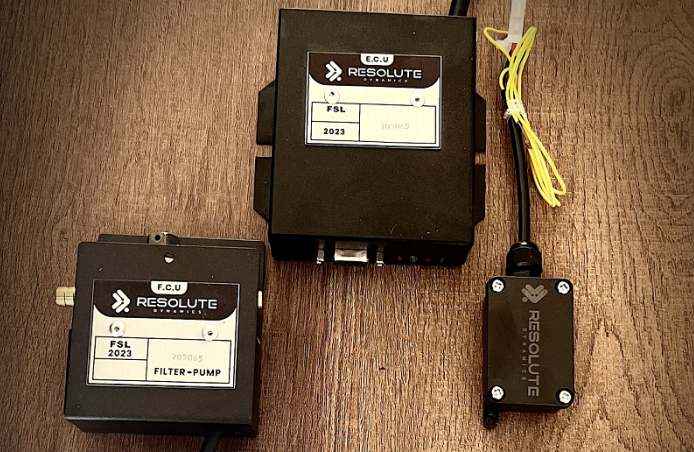
| 1. The device | The limiter itself — ECU-based or mechanical |
| 2. Installation | Fitting, wiring, mounting, calibration to 60 km/h, functional test |
| 3. Certification & sealing | Tamper-evident seal, compliance label, documentation tying the device to your vehicle |
| 4. Inspection tie-in | The certification that feeds your periodic inspection and road tax renewal |
Only the first of those is hardware. The rest is service and paperwork — and it is where quotes diverge.
That is why two operators with the same lorry can be quoted very differently, and why the lowest sticker price is rarely the cheapest outcome once you count a failed seal, a rejected certificate, or a re-fit.
What actually drives the price
Six factors decide where you land. The gap between a cheap quote and an expensive one almost always traces back to these.
- Limiter type. An ECU-based unit prices differently from a mechanical one — and not in the direction people expect. More below.
- Vehicle make, model and registration year. A modern lorry with electronic throttle is simpler to wire than an older drivetrain.
- Fleet size. One truck and twenty trucks do not cost the same per unit.
- Installation setting. A workshop bay differs from on-site fitting at your yard.
- Certification and sealing. The tamper-evident seal, the windscreen label and the paperwork are part of the job, not extras.
- Optional add-ons. GPS tracking, telematics, or dual-speed presets stack onto the base figure.
Notice that only the first two are really about hardware. The other four are about the service wrapped around it.
ECU-based vs mechanical: the cost comparison most people get backwards
There is a widespread assumption that the “electronic” option must be the expensive one. In Singapore, the opposite holds — and this is not our opinion.
The Traffic Police themselves state that the ECU-based speed limiter is estimated to cost less than the mechanical speed limiter, and that lorry owners are strongly encouraged to install one.
| ECU-based (electronic) | Mechanical | |
|---|---|---|
| Suited to | Modern lorries with electronic throttle control | Older lorries without the necessary electronics |
| Relative cost | Lower | Higher |
| Why | Integrates directly with the engine’s existing control unit — fewer parts, leaner labour | Physically restricts fuel or throttle; supply is tighter |
| TP position | Strongly encouraged | Fallback where the lorry’s specifications do not allow ECU-based fitting |
How each one works
An ECU-based limiter does not bolt a physical brake onto the throttle. It talks directly to the engine control unit. When the vehicle reaches 60 km/h, the ECU simply stops feeding more power, regardless of how hard the driver presses. Because it rides on electronics the lorry already has, both the parts and the labour are lighter.
A mechanical limiter works the old way — physically capping fuel supply or throttle movement at the set speed. It costs more, and there is a second reason beyond the engineering: supply is constrained, so availability can swing the price. Leave it late and you may find the market has moved without you.
The practical instruction: ask your agent whether your lorry is suitable for an ECU-based unit before you accept any quote. If it is, and someone has quoted you for a mechanical unit anyway, you are being over-sold. If your lorry already carries a working mechanical limiter that meets the approved standards, you generally do not need to rip it out.
For the underlying engineering, how the ECU powers speed limiting and types of speed limiter devices go deeper.
One standards note that affects what you are allowed to pay for
A compliant device has to meet the recognised standards accepted for the Singapore regime. A cheap parallel import that misses them is not a bargain — it is a rejected certificate waiting to happen, and you will pay twice.
The saving on a non-compliant device is always smaller than the cost of removing it.
Installation cost: why you cannot shop this line item freely
Installation typically runs 1 to 2 hours per vehicle. But the rule that shapes the cost is not the clock — it is this:
A speed limiter may only be supplied, installed, rectified or inspected by an SPF Authorised Agent. Only Traffic Police can appoint Authorised Agents and issue authorisation certificates. As of 1 October 2025, TP listed 61 Authorised Agents operating across Singapore — that list changes frequently, so always verify the current roster on the Singapore Police Force (Traffic Police) portal before booking, and TP publishes the live list.
Self-fitting is not allowed. Not by a general workshop, not by your own in-house mechanic, not by anyone outside that list. Using a non-authorised installer does not merely fail to achieve compliance — it is itself an offence.
That single rule is what shapes the labour cost. You are not paying a workshop rate. You are paying for a certified technician whose authorisation is the thing that makes the work count.
What the labour actually buys
It is more than a plug-in. The technician:
- Wires the limiter into the ECU or ignition
- Mounts the control unit in a tamper-resistant position so it cannot be quietly switched off
- Calibrates it so it engages cleanly at the 60 km/h threshold
- Runs a functional test proving the lorry cannot creep past it
- Seals the installation against tampering
- Issues the certification tying the device to your specific vehicle
For larger fleets, some agents offer on-site installation at your depot. The line item may look similar, but time off the road has a cost of its own — a well-organised on-site batch often saves more than the invoice shows.
Before you book: verify the agent against the live SPF list. Not their website. Not their claim. The list. This takes two minutes and it is the cheapest insurance in the entire process.
Certification, sealing and the label
The paperwork is baked into the price rather than tacked on afterwards.
After fitting, the Authorised Agent tests the system, seals it against tampering, and issues the certification that ties the limiter to your vehicle. You also receive a compliance label, which must sit on the top-right of the front windscreen as seen from outside. Missing that label is a separate offence in its own right, so it is not a sticker to lose.
This certification then feeds straight into your road tax renewal and periodic vehicle inspection. A vehicle without a working, certified limiter fails inspection — and a vehicle that fails inspection cannot legally be driven.
So the certification fee is not red tape. It is the thing that keeps the lorry earning.
If the seal is broken or the device is modified, the vehicle must be re-tested and re-certified before it can legally run again. Budget for that possibility rather than being surprised by it. Tamper-proof seals on speed governors covers what the seal actually is and why it fails. Our Speed Limiter Certificate page breaks down the document itself.
Per vehicle vs per fleet: where the maths changes
The figure that matters is the all-in per-vehicle total — device plus Authorised Agent installation plus certification. That is the number to budget against. Quotes that show you only hardware are setting up a surprise.
Fleet size moves the maths in your favour. Fitting twenty lorries usually earns a lower per-unit rate than fitting one, because scheduling, travel and setup are spread across the batch.
If you run a mixed fleet, get a single fleet quote rather than pricing each truck separately. Ask the provider to break the quote into the same three components for every vehicle class. Two reasons:
- You can compare like with like across suppliers.
- You can see exactly where the volume discount kicks in — and negotiate against it.
An operator who knows their own break-even point negotiates from a different position than one who is reading a single blended number.
Are there grants or subsidies?
Possibly — and it is worth checking before you book, because it changes your real out-of-pocket cost.
Funding schemes and their eligibility criteria shift over time. Treat any expected grant as unconfirmed until you have it in writing, and — this matters — apply for funding before you lock in an installation date, not after. Retroactive applications are where operators lose money they were entitled to.
Ask your agent directly whether your specific job and vehicle class qualify for any active scheme.
The number almost nobody budgets: the cost of not complying
This is where the arithmetic has shifted, and it is the reason the compliance cost now looks small.
The direct fine. Owners who miss their deadline may be prosecuted and are liable for a fine of up to S$1,000. The vehicle also fails its mandatory inspection and is prohibited from being driven until it complies.
That second consequence is the expensive one. A lorry that cannot legally move is not a lorry with a fine attached — it is a lorry generating nothing.
But the fine is no longer the ceiling. Three additional exposures now sit on top:
1. Remedial Orders — up to S$50,000. From 1 January 2026, companies whose drivers are caught speeding in lorries are issued a Remedial Order under the Workplace Safety and Health Act, for committing an unsafe act at work. The RO requires the company to install speed limiters across all its remaining lorries — ahead of their statutory deadlines. Non-compliance with the RO brings fines of up to S$50,000.
Read that carefully. One speeding driver can collapse your entire phased timeline into an immediate obligation, at a moment of the regulator’s choosing rather than yours.
2. bizSAFE certification. From 1 January 2026, the speed limiter requirement is folded into the Workplace Safety and Health Council’s risk management audit as part of bizSAFE certification and renewal. Companies found operating lorries without limiters are flagged during audits and may be unable to obtain or renew their bizSAFE certification.
For any operator who bids on contracts where bizSAFE is a prerequisite, that is not a compliance cost. That is a revenue cost, and it is potentially a much larger number than anything on the installation invoice.
3. Insurance. MHA and Traffic Police have been exploring differentiated insurance premiums with motor insurers — higher premiums for non-compliant lorries, and the possibility of rejected insurance applications after the respective deadlines.
And the penalties are being raised. MHA indicated it would table legislative amendments in 2026 to increase the maximum penalty for missing the installation deadline, or for tampering, from S$1,000 to S$10,000. Check the current position before you assume the old figure still applies.
What this does to the business case
Put the numbers side by side and the argument makes itself. The all-in cost of fitting a compliant limiter through an Authorised Agent is a known, bounded, one-time figure. The cost of not fitting one is a fine, plus an idle vehicle, plus a possible S$50,000 Remedial Order, plus a bizSAFE certification you may not be able to renew, plus an insurance position that gets worse.
The compliance cost is not the expensive number in this equation. It stopped being the expensive number on 1 January 2026.
The three-step quote process
Getting an accurate quote is a sequence. Doing it out of order means re-quoting.
1. Check each vehicle’s MLW. Log into the LTA One Motoring portal, or read your vehicle registration card. Your Maximum Laden Weight is printed there. This tells you which lorries are in scope and which deadline applies to each — and the deadline depends on both MLW and registration date, not MLW alone.
2. List your vehicle details. Licence plate, engine number, chassis number. Certification ties to the specific vehicle, so a quote built on generic assumptions will not survive contact with the paperwork.
3. Request a fleet quote broken into three components. Device, installation, certification — per vehicle class. Insist on that structure. A blended single figure is a figure you cannot interrogate.
Once you have that, you can compare quotes honestly and book with enough runway before your compliance date.
What a proper quote should include
Whoever you buy from, the figure should cover the job end to end, not just the box that gets bolted on:
- The device, matched to your lorry’s ECU capability
- Installation by an SPF Authorised Agent
- Calibration to the 60 km/h threshold
- The tamper-evident seal
- The windscreen compliance label
- The documentation you need for inspection and road tax
If a quote omits any of those, it is not a cheaper quote. It is an incomplete one, and the gap will land on you later.
You can see the full range of solutions we support for Singapore fleets on our speed limiter device in Singapore page — including dual and multi-speed limiters for lorries moving between the CBD and the expressways, and GPS tracking if you want speed data feeding your fleet dashboard.
For the full rules — who must comply, by when, and what happens if they don’t — that sits on our Singapore LTA compliance guide and the Singapore fleet checklist.
Frequently asked questions
How much does a speed limiter cost in Singapore? There is no single figure. The all-in cost combines the device, Authorised Agent installation, and certification — and it varies with limiter type, vehicle, and fleet size. The most reliable number comes from a quote built around your actual vehicles, structured as three separate line items.
Which is cheaper — ECU-based or mechanical? The ECU-based unit. Traffic Police themselves estimate it costs less than a mechanical limiter, and strongly encourage owners to fit one. Mechanical units suit older lorries whose specifications will not support an ECU-based install, and cost more partly because supply is tighter.
Can I install a speed limiter myself? No. A speed limiter may only be supplied, installed, rectified or inspected by an SPF Authorised Agent. Self-installation — even by your own qualified technician — is not permitted, and using a non-authorised installer is itself an offence.
How long does installation take? Typically 1 to 2 hours per vehicle, though wiring condition and vehicle model can extend it. On-site fitting at your depot is available from some agents and can cut fleet downtime.
Are there recurring or re-certification costs? Plan for them. If the tamper seal is broken or the device is modified, the vehicle must be re-tested and re-certified before it can legally run. Certification status is tied to your periodic inspection.
What happens if I miss my deadline? A fine of up to S$1,000 (with amendments proposed to raise this to S$10,000), and the vehicle fails its mandatory inspection and cannot legally be driven. Since 1 January 2026, companies whose drivers are caught speeding may also receive a Remedial Order under the Workplace Safety and Health Act, carrying fines of up to S$50,000, and non-compliance can affect bizSAFE certification.
How do I check my lorry’s MLW? Log into the LTA One Motoring portal, or read your vehicle registration card. Your deadline depends on both MLW and registration date.
Related reading: For a regional pricing comparison see our Malaysia speed limiter price guide, and for a technical primer read What is a speed governor?

The Resolute Dynamics team designs and manufactures speed limiters (SLD), GPS tracking, and automotive safety systems used on 200,000+ vehicles across 20+ countries. We write about fleet compliance, road-safety regulation, and vehicle-safety technology, including Malaysia’s JPJ SLD mandate, UAE RTA rules, and global standards like UN R89, to help fleet operators and transport businesses stay safe and compliant.