If you run a fleet in the United Kingdom, two sets of rules decide how fast your vehicles are allowed to go, and people mix them up all the time. One is the speed limiter rule, which has been law for decades and applies right across the country.
The other is Intelligent Speed Assistance, or ISA, which is newer, came out of European Union law, and only became compulsory on one side of the Irish Sea. Sort out which is which and most of the confusion disappears.
Here is the short version before the detail. Speed limiters are mandatory on most heavy commercial vehicles in Great Britain and Northern Ireland alike. ISA, on the other hand, is required on new vehicles in Northern Ireland but not in Great Britain.
That single split is where fleet operators trip up, and it is the heart of this guide. Below, every rule is broken down by vehicle type, speed setting, legal basis, and the way the Driver and Vehicle Standards Agency (DVSA) checks your trucks and coaches on the road.
Are Speed Limiters Mandatory for Commercial Fleets in the UK?
Yes. Goods vehicles with a maximum laden weight above 3.5 tonnes, and passenger vehicles with more than 8 passenger seats, must be fitted with a road speed limiter.
That covers the overwhelming majority of commercial fleets: rigid lorries, articulated units, tippers, tankers, buses, coaches, minibuses, and even stretch limousines. If your vehicle falls into one of those classes, the limiter is not optional and never has been.
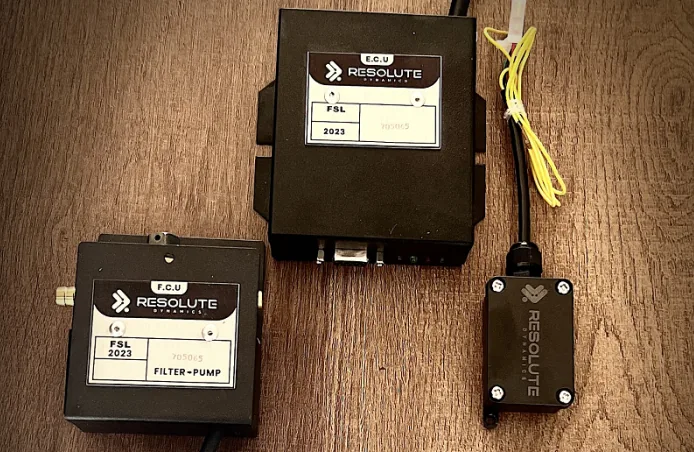
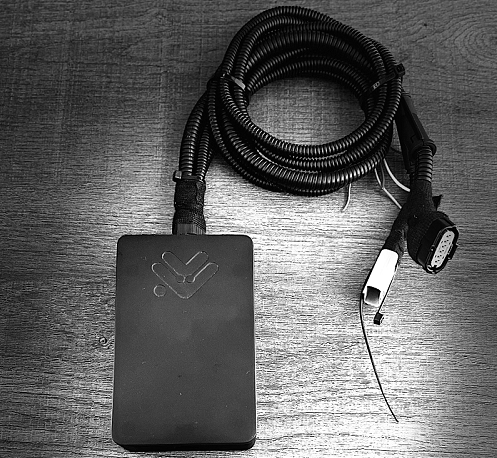
A speed limiter is a deceptively simple device. It works by restricting the fuel supply to the engine once the vehicle reaches a preset speed, so the driver physically cannot push past that ceiling even with the accelerator flat to the floor.
On modern vehicles the function lives inside the engine control unit (ECU), which reads road speed and trims engine torque the moment the threshold is reached. The result is a hard top-end cap that does not rely on the driver’s good intentions.
Which Vehicles Must Have a Speed Limiter
The fitment rule splits commercial vehicles into two broad families. Goods vehicles over 3.5 tonnes maximum laden weight make up the first family, which sweeps in nearly every HGV on UK roads.
The second family is passenger vehicles built to carry more than 8 people beyond the driver, meaning buses, coaches, and minibuses used for hire or reward. Light vans under 3.5 tonnes sit outside the mandate, which is why a courier’s Transit can legally hit the national speed limit while a 44-tonne artic cannot.
There is a useful way to self-check your fleet. Pull the plating certificate or the V5C for each asset, look at the maximum permissible weight and the seating capacity, and sort every vehicle into “limiter required” or “exempt.” Anything carrying goods above 3,500 kilograms, or anything with nine seats or more, lands in the regulated group.
Speed Limiter Settings: 90 km/h for HGVs, 100 km/h for Coaches
Heavy goods vehicles must run a limiter set so the stabilised speed does not exceed 90 km/h, which works out at roughly 56 mph. In legal terms the set speed sits at no more than 85 km/h, with the vehicle’s construction guaranteeing the stabilised speed stays at or below 90 km/h.
Coaches and buses are held to a slightly higher ceiling of 100 km/h, or about 62 mph. A handful of older buses were historically calibrated to 65 mph, but newer passenger vehicles follow the 100 km/h figure.
That 56 mph HGV cap explains something drivers notice constantly: a lorry sitting at a steady speed on the motorway while cars stream past.
The limiter deliberately holds the truck below the 60 mph national limit for heavy vehicles, leaving a small buffer that absorbs downhill gradients, tailwinds, and tyre wear. The limiter, not the speedometer, is what really governs the top end of a commercial vehicle’s performance.
The Legal Basis: Road Vehicles (Construction and Use) Regulations 1986
The rules sit inside the Road Vehicles (Construction and Use) Regulations 1986, the backbone of vehicle standards law in the UK. Speed limiters were written in through regulations 36A, 36B, and 36C, which were inserted by a 1993 amendment and later updated.
Regulation 36A handles buses and coaches; regulation 36B handles goods vehicles. These provisions brought European Council Directives 92/6/EEC and 92/24/EEC into domestic law, and a 2002 directive (2002/85/EC) later widened the range of vehicles caught by the rule.
Why does the source of the law still matter after Brexit? Because these limiter requirements were copied into UK statute long ago and stayed there. Leaving the European Union did not switch them off.
They are now stand-alone British regulations, enforced under the Road Traffic Act 1988 and the Construction and Use Regulations, and they apply uniformly in England, Scotland, Wales, and Northern Ireland. Keep that point in your back pocket, because the ISA story plays out very differently.
Exemptions From UK Speed Limiter Fitment
A narrow band of vehicles escapes the fitment duty. Certain goods vehicles first registered between 1 October 2001 and 31 December 2004, built to specific older emission standards or fitted with particular engines, were granted an exemption from limiter fitment.
These are edge cases now, given the age of the vehicles involved, but they exist on paper and the DVSA can confirm the detail for any individual asset.
The practical takeaway is to treat exemptions as the rare exception rather than the rule. If you operate anything built in the last twenty years above the weight or seating thresholds, assume a limiter is required and budget for it. Guessing wrong on a modern vehicle is far more expensive than a quick check.
Speed Limiter vs Intelligent Speed Assistance (ISA): What’s the Difference?
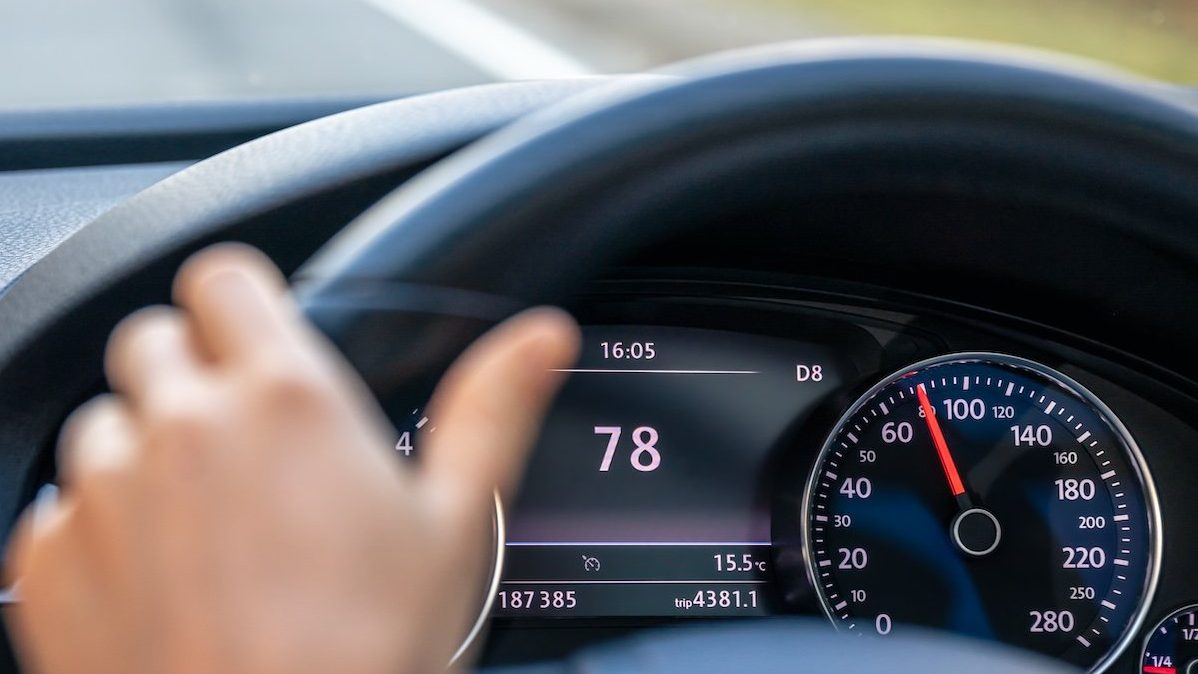
A speed limiter caps a vehicle’s top speed mechanically through the ECU, while ISA reads the live speed limit of the road you are on and warns or gently resists when you go over it.
They sound similar, yet they solve different problems. The limiter sets one fixed ceiling for the whole journey. ISA adjusts constantly, matching its target to whatever the current limit happens to be, whether that is a 20 mph school zone or a 70 mph stretch of motorway.
Think of it this way. A traditional limiter is a wall at 56 mph that a truck simply cannot climb over. ISA is more like a co-pilot who keeps glancing at the signs and tapping your shoulder when the number on the dashboard creeps above the number on the post. One is a blunt, permanent restraint. The other is a responsive, context-aware system that changes with the road.
How a Commercial Speed Limiter Works
The limiter monitors wheel or transmission speed through the vehicle’s electronics and acts on the fuel and torque the engine is allowed to produce. As the vehicle approaches the calibrated set speed, the system progressively cuts engine output, so acceleration tails off and the speed plateaus.
There is no drama and no warning chime; the truck simply will not go faster. Because the control lives in the ECU on modern vehicles, the setting is precise and repeatable, which is exactly why the law demands it be calibrated and sealed by an approved specialist.
How Intelligent Speed Assistance (ISA) Works
ISA pulls information from two sources and cross-checks them. A forward-facing camera mounted near the windscreen reads traffic signs in real time, while digital map data supplies the expected limit for that location.
When the two agree that you are over the limit, the system delivers feedback, usually a visual cue on the instrument cluster backed up by an audible warning. Some vehicles add a gentle pushback through the accelerator pedal to nudge the driver’s foot off the throttle.
Two features define how ISA behaves in everyday driving. First, the driver always stays in charge; ISA can be overridden by pressing firmly on the pedal, which matters when you need a burst of speed to merge or overtake safely. Second, it cannot be permanently switched off.
Turn it down for one trip and it springs back to life the next time the engine starts. To put numbers on the safety case, the European Transport Safety Council has estimated that widespread ISA could cut collisions by around 30% and road deaths by roughly 20%. For a deeper side-by-side, the breakdown of how speed limiters and Intelligent Speed Assistance differ is worth a read.
Is ISA Mandatory in the UK? Great Britain vs Northern Ireland
ISA is not legally mandated in Great Britain, but it is required on new vehicles in Northern Ireland from 7 July 2024. That one sentence carries more weight for fleet operators than almost anything else in this guide, because it means the rules inside your own country are not uniform.
A coach manufacturer building for Belfast faces a different legal checklist than one building for Birmingham, even though both cities sit under the same flag.
The divergence flows from the European Union’s General Safety Regulation, known in the trade as GSR2, formally Regulation (EU) 2019/2144. This regulation made ISA a mandatory fitment across the EU. Northern Ireland follows it; Great Britain does not. The table below lays the split out plainly.
| Aspect | Great Britain (England, Scotland, Wales) | Northern Ireland |
|---|---|---|
| ISA legally mandated? | No | Yes, on new vehicles from 7 July 2024 |
| Governing rule | None adopted (DfT opted out) | EU GSR2 via the Northern Ireland Protocol |
| Speed limiters (HGV/bus) still required? | Yes, under C&U Regs 1986 | Yes, under C&U Regs 1986 |
| ISA fitted in practice? | Often, by manufacturer choice | Yes, by law |
Why Great Britain Opted Out of the EU ISA Mandate
After leaving the European Union, the United Kingdom was no longer bound to copy new EU vehicle safety regulations into domestic law. When GSR2 landed, the Department for Transport (DfT) confirmed that cars in Great Britain would remain unaffected by the ISA mandate.
So while the EU made the technology compulsory, Great Britain chose not to follow suit, leaving ISA as a feature rather than a legal requirement on this side of the border.
That choice does not mean the government dislikes the technology. The DfT has continued to study driver-assistance systems and road safety data. It simply decided not to make ISA a legal must-have for now, preferring a route where the market and manufacturers lead rather than the statute book.
Why Northern Ireland Requires ISA (Windsor Framework / NI Protocol)
Northern Ireland sits in a unique position. Under the Northern Ireland Protocol, later refined by the Windsor Framework, it stays aligned with EU rules for goods and follows the EU type-approval process for vehicles.
Because GSR2 forms part of that type-approval regime, new vehicles entering service in Northern Ireland must carry ISA, exactly as they would anywhere in the EU. The Protocol, not a separate Northern Ireland decision, is what pulls ISA into law there.
The result is a genuine regulatory border inside the United Kingdom. A fleet that operates across both jurisdictions, common for hauliers running between the island of Ireland and the mainland, has to understand that a vehicle compliant in one region may face different expectations in the other. For most operators this is manageable, but it deserves a conscious check rather than an assumption.
GSR2 Timeline: July 2022, July 2024 and July 2026
GSR2 rolled out in phases, and the dates matter when you are buying or registering vehicles. ISA became mandatory for brand-new vehicle types from July 2022.
It then extended to all new vehicles registered from 7 July 2024, sweeping in models that were already on sale. A further phase arrives in July 2026, widening the scope of mandated driver-assistance technology to include features such as advanced driver distraction warning.
One detail saves a lot of worry: the regulation only bites on vehicles built after each cut-off. There is no retrofit duty for older stock. A truck or coach built before the relevant date does not need to be torn apart to add ISA. The rule shapes what manufacturers must build going forward, not what is already parked in your yard.
Why Many GB Fleet Vehicles Have ISA Anyway
Here is the twist that surprises a lot of operators. Even though Great Britain did not mandate ISA, plenty of GB fleet vehicles arrive with it fitted as standard.
Manufacturers typically build to the most demanding market and use European-specification software across the board, because creating a separate, ISA-free variant just for Great Britain adds cost and complexity for no commercial gain. Carmakers and commercial vehicle builders would rather ship one specification than two.
So if you buy a new coach or van in England and find ISA already active, that is not a mistake. It is the manufacturer choosing economies of scale. For your compliance paperwork, the legal status in Great Britain is still “not required,” but the practical reality is that ISA is becoming the norm regardless. Many operators treat it as a useful safety extra and simply train drivers on how the override works.
UK National Speed Limits for HGVs and Commercial Vehicles
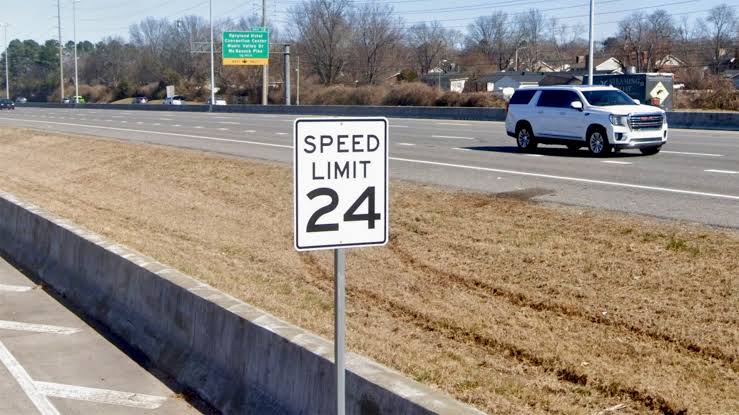
National speed limits and limiter settings are two separate layers, and a compliant fleet respects both. The limiter caps the vehicle’s mechanical top speed, while national limits set the legal maximum for the road you are travelling on, which is often lower. A driver can be inside the limiter’s ceiling and still be speeding if the road’s posted limit is below it.
For heavy goods vehicles over 7.5 tonnes in England and Wales, the picture looks like this: 50 mph on single carriageways, 60 mph on dual carriageways, and 60 mph on motorways. Scotland runs lower limits on the open road, which catches out drivers heading north. The table sets out the headline figures.
| Road type | HGV over 7.5t (England & Wales) | HGV over 7.5t (Scotland) |
|---|---|---|
| Single carriageway | 50 mph | 40 mph |
| Dual carriageway | 60 mph | 50 mph |
| Motorway | 60 mph | 60 mph |
| Built-up area | 30 mph (20 mph default in Wales) | 30 mph |
HGV Speed Limits by Road Type (England, Wales, Scotland)
Single carriageways are where the limits feel tightest, set at 50 mph for the heaviest lorries in England and Wales after a 2015 change lifted them from 40 mph.
Dual carriageways open up to 60 mph, and motorways stay at 60 mph for vehicles over 7.5 tonnes, which is 10 mph below the 70 mph car limit. Wales has also made 20 mph the default in many built-up areas since September 2023, so urban deliveries there demand extra care.
Lighter goods vehicles up to 7.5 tonnes get a touch more freedom, running up to 70 mph on motorways unless they are articulated or towing a trailer, in which case the limit drops to 60 mph. The lesson for mixed fleets is that one blanket speed policy will not fit every vehicle. The right number depends on weight, body type, road class, and which nation of the UK the wheels are turning in.
How the 56 mph Limiter Interacts With National Limits
Because the limiter holds most heavy goods vehicles at around 56 mph, the vehicle naturally stays under the 60 mph national limit on motorways and dual carriageways without the driver lifting a finger.
The mechanical cap does part of the compliance work for you on faster roads. That built-in margin is one reason limiters are credited with smoothing traffic and trimming the worst excesses of HGV speeding.
The catch is the slower roads. On a 30 mph high street or a 50 mph single carriageway, the limiter offers no help at all, because those limits sit well below 56 mph. There, compliance rests entirely on the driver and, where fitted, on ISA. This is precisely the gap that ISA was designed to close, which is why the two technologies complement rather than replace one another.
How UK Speed Limiter Rules Are Enforced
The DVSA checks limiter function and setting at the roadside, at operators’ premises, and at the annual test. Enforcement is not a paperwork formality; examiners carry purpose-built equipment that reads whether the limiter is present, working, and calibrated to the correct figure. A limiter that has been tampered with, disconnected, or set too high is treated as a serious roadworthiness defect.
Enforcement also reaches beyond the individual vehicle to the business behind it. Through the Operator Compliance Risk Score (OCRS), the DVSA tracks every encounter with your fleet and builds a risk profile that decides how often you get stopped. A clean record earns a lighter touch; a pattern of defects invites scrutiny. The system rewards operators who run tight, well-documented maintenance regimes.
DVSA Roadside and Annual Test Checks
At the roadside, DVSA examiners can direct a commercial vehicle into a check site and inspect far more than tyres and lights. They carry equipment to check the function and setting of the speed limiter on the spot. The annual test, the heavy-vehicle equivalent of an MOT, includes the limiter as part of the roadworthiness assessment, so a faulty unit can fail the test outright.
Between those formal checkpoints, the DVSA’s Guide to Maintaining Roadworthiness expects operators to keep monitoring limiter effectiveness as part of routine safety inspections.
Calibration and Sealing by an Authorised Sealer
Anyone can physically install a limiter, but checking the installation and verifying the calibration must be done by a DVSA “authorised sealer.” Once calibrated, the unit is sealed so it cannot be quietly adjusted, and a plate must be fitted showing the speed to which the vehicle has been set.
That plate is your proof of compliance, and an examiner will look for it. Becoming an authorised sealer is itself a regulated activity, with requirements covering equipment, record-keeping for at least five years, and periodic quality checks. For the certification side of this, the speed limiter certificate process explains what documentation you should hold.
Penalties: Prohibition Notices, Fines and Operator Licence Risk
When an examiner finds a defective or tampered limiter, the consequences escalate quickly. The immediate sanction is often a prohibition notice (form PG9), which can take the vehicle off the road until the fault is fixed, and a fixed penalty may follow. The deeper risk is to your operator’s licence.
Any business using goods vehicles over 3,500 kilograms needs an operator’s licence, and the Traffic Commissioner has the power to revoke, suspend, or curtail that licence where maintenance and compliance fall short. Losing the “O” licence does not just dent one journey; it can stop the whole operation.
That is why limiter compliance is a board-level issue, not a workshop afterthought. A single tampered unit, discovered during a roadside stop, can drag an operator in front of the Traffic Commissioner and put the entire fleet’s right to trade at risk. The cost of getting it right is trivial next to the cost of getting it wrong.
Speed Limiter Compliance Checklist for UK Fleet Operators
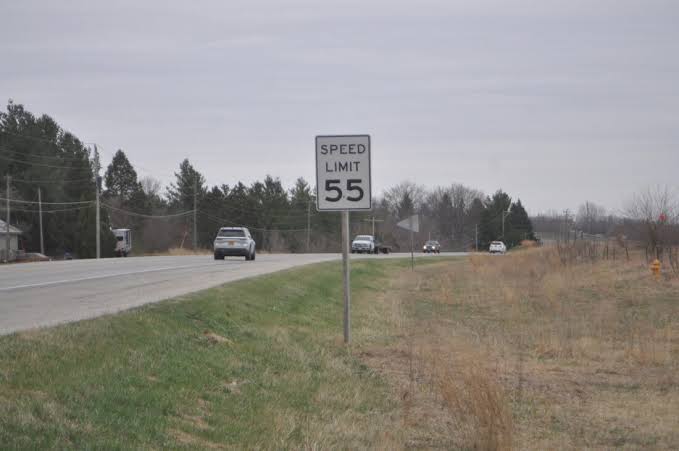
Turning the law into daily practice does not need to be complicated. A handful of disciplined habits keeps your fleet on the right side of the DVSA and protects your operator’s licence. Work through the steps below and review them whenever you add vehicles or the regulations shift.
- Audit your fleet by weight and seating category. Sort every vehicle into “limiter required” or “exempt” using its maximum laden weight and passenger seat count, so nothing slips through unnoticed.
- Fit certified limiters and obtain the calibration plate and certificate. Use quality, standards-compliant equipment and make sure the sealing plate showing the set speed is present on each vehicle.
- Schedule recalibration and re-sealing. Build limiter checks into your planned maintenance calendar rather than waiting for the annual test to expose a problem.
- Monitor limiter effectiveness with telematics. The DVSA expects operators to demonstrate a process for spotting limiter faults and acting on them, and connected GPS tracking systems make that monitoring automatic and evidence-rich.
- Keep records ready for DVSA and operator-licence audits. Hold maintenance reports, calibration records, and driver defect reports where you can produce them on demand, because clean paperwork is half the battle in any inspection.
Choosing Speed Limiter and ISA Technology for a UK Fleet
The right hardware depends on what your fleet actually does. A long-haul HGV operator has different needs from a city bus company or a mixed logistics firm running both vans and artics. The good news is that the technology has matured well beyond a single fixed cap, and modern systems can match the layered reality of UK speed rules.
For fleets that move between different zones and duties, a dual or multi-speed limiter lets a single vehicle hold different ceilings for different operating areas, which suits tankers, oil-field transport, and municipal vehicles that switch between site and public roads.
Where you want the responsiveness of ISA-style behaviour, an adaptive speed limiter adjusts to context rather than enforcing one blunt figure. And underpinning all of it, a robust speed limiter and speed governor platform paired with telematics gives you both the mechanical cap the law demands and the data trail the DVSA wants to see.
Frequently Asked Questions
Are speed limiters a legal requirement for vans under 3.5 tonnes in the UK? No. The mandatory fitment rule applies to goods vehicles over 3.5 tonnes maximum laden weight and to passenger vehicles with more than 8 seats. A standard van below 3.5 tonnes is not legally required to carry a limiter, though many operators choose to fit one for safety and fuel savings.
What speed are UK HGV limiters set to? Heavy goods vehicles run a limiter set so the stabilised speed does not exceed 90 km/h, which is about 56 mph. Coaches and buses are limited to 100 km/h, roughly 62 mph. The exact set speed is recorded on the limiter plate fitted to the vehicle.
Is ISA the same as a speed limiter? No. A speed limiter caps the vehicle’s mechanical top speed through the ECU at one fixed figure. ISA reads the current road’s speed limit using a camera and map data, then warns the driver or gently resists when that limit is exceeded. The limiter is a fixed ceiling; ISA changes with the road.
Does ISA apply to commercial vehicles in Great Britain? ISA is not legally mandated in Great Britain, so there is no legal duty to fit it on vehicles registered in England, Scotland, or Wales. Many new vehicles arrive with ISA anyway because manufacturers build to European specification. In Northern Ireland, ISA is required on new vehicles under the EU General Safety Regulation.
Who can legally calibrate and seal a speed limiter in the UK? While anyone can install a limiter, the calibration must be checked and the unit sealed by a DVSA authorised sealer. The sealer fits a plate showing the set speed, which serves as proof of compliance during roadside and annual-test checks.
What happens if a fleet vehicle’s limiter is found faulty at a roadside check? A DVSA examiner can issue a prohibition notice (form PG9) that stops the vehicle being used until the fault is repaired, and a fixed penalty may follow. Repeated or serious failures can also be reported to the Traffic Commissioner, who has the power to act against the operator’s licence.
Staying Compliant Across Great Britain and Northern Ireland
The cleanest way to stay compliant is to keep the two rule sets straight in your mind. Speed limiters are mandatory on heavy commercial vehicles everywhere in the UK, sit under the Construction and Use Regulations 1986, and are enforced hard by the DVSA.
ISA is required on new vehicles in Northern Ireland through the Windsor Framework, optional in law in Great Britain, and increasingly fitted by manufacturers regardless of which side of the border you are on.
Get the limiter side right first, because that is where enforcement and operator-licence risk concentrate. Audit your fleet, fit certified and properly sealed limiters, monitor them with telematics, and keep the records tidy.
Then treat ISA as the direction of travel: not a legal must-have in Great Britain today, but a technology that is quietly becoming standard and one that closes the gap on the slower roads a limiter cannot reach. To talk through the right setup for your vehicles, the team at Resolute Dynamics can help you plan a compliant fleet solution.
Related: What is ISA (technical primer) – ISA in the US by state.

The Resolute Dynamics team designs and manufactures speed limiters (SLD), GPS tracking, and automotive safety systems used on 200,000+ vehicles across 20+ countries. We write about fleet compliance, road-safety regulation, and vehicle-safety technology, including Malaysia’s JPJ SLD mandate, UAE RTA rules, and global standards like UN R89, to help fleet operators and transport businesses stay safe and compliant.