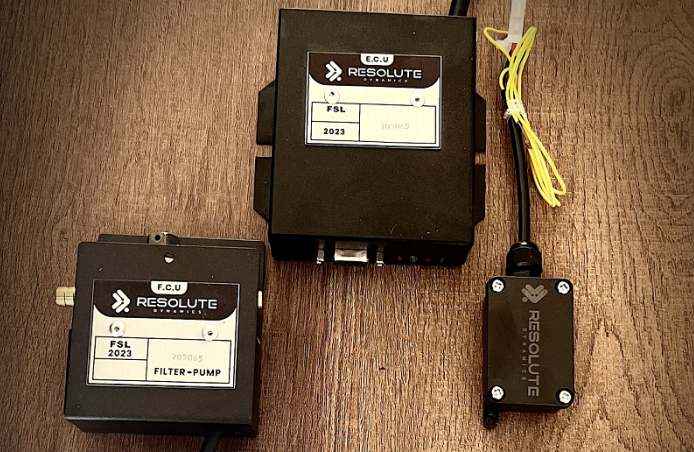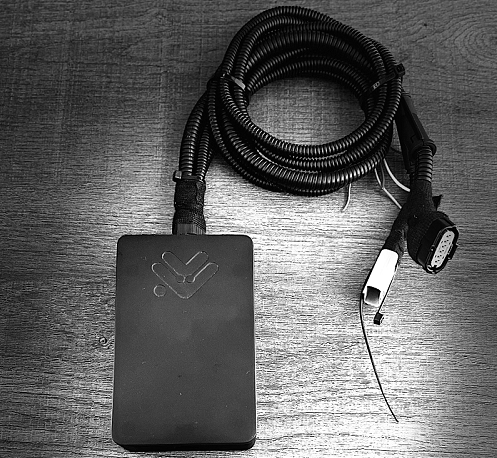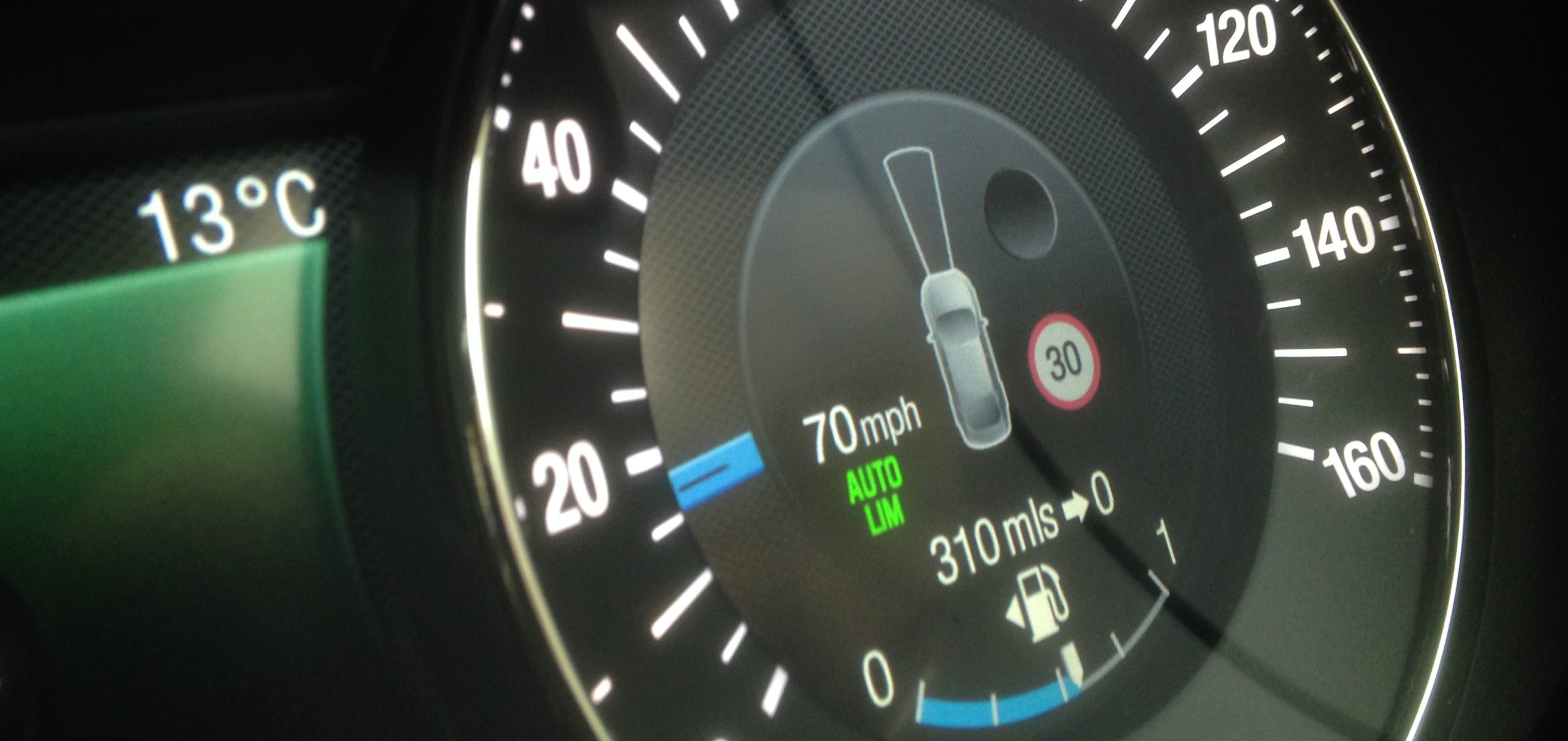
A speed governor is a device that restricts a vehicle’s top speed to a fixed, preset limit by controlling fuel flow, throttle input, or the engine’s electronic speed signal. Once a vehicle reaches that programmed number, say 80 km/h, the governor steps in and holds the speed there, no matter how hard the driver presses the accelerator.
I want to walk you through exactly what that means, how the device does its job, the different kinds you will run into, and the laws that make these units mandatory in many countries. By the end, you will understand the speed governor the way a fleet manager or a transport inspector understands it.
What Does “Speed Governor” Mean?
The term “speed governor” describes any mechanism that governs, or regulates, the maximum velocity of a moving vehicle. The word “governor” comes from old engine engineering, where a governor was the part that kept a steam engine or motor from running too fast.
The idea carried straight over to cars, trucks, and buses. Today a speed governor is the electronic or mechanical guard that sets a ceiling on how fast a vehicle can go.
Here is the simplest way I can put it. A speed governor does not slow you down on its own, and it does not brake for you. It just refuses to let the vehicle climb past the number it has been programmed to enforce. Drivers often call this the “governed speed” or the “set point.” Engineers sometimes call the moment the device kicks in the “kill point,” because that is where extra acceleration gets cut off.
Speed Governor vs Speed Limiter vs Speed Restrictor
These three terms point to the same core function: capping a vehicle’s maximum speed. The difference is mostly regional habit, not engineering.
- Speed governor is the common name in India, parts of Africa, and the United States.
- Speed limiter is the standard term in the UAE, the United Kingdom, and the European Union.
- Speed restrictor and road speed limiter (RSL) show up in technical manuals and older paperwork.
So if a supplier in Dubai talks about a “speed limiter” and a transport officer in Mumbai talks about a “speed governor,” they are describing one and the same product. I mention this because the mixed vocabulary confuses a lot of first-time buyers.
What Is the Function of a Speed Governor?
A speed governor performs three main functions: it caps top speed, it enforces legal compliance, and it protects the vehicle and the people around it.
- Caps the maximum speed. This is the headline job. The governor holds the vehicle at or below the set limit so a heavy truck cannot suddenly hit highway speeds it was never built to handle safely.
- Enforces compliance. Many governments require a working governor before a commercial vehicle can pass inspection. The device turns a paper rule into a physical one.
- Protects assets and lives. Slower top speeds mean shorter stopping distances and far less kinetic energy in a crash. That lowers both injury severity and repair bills.
Notice what the governor does not do. It does not steer, it does not read traffic signs on its own, and it does not replace a careful driver. It simply removes the option of dangerous over-speeding.
How Does a Speed Governor Work?
A speed governor works by interrupting one of the three things an engine needs to accelerate: fuel, air (throttle), or the electronic command to go faster. The device constantly watches the vehicle’s road speed through a sensor on the wheel, gearbox, or the engine control unit (ECU). The moment speed touches the set point, it acts.
Think of it like a ceiling in a room. You can jump as high as you want, but your head stops at the ceiling. The governor is that ceiling for speed.
There are three working styles you should know.
Mechanical Speed Governors
A mechanical governor uses spinning weights and spring tension to physically limit fuel or throttle as engine speed rises. This is the oldest design, built on the centrifugal, or flyweight, principle. As the engine spins faster, small weights fly outward and pull back the fuel or throttle linkage.
These units are simple and rugged, but they are less precise and harder to fine-tune. You mostly find them on older diesel engines and some industrial equipment.
Electronic Speed Limiters (ESL)
An electronic speed limiter caps speed by sending a command through the vehicle’s ECU to cut acceleration at the set point. The ESL taps into the same digital brain that already runs the engine.
Because it speaks the ECU’s language, it can hold the limit with tight accuracy and it can be reprogrammed without tearing the engine apart.
This is the modern standard for cars, trucks, buses, and specialized vehicles. If you want the full breakdown of how this hardware is built and approved, the Speed Limiter / Speed Governor device page covers the engineering side in depth.
Fuel-Type Speed Limiters (FSL)
A fuel-type speed limiter controls speed by electronically managing the fuel flow into the engine. Instead of choking the throttle, it trims the fuel supply the engine receives once the vehicle reaches its limit.
This keeps the ride smooth and tends to help fuel efficiency, which is why fleets watching their running costs often lean toward it. Both FSL and ESL units are widely used and trusted for commercial fleets.
What Are the Types of Speed Governors?
Speed governors come in five practical types, sorted by how they control speed and which vehicles they suit best. Here is a quick comparison.
| Type | How it controls speed | Best-fit vehicle | Adjustable? |
|---|---|---|---|
| Mechanical governor | Spinning weights cut fuel/throttle | Older diesels, industrial gear | Limited |
| Electronic Speed Limiter (ESL) | ECU command cuts acceleration | Trucks, buses, cars | Yes |
| Fuel-Type Speed Limiter (FSL) | Trims fuel delivery | Commercial fleets | Yes |
| Dual / Multi speed limiter | Switches limits by zone or terrain | Mixed-route fleets, off-road | Yes |
| Adaptive speed limiter | Adjusts the limit to conditions | Smart and modern fleets | Yes |
For fleets that cross different speed zones, a Dual Speed Limiter / Multi Speed Limiter can hold one limit on a highway and a lower one inside a city. The Adaptive Speed Limiter goes a step further and shifts the cap based on driving conditions.
Which Vehicles Need a Speed Governor?
Governments usually require speed governors on commercial and high-risk vehicles, including buses, heavy trucks, school buses, taxis, and tankers carrying hazardous goods. These are the vehicles that do the most damage when they over-speed, because of their weight and the number of people they affect.
- Buses and coaches carry many passengers, so a capped speed protects more lives at once.
- Heavy trucks and goods carriers need longer distances to stop, especially when loaded.
- School buses carry children, which is why many regions hold them to strict, lower limits. A dedicated setup like School Bus Safety Solutions pairs the governor with extra child-safety features.
- Taxis and ride-hail cars rack up huge daily mileage, raising their exposure to risk.
- Tankers and hazmat carriers turn a high-speed crash into a possible spill or fire.
Most rules leave out two-wheelers, private cars below a certain seat count, and emergency vehicles such as ambulances, fire tenders, and police cars.
What Is the Legal Definition of a Speed Governor?
In legal terms, a speed governor is defined as a mandatory speed-limitation device that must hold a vehicle at or below a set maximum speed, fitted and certified according to a country’s transport regulations.
The exact wording changes from place to place, but the core idea is the same everywhere: it is a regulated safety device, not an optional accessory, and tampering with it is an offense.
Speed Governor Law in the UAE (RTA)
In the UAE, the Roads and Transport Authority (RTA) requires approved speed limiters on commercial vehicles, and a valid certificate is needed to pass annual vehicle inspection.
The device must come from an approved type and work within the RTA’s accepted range. Without it, the vehicle cannot legally stay on the road. Once installed, the unit is documented through a Speed Limiter Certificate, which inspectors check during testing across emirates such as Dubai, Abu Dhabi, Sharjah, and Ajman.
Speed Governor Regulations Around the World
Speed governor laws exist on every major continent, and most of them trace back to one shared technical standard, UN Regulation No. 89. Here is how the picture looks in a few key regions.
- United Nations (UNECE R89): UN Regulation No. 89 has been the international rulebook for speed limitation devices since it entered into force on 1 October 1992. An R89-certified device must hold the set speed within about ±4 km/h and must be tamper-evident, meaning any attempt to bypass it should be visible to inspectors.
- India: The Ministry of Road Transport and Highways made speed governors compulsory through notification G.S.R. 290(E), dated 15 April 2015, under the Central Motor Vehicles Rules, 1989. Commercial buses and trucks are capped at 80 km/h, the device must meet Automotive Industry Standard AIS-018, and a tamper-proof sticker goes on the windscreen.
- European Union: EU rules have required limiters on heavy trucks and buses for years. The newer General Safety Regulation, Regulation (EU) 2019/2144, added Intelligent Speed Assistance (ISA) for new vehicle types from 6 July 2022 and for all new vehicles from 7 July 2024. ISA differs from a hard governor because it warns and nudges the driver rather than forcing a fixed cap, and the driver stays in full control.
- East Africa (Kenya and neighbors): Authorities such as Kenya’s National Transport and Safety Authority (NTSA) require R89-certified, GPS-linked limiters, with public service vehicles held near 90 km/h and heavy goods vehicles near 80 km/h.
The takeaway is simple. Whether the law calls it a governor or a limiter, the device has become a standard legal requirement for commercial transport in much of the world.
What Speed Is a Governor Set To?
A speed governor is usually set to 80 km/h to 100 km/h for commercial vehicles, depending on the country and the vehicle type. The number is fixed by law, not by the owner’s preference.
| Region / vehicle | Typical preset speed |
|---|---|
| UAE heavy commercial vehicles | Around 80 km/h |
| India buses and trucks | 80 km/h |
| Kenya public service vehicles | Around 90 km/h |
| Kenya heavy goods vehicles | Around 80 km/h |
| EU heavy goods vehicles (long-standing rule) | Around 90 km/h |
| EU buses and coaches (long-standing rule) | Around 100 km/h |
Always confirm the current figure with your local transport authority, since limits get revised over time and can differ by vehicle class.
What Are the Benefits of a Speed Governor?
A speed governor delivers five clear benefits: safer roads, lower fuel costs, reduced wear, easier compliance, and better fleet control.
- Reduces crash severity. Lower top speed means less kinetic energy in an impact and shorter stopping distance.
- Saves fuel. Holding a steady, capped speed cuts the hard acceleration that burns extra diesel or petrol.
- Lowers maintenance. Smoother driving reduces strain on the engine, brakes, and tires.
- Keeps you legal. A working, certified device clears inspections and avoids fines or off-road penalties.
- Improves fleet oversight. When paired with a GPS Tracking System, managers can watch speed and location together and spot risky driving early.
I will not promise that a governor prevents every accident, because no single device can. What it does reliably is remove over-speeding from the list of things that can go wrong.
Can You Remove or Adjust a Speed Governor?
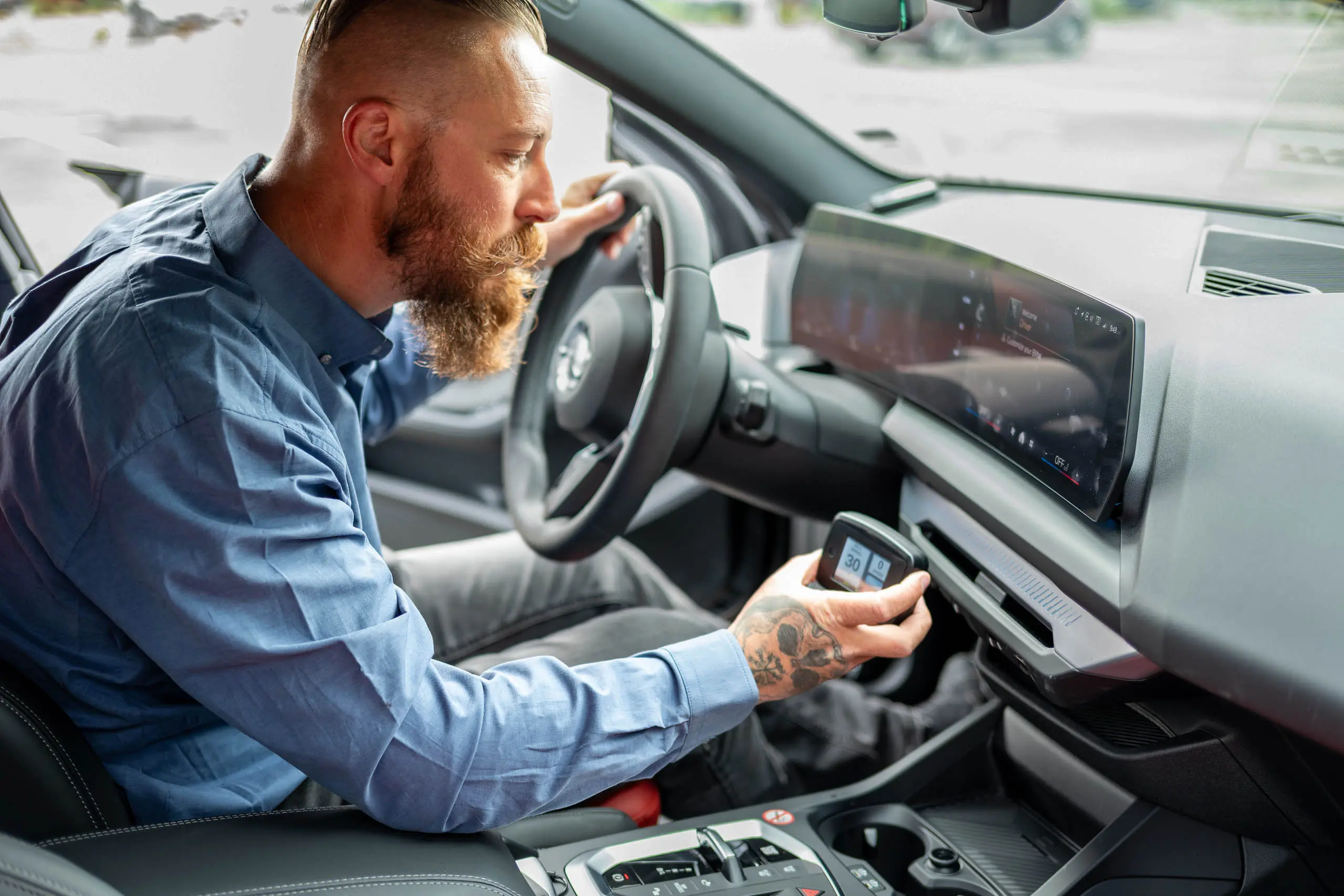
Removing or disabling a speed governor on a regulated vehicle is illegal in most countries and treated as a serious traffic offense. Modern units are tamper-evident by design, so any attempt to disconnect a sensor, rewrite the ECU, or fit a defeat device usually triggers a fault code that inspectors can read.
Adjusting the set speed is a different matter. The limit can be reprogrammed, but only within the legal range and only by an authorized technician. On adjustable and multi-zone units, the limit can even change automatically by route or terrain, which is the legal and intended way to “change” the cap.
Frequently Asked Questions
Is a speed governor the same as a speed limiter? Yes. A speed governor and a speed limiter describe the same device that caps a vehicle’s maximum speed. The name simply changes by region.
Is it illegal to remove or tamper with a speed governor? In most countries, yes. On regulated commercial vehicles, disabling or bypassing the device is an offense, and tamper-evident designs make the interference easy to detect during inspection.
Can a speed governor be adjusted? The set speed can be reprogrammed by an authorized technician, but only within the legal limit for that vehicle. Multi-zone and adaptive units can shift the cap automatically by location or conditions.
Does a speed governor improve fuel economy? Often, yes. By holding a steady capped speed and trimming hard acceleration, fuel-type and electronic limiters can reduce fuel use, which is a common reason fleets install them.
Do private cars need a speed governor? Usually not. Most laws apply governors to commercial and high-risk vehicles such as buses, trucks, and taxis, while private cars, two-wheelers, and emergency vehicles are commonly exempt.
See also: What is Intelligent Speed Assistance (ISA)? – Tamper-proof seals explained – Post-installation audit checklist.

The Resolute Dynamics team designs and manufactures speed limiters (SLD), GPS tracking, and automotive safety systems used on 200,000+ vehicles across 20+ countries. We write about fleet compliance, road-safety regulation, and vehicle-safety technology, including Malaysia’s JPJ SLD mandate, UAE RTA rules, and global standards like UN R89, to help fleet operators and transport businesses stay safe and compliant.