Five East African countries now treat the speed governor as a legal requirement rather than an optional safety add-on, and the region carries some of the highest road-fatality rates per capita anywhere in the world.
That mix of strict law and dangerous roads is exactly why I keep getting the same question from fleet owners in Nairobi, Dar es Salaam, Kampala, and Kigali: “What does the law actually expect from my vehicles?” The honest answer is that it depends on which border you cross, because each country runs its own regulator, its own standard, and its own penalty regime.
This guide walks through every one of them, country by country, so you know precisely what a compliant fleet looks like across East Africa.
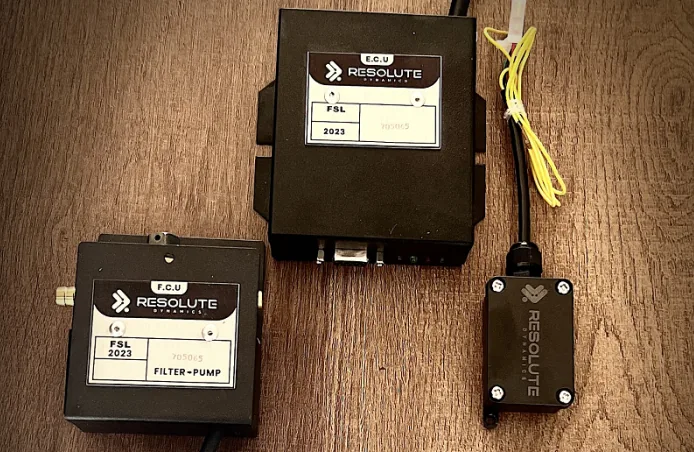
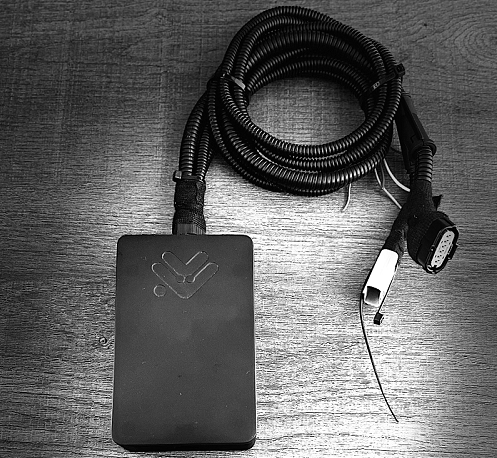
A speed governor (also called a speed limiter or a maximum road speed limiter) is a device that caps how fast a vehicle can travel by controlling engine power once the vehicle reaches a set ceiling.
It does not slam the brakes. It simply refuses to let the engine push past the configured limit. That is the core idea everywhere in the region, even though the names, the settings, and the paperwork shift from one country to the next.
Speed governor vs. speed limiter vs. RPM regulator
People use these three terms loosely, and that causes real confusion at inspection time. A speed governor and a speed limiter are the same thing in East African regulatory language: a device that limits maximum road speed. An RPM regulator is different.
It controls engine revolutions per minute, usually to protect the engine, manage fuel burn, or govern power take-off equipment, rather than to cap road speed.
When a Kenyan or Rwandan inspector asks for your “speed governor,” they mean the road-speed limiting device certified to the national standard, not the RPM control. If you want the full technical breakdown, our overview of the speed limiter and speed governor device explains how each one behaves on the road.
Kenya speed governor compliance (NTSA & KS 2295:2018)
In Kenya, speed governor compliance is governed by the National Transport and Safety Authority (NTSA) under the Traffic Act and the NTSA Act, with the device standard set by the Kenya Bureau of Standards (KEBS) as KS 2295:2018. This is the strictest and most data-driven framework in the region, and it is where I spend most of my time with clients, so let me break it down properly.
Which vehicles must be fitted
The fitment rule in Kenya is tied to weight and passenger capacity. The National Transport and Safety Authority (Operation of Commercial Vehicles) Regulations require that all commercial vehicles carry a speed governor that conforms to KS 2295.
In practice, enforcement focuses on Public Service Vehicles (PSVs) of seven seats and above and commercial vehicles with a tare weight of 3,048 kilograms and above. So a matatu, a long-distance bus, a tipper truck, a tanker, or a school bus all fall squarely inside the rule.
A small private saloon car does not. If your vehicle moves passengers for hire or hauls cargo at scale, assume the governor is mandatory.
KS 2295:2018 — what changed from KS 2295:2011
The current standard is KS 2295:2018, which replaced the earlier KS 2295:2011 edition that came into effect on 1 April 2014. The standard comes in two parts: KS 2295-2 Part 1 covers performance and installation requirements, and KS 2295-2 Part 2 covers system and component specifications.
The big leap with the 2018 edition is data. Older governors simply capped speed. The newer devices store trip data and transmit it, which turns a passive mechanical limit into an active monitoring tool. That single change is what reshaped enforcement in Kenya, because the regulator no longer relies on a roadside officer happening to catch you.
Speed settings and the IRSMS data rule
KS 2295:2018 devices transmit speed data every five seconds to NTSA’s Intelligent Road Safety Management System (IRSMS), and recorders log vehicle data for 72 hours. The transmitted record includes the vehicle’s speed, its location, the driver, and the SACCO or company it belongs to.
The long-established road-speed setting for PSVs and commercial vehicles in Kenya has been 80 kilometres per hour, anchored in the Traffic Act. Newer guidance tied to UNECE Regulation 89 adoption references differentiated settings for PSVs and heavy goods vehicles, so I always tell clients to confirm the exact gazetted figure for their vehicle class with NTSA at fitting time rather than assume.
The principle, though, never changes: the governor enforces the legal ceiling automatically, and the system sees it if you try to exceed it.
R89 certification and tamper-evident devices
Kenya is moving toward UNECE Regulation 89 (R89) certified speed limiting devices, which matters more than it might sound. Earlier generations of governors used in the region were largely analogue units that a mechanic could defeat in minutes.
An R89-certified device carries a type-approval mark and is built to be tamper-evident, meaning any attempt to bypass or disconnect it triggers a fault that an inspector can see.
This shifts compliance from a paperwork exercise to a hardware-level guarantee, which is the entire point. Counterfeit and uncertified devices circulate at lower prices, and fitting one exposes you to the same penalties as having no device at all.
NTSA-approved installation, calibration, and certification
A compliant device is only half the job. The governor must be installed and calibrated by an NTSA-approved provider, and you must keep evidence of fitment and a calibration record. After installation, you receive a speed limiter certificate, which is the document inspectors and licensing officers ask for.
No certificate, no clean inspection. With NTSA tightening its garage and inspection framework, including annual inspections for commercial vehicles, the certificate has become the linchpin of the whole compliance chain.
Penalties for non-compliance in Kenya
Non-compliance in Kenya is expensive and operationally crippling. Reported fines run up to KSh 100,000, and the heavier consequence is that NTSA-issued licences can be invalidated when a vehicle fails to present a functional, compliant governor.
A 2024 inter-ministerial road safety directive went further, ordering institutions and companies to present vehicles for compliance checks within tight windows, with licence invalidation as the stick. For a logistics operator, a parked, unlicensed truck costs far more per day than the device ever did.
Tanzania speed governor compliance (LATRA)
In Tanzania, land transport is regulated by the Land Transport Regulatory Authority (LATRA), established by the LATRA Act No. 3 of 2019, which replaced the former SUMATRA.
The backbone of Tanzania’s monitoring approach is the LATRA Vehicle Tracking System (VTS), a digital platform built specifically to watch commercial vehicles, especially long-distance passenger buses and freight carriers.
LATRA Vehicle Tracking System (VTS)
The LATRA VTS uses GPS and GSM technology to track location, speed, and route adherence in real time. It also runs driver identification, so only registered, authorised drivers operate a given vehicle, and it analyses driving patterns like speed and sudden braking to flag risky behaviour.
Integration with the VTS is mandatory for certain vehicle categories, which means the system effectively functions as Tanzania’s speed-and-behaviour enforcement layer, much like Kenya’s IRSMS. If you run buses on the Dar es Salaam corridors, VTS integration is not negotiable.
Which vehicle categories are covered
LATRA’s reach covers operators of public passenger transport, goods carriers, and special-hire vehicles. Tanzania’s general road-speed framework under the Road Traffic Act sits at 50 km/h in urban areas, 80 km/h on rural roads, and 100 km/h on highways, and commercial vehicles undergo annual roadworthiness inspections.
The practical takeaway is that any bus or freight vehicle operating commercially needs to be VTS-ready and speed-managed to keep its road service or carrier licence.
Uganda speed limiter and speed-management rules
Uganda governs road speed through the Traffic and Road Safety Act (Cap. 361) and the newer Traffic and Road Safety (Prescription of Speed Limits) Regulations, 2024, overseen by the Ministry of Works and Transport and enforced by the Uganda Police Force.
Uganda’s model leans more toward tiered speed limits and automated enforcement than toward a single device mandate, so the compliance picture looks a little different here.
The 2024 tiered speed limits
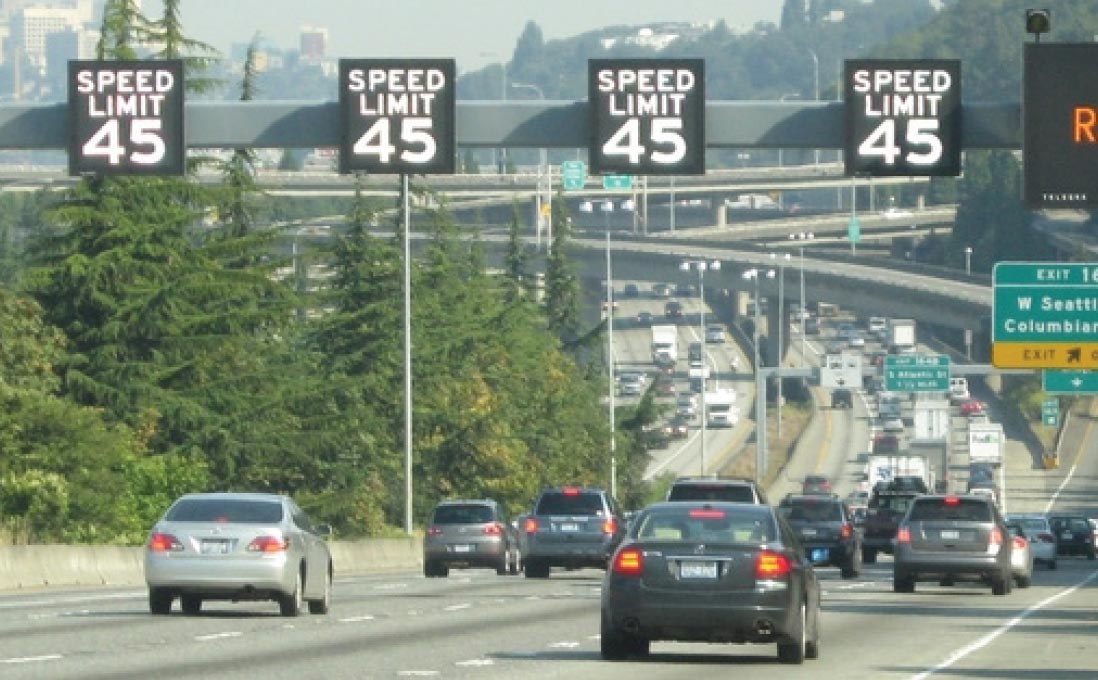
The 2024 regulations set speed limits by road type and vehicle category. In urban areas, trading centres, and built-up zones, a uniform 30 km/h limit applies to all vehicles, including passenger cars, motorcycles, PSVs, and goods vehicles.
On highways, the maximum for passenger vehicles is 100 km/h, with lower ceilings for heavy goods vehicles. These are tighter urban limits than most of the region, and they reflect Uganda’s focus on pedestrian safety in dense zones.
Automated enforcement and the monitoring system
Uganda enforces these limits through an Automated Express Penalty System (EPS Auto) that uses CCTV cameras and digital number plates tied to the country’s Intelligent Transport Monitoring System. Offenders must pay within 72 hours to avoid a surcharge, and non-payment can lead to vehicle impoundment.
For fleet operators, this means a governor set to the correct ceiling is the cleanest way to avoid a steady drip of automated fines, even where the device itself is not the headline legal requirement.
Rwanda speed governor compliance (RURA & RNP)
Rwanda runs one of the most rigorous road-safety environments in Africa, jointly administered by the Rwanda Utilities Regulatory Authority (RURA) and the Rwanda National Police (RNP), with the device standard published by the Rwanda Standards Board (RSB).
Rwanda has made speed governors mandatory for public transport vehicles carrying both passengers and goods, and it backs that up with national standards and a tracking platform.
RSB standard and RNP-approved fitting centres
The RSB developed a national standard, “Maximum road speed governors for motor vehicles — Requirements,” covering performance, installation, and component specifications.
Installation must be carried out at an RNP-approved fitting centre, and self-installation by owners or random workshops is not permitted. This tight control over who fits the device is something Rwanda enforces more strictly than its neighbours.
GPS transmission and annual re-certification
Compliant devices in Rwanda are GPS-enabled and transmit real-time location and speed data to the RURA tracking platform, and operators face annual re-certification, meaning a device that passes one year must be rechecked the next.
Recent guidance has pushed the requirement toward all vehicles above a heavy-weight threshold and a uniform low ceiling, which makes Rwanda’s standard a useful baseline for anyone planning routes that touch the country.
Ethiopia and the wider region
Ethiopia has been accelerating its commercial-vehicle safety programme under the Ethiopian Roads Authority and the Ministry of Transport and Logistics, with requirements pointing toward approved speed limiting devices on intercity buses, minibuses, and trucks above 3,500 kg.
The framework here is newer and still firming up, so I treat Ethiopian requirements as emerging rather than fully settled, and I recommend confirming current rules directly before specifying devices for an Ethiopian fleet. Across the rest of the region, momentum is clearly in one direction: more countries, more standards, and tighter enforcement every year.
Cross-border fleets: the Northern and Central Corridors
If your trucks run the Northern Corridor from Mombasa through Nairobi to Kampala and Kigali, or the Central Corridor out of Dar es Salaam, you face several regulators on a single trip, and that is where compliance gets genuinely tricky. A device and a speed setting that satisfy Tanzania may not satisfy Rwanda, and vice versa.
The simplest rule I give cross-border operators is this: set your fleet to the strictest standard on the route, and fit a device certified across every country you touch. That way one configuration clears every border instead of forcing a reset at each one.
How EAC harmonization affects operators
The East African Community (EAC) has been working to harmonize vehicle standards and emission rules across member states, and the region already shares some standards, such as the East African Standard for vehicle exhaust emission limits.
Full harmonization of speed governor rules is not complete, so for now the differences between NTSA, LATRA, RURA, and Uganda’s framework remain real. Watching EAC progress matters, because the day the standards fully align is the day cross-border compliance gets dramatically simpler.
Specifying one device for the whole route
The practical move is to specify a device built around the strictest common denominator: R89 type approval, tamper-evidence, GPS transmission, and the ability to hold the lowest speed ceiling on your route. A GPS tracking system paired with the governor lets you feed location and speed data to whichever national platform a country requires, instead of swapping hardware at each frontier.
What makes a speed limiter device compliant across East Africa
A truly region-ready speed limiter meets five core criteria: valid type approval, tamper-evidence, accurate speed-holding, telematics transmission, and authorised installation. Miss any one of them and you are exposed somewhere on the map. Let me unpack the two that trip people up most.
Tamper-evidence, type-approval marks, and telematics
Inspectors increasingly check for a type-approval mark on the device casing and a tamper-evident seal that proves the unit has not been bypassed.
Our guide to tamper-proof seals on speed governors covers why this single feature decides whether a device passes or fails. On top of that, the device must push data to the national system, whether that is Kenya’s IRSMS or Tanzania’s VTS, because monitoring is now baked into the law rather than bolted on afterward.
Dual and multi-speed limiters for mixed duty
Vehicles that swing between dense city streets and open highways, or that cross borders with different ceilings, benefit from a dual speed limiter and multi-speed limiter that can hold more than one configured limit.
Instead of a single hard cap, the device adjusts the ceiling to the zone or the jurisdiction, which keeps you legal in a 30 km/h Ugandan town and on a 100 km/h Tanzanian highway without manual intervention.
How to make your fleet compliant: a step-by-step checklist
Follow these seven steps to bring an East African fleet into compliance without backtracking:
- Audit every vehicle against its country’s rule, checking weight, passenger capacity, and current device status.
- Verify that each existing device carries a valid type-approval mark and is not a counterfeit unit.
- Select a certified governor that meets the strictest standard on your routes, especially for cross-border vehicles.
- Install the device only at a regulator-approved fitting centre, such as an NTSA-approved provider in Kenya or an RNP-approved centre in Rwanda.
- Calibrate the device to the correct legal speed ceiling for each vehicle class and confirm the setting.
- Register the device on the relevant national portal and integrate it with the required tracking platform.
- Retain the speed limiter certificate, calibration record, and re-certification dates in each vehicle and your records.
Speed governor penalties and rules across East Africa compared
The table below puts the four core frameworks side by side so you can see the differences at a glance.
| Country | Regulator | Governing framework | Device standard | Vehicles covered | Key enforcement / penalty |
|---|---|---|---|---|---|
| Kenya | NTSA (standards by KEBS) | Traffic Act, NTSA Act | KS 2295:2018 | PSVs 7-seat+ and commercial vehicles ≥ 3,048 kg | Fines up to KSh 100,000; NTSA licence invalidation; 5-second IRSMS data |
| Tanzania | LATRA | LATRA Act No. 3 of 2019; Road Traffic Act | LATRA VTS integration | PSVs, goods carriers, special-hire | Mandatory VTS tracking; licence conditions |
| Uganda | Ministry of Works / Uganda Police | Traffic and Road Safety Act Cap. 361; 2024 Speed Limits Regs | Speed-limit enforcement model | All road users by class | EPS Auto fines; 72-hour payment; impoundment |
| Rwanda | RURA and Rwanda National Police | RURA framework; RSB standard | RSB speed governor standard | Public transport, passengers and goods | RNP-approved fitting only; annual re-certification |
A useful companion read is our global comparison of speed limiter laws, which places East Africa next to other regions, and our explainer on ISO and SAE speed governor standards for the technical baseline behind these national rules.
Frequently asked questions
Are speed governors mandatory in Kenya? Yes. Under NTSA regulations, all commercial vehicles must carry a speed governor conforming to KS 2295, with enforcement centred on PSVs of seven seats and above and commercial vehicles weighing 3,048 kg and above.
What is KS 2295:2018? KS 2295:2018 is the Kenyan standard for maximum road speed limiters, published by KEBS. It sets performance, installation, and component requirements, and its devices transmit speed data to NTSA’s IRSMS every five seconds. It replaced the KS 2295:2011 edition.
What speed are PSV speed governors set to in Kenya? The long-established road-speed setting for PSVs and commercial vehicles in Kenya is 80 km/h under the Traffic Act. Because newer R89-linked guidance references differentiated settings by vehicle class, confirm the current gazetted figure with NTSA at fitting time.
Does one speed limiter work across East African borders? Not automatically, because Kenya, Tanzania, Uganda, and Rwanda each run separate regulators and platforms. A device with R89 type approval, GPS transmission, and multi-speed capability, set to the strictest ceiling on your route, is the most reliable way to clear every border.
Who can legally install a speed governor in Kenya? Only an NTSA-approved provider may install and calibrate the device, and that provider issues the speed limiter certificate inspectors require. Rwanda applies a similar rule through RNP-approved fitting centres.
Related: Tamper-proof seal procedure – Post-installation audit checklist – What is a speed governor?

The Resolute Dynamics team designs and manufactures speed limiters (SLD), GPS tracking, and automotive safety systems used on 200,000+ vehicles across 20+ countries. We write about fleet compliance, road-safety regulation, and vehicle-safety technology, including Malaysia’s JPJ SLD mandate, UAE RTA rules, and global standards like UN R89, to help fleet operators and transport businesses stay safe and compliant.