When an inspector waves down one of your trucks, or an insurer questions a claim, or an auditor arrives unannounced, the first thing they want is proof. Proof that the speed limiter on that specific vehicle is set correctly, sealed, calibrated, and legal for the road it is on. That proof is the vehicle’s compliance record. Without it, a perfectly compliant truck can still fail a check, because on paper you cannot show it complies.
Most fleets keep bits of this information scattered: a calibration certificate in a drawer, a serial number in an email, a road-test note on a clipboard. That works until the day it does not. What you actually need is one organized record per vehicle, kept current across its whole life, that pulls every piece of compliance evidence into a single place. This guide shows you how to build that record and keep it inspection-ready, so the proof is always there when someone asks for it.
What a Speed Limiter Compliance Record Is and Why Every Vehicle Needs One
A speed limiter compliance record is a single per-vehicle file that proves the device is configured, calibrated, sealed, and legal, and that tracks every change over time. It is not one certificate. It is the running history of that vehicle’s limiter, from the day it was fitted to the present.
Every vehicle needs its own because compliance is checked one vehicle at a time. A roadside officer inspects that truck, not your fleet in the abstract. An insurer investigating a crash wants that vehicle’s speed and calibration history, not a general policy document. An auditor confirming regulatory compliance samples individual vehicles and asks for their files. When the record exists and is complete, these moments are quick and painless.
When it is missing or patchy, the same moments turn into fines, rejected claims, and vehicles pulled off the road while you scramble for paperwork. The record is cheap to maintain and expensive to lack, which is why it belongs on every unit in your fleet.
The Core Sections of a Per-Vehicle Compliance Record
A complete record has five core sections, each answering a different question an inspector or auditor might ask. Build the file around these, and you will never be caught missing a category. The detail inside each section lives in your specialist processes, which I link to below, so here I am giving you the architecture, not re-listing every field.
Vehicle and device identity
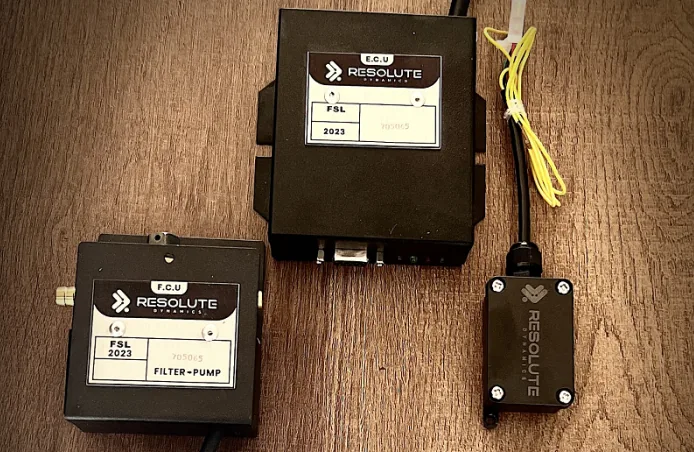
Start with what uniquely identifies the vehicle and the hardware on it: the VIN, registration plate, and your internal fleet unit number, plus the limiter’s serial number, model, and the firmware version currently installed. This section answers “which vehicle and which device are we talking about,” and it is the anchor everything else attaches to.
Configuration and calibration history
Record the governed speed setting, the tolerance used, and the date and time of commissioning, then keep a running calibration log that shows every calibration since, not just the last one. That history matters because regulators and insurers often look back several years. The full log format and technician process are covered in our guide on how to calibrate and reset a speed limiter, and this section of the record is where those results land.
Certification and seal records
Hold the compliance certificate for each market the vehicle operates in, along with every tamper-evident seal number installed or removed and the reason for any seal break. In many jurisdictions the certificate is what proves legality at inspection, so this section is often the first one an officer asks to see.
Commissioning and audit sign-off
Keep the completed commissioning checklist and the road-test sign-off from installation, showing the device was verified working before the vehicle returned to service. The full commissioning process and the fifteen-point checklist are laid out in our post-installation speed limiter audit guide, and the signed output of that audit belongs in this part of the record.
Incident and fault history
Finally, log any limiter faults, failures, or over-speed incidents with their timestamps and telematics evidence. If a device ever malfunctions, a documented, factual account protects you legally and with insurers, as our guide on logging speed limiter failures explains. A clean incident history also shows a pattern of responsible management over time.
Digital or Paper Records: Which to Use

Use a digital record as your single source of truth, backed by paper copies where the road demands them. This gives you the searchability of a database and the practicality of a document a driver can hand over at a checkpoint.
A digital record inside a fleet management system is far easier to keep current, search, and back up than a folder of paper, and it can trigger alerts when a calibration is due. Trying to run this on a simple spreadsheet usually looks fine for the first year and then falls apart as the fleet grows and the history deepens. That said, keep printed copies of key certificates for roadside inspections and for crossing into stricter regions, since an officer at the roadside cannot log into your system. The sensible setup is digital-first for management and oversight, with paper as the portable proof drivers carry.
Keeping the Record Live: Updating It Over Time
A compliance record is a history, not a snapshot, so it must be updated every time the vehicle’s limiter changes. The single most common failure is treating the file as done once the vehicle is commissioned. It never is.
Add a new entry whenever the device is recalibrated, whenever firmware is updated, whenever a repair touches the limiter or its wiring, whenever a seal is broken and replaced, and whenever the governed speed is reconfigured.
Each entry should tie back to a date, a technician, and a work order, so every change is traceable to real documented work. Tying record updates to your regular recalibration cycle is the easiest way to keep this discipline, and our guide on how often speed governors should be calibrated helps you set that rhythm. A record kept live this way tells the full story of the vehicle; one left as a snapshot tells only its first day.
Meeting Jurisdiction-Specific Record Requirements

Different authorities demand different documents, so your record must hold whatever each market you operate in requires to see. A file that satisfies one country’s inspector can fall short in another, and for cross-border fleets that gap is a real risk.
Map the requirements for each region and keep the matching evidence on file. In Singapore, the LTA expects a Certificate of Compliance retained in your fleet records and may request it during inspections or accident investigations. In the UAE, RTA rules and GSO standards govern what counts as compliant, while Saudi Arabia adds SABER documentation. In Malaysia the JPJ framework applies, and in the United States, FMCSA and state rules often tie compliance evidence to periodic inspection or registration renewal.
Our global comparison of speed limiter laws and the speed limiter laws by state guide help you pin down exactly what each market wants, and the installation and mandatory requirements guide covers the baseline documents that apply almost everywhere.
Making Records Inspection- and Audit-Ready
An inspection-ready record is one you can produce completely and quickly, for any vehicle, on demand. Speed of retrieval matters almost as much as completeness, because a record you cannot find fast is nearly as useless as one that does not exist.
Run a completeness check on each file: is every section filled in, is the certificate current, are seal numbers recorded, is the road-test sign-off signed? Set a retention period that keeps several years of history, since audits and investigations often reach back well beyond the last calibration. Decide who can access the records and make sure retrieval is a matter of seconds, not an afternoon of searching. When you need to submit evidence to a regulator, being able to assemble a clean documentation package quickly is a real advantage, and the structure for that package is covered in the audit guide linked above.
Managing Records Across a Whole Fleet
Individual records only deliver their full value when they roll up into fleet-wide oversight. One tidy file per vehicle is good; being able to see the compliance status of every vehicle at once is what actually keeps you ahead of problems.
A good fleet management platform lets you view configuration, calibration history, and certificate status across the fleet, and flags vehicles that are due or overdue rather than leaving you to firefight. You can filter by depot, vehicle class, or route to schedule workshops efficiently instead of reacting to a failed inspection. This fleet-level view is where scattered paperwork most obviously fails and a structured system most obviously wins, a point our roundup of the top fleet manager questions returns to repeatedly. Per-vehicle discipline and fleet-level visibility are two halves of the same system.
A Per-Vehicle Compliance Record Checklist
Use this as the skeleton for every vehicle’s file. Each row is a section, what it holds, and when to update it.
| Section | What to include | Update when |
|---|---|---|
| Identity | VIN, plate, unit number, device serial, model, firmware | Device or firmware changes |
| Configuration | Governed speed, tolerance, commissioning date | Any reconfiguration |
| Calibration log | Full history of calibrations, technician, work order | Every calibration |
| Certification and seals | Certificates per market, all seal numbers | New certificate or seal event |
| Commissioning | Signed checklist and road-test sign-off | At install and re-commissioning |
| Incidents | Faults, failures, over-speed events with evidence | Every incident |
Common Record-Keeping Mistakes
The classic mistakes are treating the record as a one-time snapshot and leaving gaps that only surface under scrutiny. A few specific traps are worth naming so you can design them out.
Do not miss vehicles, because a single unrecorded truck can trigger a non-compliance notice for the fleet. Do not record only the latest calibration and lose the history, since the trail over years is what protects you. Do not skip seal numbers or the post-work road test, a habit that leaves you exposed with regulators and insurers alike. Do not let the whole system live on a fragile spreadsheet that collapses as the fleet grows. And do not keep paper only, with no searchable digital backbone, or retrieval becomes a scramble every time someone asks. Each of these is easy to avoid with a structured, live, digital-first record.
Frequently Asked Questions
What should a speed limiter compliance record include?
A compliance record should include the vehicle and device identity, the governed-speed configuration and full calibration history, certificates and seal numbers for each market, the signed commissioning and road-test sign-off, and a history of any faults or over-speed incidents. Together these prove the limiter is set correctly, sealed, and legal.
Should I keep digital or paper records?
Keep a digital record as your main source of truth, because it is searchable, easy to update, and can flag due calibrations, then keep paper copies of key certificates for roadside inspections and stricter regions. A digital-first system with paper backups gives you both management control and portable proof.
How long should I keep speed limiter records?
Keep several years of history rather than just the latest event, because audits, insurance claims, and accident investigations often look back well beyond the most recent calibration. Set a defined retention period and preserve the full calibration and incident history for each vehicle across that window.
Who needs to see these records?
Roadside inspectors, regulatory auditors, and insurers are the main parties who request them, usually for a specific vehicle during an inspection, a compliance audit, or an accident investigation. Your own compliance and safety teams also rely on them to manage the fleet.
How is a compliance record different from a calibration log?
A calibration log is one section of the wider compliance record. The log tracks calibration events over time, while the full compliance record also holds device identity, certificates and seals, commissioning sign-off, and incident history. The record is the complete file; the log is one part of it.
Final Thoughts
A speed limiter compliance record is your evidence that each vehicle is safe and legal, and it is only as good as its completeness and currency. Build one file per vehicle around the core sections, keep it digital-first with paper where the road needs it, update it every time the limiter changes, and hold whatever each market you serve requires. Do that across the fleet, and compliance stops being a scramble whenever someone asks for proof. Instead, the proof is already there, organized, current, and ready, which is exactly where you want it when an inspector, insurer, or auditor comes calling.

The Resolute Dynamics team designs and manufactures speed limiters (SLD), GPS tracking, and automotive safety systems used on 200,000+ vehicles across 20+ countries. We write about fleet compliance, road-safety regulation, and vehicle-safety technology, including Malaysia’s JPJ SLD mandate, UAE RTA rules, and global standards like UN R89, to help fleet operators and transport businesses stay safe and compliant.