If you are trying to budget for a speed limiter, here is the short version: the fully installed cost usually lands between $150 and $1,800 per vehicle, and the single biggest thing that moves that number is the device type you choose. A rugged mechanical governor sits at the cheap end. A GPS-enabled adaptive limiter wired into your telematics stack sits at the top.
I have spent years watching fleet owners get quoted wildly different prices for what sounds like the “same” device, and almost every time the confusion comes down to one thing — they were comparing a bare-bones fuel-cut governor against a smart, drive-by-wire system and expecting the sticker price to match. It never does.
So let me walk you through the real numbers, broken down by the way you actually shop for these things: by device type, then by region. I will also show you the hidden line items — calibration, recertification, sealing, telematics data — that quietly decide your true cost of ownership. Let’s get into it.
Prices below are indicative ranges compiled from installer public quotes; the final cost varies by vehicle type, ECU compatibility, regional labour rate, and any mandatory certification or annual renewal fees.
How Much Does Speed Limiter Installation Cost? (Quick-Answer Table)
Speed limiter installation costs range from roughly $150 to $1,800 per vehicle in 2026, spread across six main device types. The table below shows typical installed totals — hardware plus labor plus calibration and certification. These are industry-typical bands; your exact quote shifts with vehicle make, throttle system, and the country you register in.
| Device Type | Hardware (per vehicle) | Install / Labor | Calibration + Certificate | Typical Installed Total |
|---|---|---|---|---|
| Mechanical governor (DBV) | $100 – $300 | $40 – $120 | $30 – $100 | $170 – $520 |
| Electronic / ECU-based | $300 – $1,000 | $60 – $180 | $30 – $120 | $390 – $1,300 |
| GPS-based limiter | $300 – $800 + data plan | $60 – $180 | $40 – $150 | $400 – $1,100 + subscription |
| RPM regulator | $150 – $500 | $50 – $150 | $30 – $100 | $230 – $750 |
| Dual / multi-speed limiter (MSL) | $500 – $1,200 | $80 – $200 | $50 – $150 | $630 – $1,550 |
| Adaptive / ISA system | $700 – $1,500 + data plan | $100 – $250 | $50 – $180 | $850 – $1,930 + subscription |
Two things to notice right away. First, the GPS and adaptive rows carry a recurring cost — a telematics data plan that runs $15 to $70 per vehicle per month. Second, the calibration-and-certificate column is not optional in most regulated markets; it is what keeps your vehicle road-legal year after year.
What’s Included in a Speed Limiter Installation Cost
A speed limiter installation cost bundles five separate line items, not one. When a garage hands you a single figure, they have quietly stacked hardware, labor, calibration, certification, and a post-fit audit into that number. Pulling them apart is the fastest way to spot whether a quote is fair or padded.
Hardware — the device unit
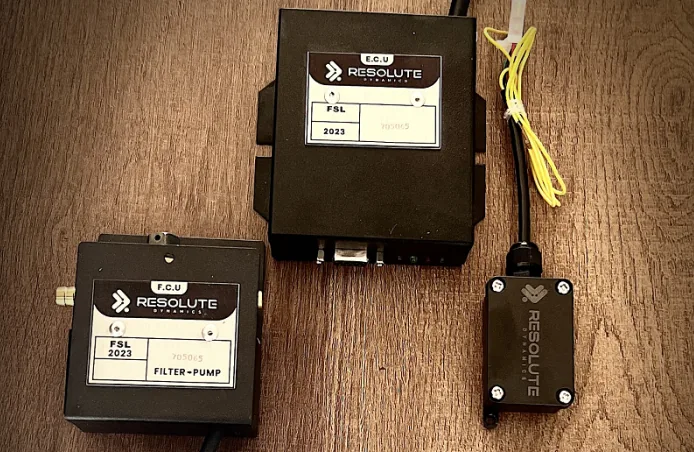
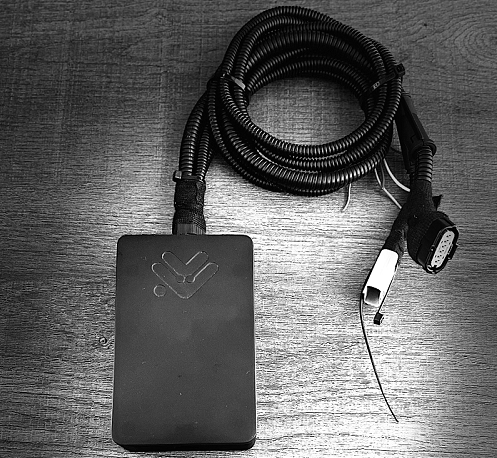
The device itself is usually 40% to 70% of your total. This is the physical kit: the control module, the speed sensor that reads pulses off the transmission or wheel, the wiring loom, and — on electronic systems — the throttle actuator or relay that talks to the engine.
A mechanical unit is little more than a sealed valve and a cable. A GPS unit adds a positioning chip, a SIM, and an antenna. The more silicon inside, the higher the hardware line.
Professional installation and labor
Labor typically adds $40 to $250 per vehicle, depending on device complexity and how buried your throttle wiring is. A plug-in mechanical governor on an old diesel truck is a quick job.
Splicing a drive-by-wire limiter into a modern ECU, mapping the CAN bus, and confirming there is no cruise-control conflict takes a trained technician far longer. This is not a corner to cut — a sloppy install is the number-one reason limiters throw fault codes or fail to engage on the highway.
Calibration and speed-setting
Calibration is where the technician programs your legal ceiling — say 80 km/h or 100 km/h — and locks it in. Expect $30 to $150 for the first calibration, often folded into the install price. This step is regulation-specific: the mandated cap for a school bus differs from a heavy tanker, and the calibration report becomes part of your compliance paper trail.
Certification and tamper-evident sealing
After calibration, an authorized center issues your compliance document and fits a tamper-evident seal over the unit. In the UAE, this is your Speed Limiter Certificate, and it is mandatory for the annual vehicle inspection across all seven emirates. Break the seal and you void the certificate — and usually trigger a fine at your next passing.
Post-installation audit and testing
A proper installer runs a road test and a diagnostic sweep before signing off. Some charge a small fee for this; good ones include it. The goal is simple: confirm the limiter engages smoothly, the seal is intact, and the telematics feed (if fitted) is reporting clean data.
Speed Limiter Installation Cost by Device Type
Device type is the loudest variable in your budget — the gap between the cheapest and priciest option is roughly 11x. Below I break down each of the six types, what you actually pay, and who each one suits. If you want the technical deep-dive on how they differ, our guide on the Types of Speed Limiter Devices: Electronic, Mechanical, GPS-Based unpacks the mechanics.
Mechanical speed limiter cost
A mechanical speed limiter costs $170 to $520 installed, making it the most affordable option on the market. These are the old-school workhorses, often called drive-by-value (DBV) units in the Gulf.
They cap speed by throttling fuel supply through a sealed valve tied to the accelerator cable — no software, no updates, no data. In dust, heat, and rough terrain where electronics struggle, a mechanical governor just keeps working.
The trade-off is rigidity. You get one fixed speed limit and nothing else — no violation logging, no location tracking, no city-versus-highway switching. For an ageing fleet on a tight budget in a spotty-signal region, that simplicity is a feature, not a flaw.
Electronic / ECU-based speed limiter cost
An electronic speed limiter costs $390 to $1,300 installed, and it is the most common type in modern commercial fleets. This system plugs straight into the vehicle’s Electronic Control Unit — the engine’s brain — and reads throttle position and speed through digital sensors. When you hit the ceiling, the ECU trims fuel or throttle response smoothly, with none of the jerkiness of a mechanical cut.
The extra spend buys precision and programmability. You can set different limits, integrate with a dashboard, and layer telematics on top. Drive-by-wire (DBW) versions, which interface directly with an electronic throttle, are the go-to for newer diesel trucks and logistics vans.
GPS-based speed limiter cost
A GPS-based speed limiter costs $400 to $1,100 to install, plus a monthly data plan of $15 to $70 per vehicle. This is where the device stops being a dumb governor and starts being location-aware. It cross-references the vehicle’s live position against a mapped database of zones — school crossings, sharp descents, congestion corridors — and adjusts the cap on the fly.
That recurring subscription is the catch most first-time buyers miss. The hardware is a one-off; the telematics feed is forever. But that same feed is what powers geofenced speed profiles, real-time violation alerts, and the driver-behavior data that lowers your insurance premium. Pair it with a full GPS tracking system and the limiter becomes a fleet-management tool, not just a compliance box.
RPM regulator cost
An RPM regulator costs $230 to $750 installed, sitting between mechanical and full electronic in price. Rather than capping road speed, it caps engine revolutions — keeping the engine in its efficient band and protecting the drivetrain.
Fleets running power take-off (PTO) equipment, tankers, and heavy machinery lean on these because the win is fuel economy and reduced wear, not just a speed ceiling.
If your pain point is diesel burn on idling or high-rev work cycles rather than motorway speeding, the RPM regulator is often the smarter buy. It quietly trims fuel waste on every shift.
Dual / multi-speed limiter (MSL) cost
A dual or multi-speed limiter costs $630 to $1,550 installed, reflecting the added intelligence of switching between two or more speed caps. A terrain-based dual limiter, for example, might hold a vehicle to 60 km/h off-road and release it to 90 km/h on sealed highway. Oil-field operators and municipal fleets love this because a single fixed cap either strangles productivity or overshoots safety zones.
The premium pays for the switching logic and the sensors that decide which limit applies. For mixed-route operations, a dual speed limiter and multi speed limiter removes the compromise you would otherwise have to make.
Adaptive / ISA cost
An adaptive limiter, also called an Intelligent Speed Assistance (ISA) system, costs $850 to $1,930 installed, plus subscription — the top of the range.
ISA marries GPS mapping, traffic-sign recognition, and sometimes AI to match the vehicle’s cap to the actual posted limit of the road it is on, second by second. The European Union now requires ISA on all new vehicles, and the UAE’s 2026 rules push GPS-enabled dynamic systems for heavy vehicles and buses.
You pay the most here because you are buying the most capability: automatic limit changes, the richest compliance logs, and the tightest tamper resistance. For operators facing strict, evolving mandates, the adaptive speed limiter is future-proofing more than a purchase.
Device-type cost comparison at a glance
| Device Type | Best For | Recurring Cost? | Relative Price |
|---|---|---|---|
| Mechanical (DBV) | Old fleets, rough terrain, tight budgets | No | $ |
| RPM regulator | PTO, tankers, fuel-focused fleets | No | $$ |
| Electronic / ECU | Modern commercial fleets | Optional | $$$ |
| GPS-based | Multi-zone urban routes | Yes | $$$ |
| Dual / multi-speed | Mixed on/off-road, oil-field | Optional | $$$$ |
| Adaptive / ISA | Strict-mandate regions, new vehicles | Yes |
Global Speed Limiter Price Variation by Region
The same device can cost two to four times more in one country than another, and it has little to do with the hardware. Labor rates, import duties, certification fees, and whether the government mandates the device all reshape the final bill. Here is how the map breaks down.
Middle East / GCC (UAE, Saudi Arabia, Qatar, Oman)
The UAE runs the most mature market in the region. Speed limiters are mandatory for commercial vehicles under Roads and Transport Authority (RTA) rules, devices must meet GCC Standardization Organization (GSO) standards, and suppliers need licensing from bodies such as ESMA and MoIAT.
Install-plus-certification is usually bundled and quote-based, and — critically — the certificate demands annual renewal. The UAE’s 2026 expansion pulls heavy vehicles over 3.5 tons, school buses, and logistics vans into the net, with GPS-enabled systems favored and fines reaching AED 10,000 for non-compliance.
Saudi Arabia takes a lighter touch: SASO oversees type-approval and GSO compatibility is required for imports, but device installation is not universally mandated. Fleets there often adopt limiters voluntarily to align with Vision 2030 safety goals. Oman and Qatar sit closer to the UAE’s model, especially for tankers and oil-field vehicles.
South Asia (India)
India is the price floor. An AIS 018-certified electronic speed governor runs roughly ₹1,000 to ₹6,000 (about $12 to $72) for the hardware alone — a fraction of Western prices — because a dense local manufacturing base drives fierce competition. Devices must carry ARAI or ICAT approval and meet Conformity of Production (COP) under AIS 037.
The catch is the recurring compliance: periodic renewal and a fresh calibration certificate from an RTO-approved or OEM-authorized service center. For telematics-linked units, AIS 140 sets the standard.
Southeast Asia (Malaysia, Singapore, Philippines)
Malaysia enforces speed-limiting devices through JPJ (Road Transport Department) mandates, rolled out in phases across commercial categories.
Singapore leans on Land Transport Authority (LTA) compliance and tends toward higher-spec smart and dual limiters, matching its dense expressway-plus-CBD road mix. The Philippines ties speed-limiter compliance to LTO registration and DTI DAO 19-14 certification, with installer accreditation adding a layer to the cost.
North America (USA, Canada)
The US picture shifted in 2026 when the FMCSA formally withdrew its proposed federal speed-limiter mandate for heavy commercial vehicles, citing state-rights and technology concerns. That leaves no national cap — adoption is voluntary or driven by insurers.
Some states, such as New York and Wisconsin, are floating device requirements for reckless drivers, with figures cited around $1,000 to $1,700 annually. Canada runs mandated limiters in provinces like Ontario and Quebec for heavy trucks, and fleet-grade GPS hardware there typically costs $99 to $499 upfront plus subscription.
Africa (Kenya, Zimbabwe, Tanzania)
Kenya requires NTSA-approved speed governors for public service vehicles, and the same pattern repeats across East and Southern Africa. Devices skew toward rugged, tamper-proof units built for tough roads and patchy connectivity, and import logistics often nudge prices above the Indian floor despite similar hardware.
Why the same device costs different amounts across regions
Four forces drive the spread: labor rates (a technician’s hour in Dubai costs more than in Chennai), import duty and logistics, certification fees set by each authority, and mandate pressure — when a device is legally required, demand and compliance overhead both lift the price. Hardware is nearly a global commodity; everything wrapped around it is local.
What Drives Speed Limiter Installation Cost
Beyond device type and geography, four factors decide where your quote lands within a range. Understanding them turns a mystery number into a predictable budget.
Vehicle type and engine system
A modern drive-by-wire diesel with a clean ECU is quick to fit and pushes cost down. An older vehicle with a mechanical accelerator pedal needs a drive-by-value setup and more fiddly integration, which raises labor. Heavy trucks, buses, and specialized rigs like tankers each carry different mounting and calibration demands.
Fleet size and volume discounts
Per-unit cost drops sharply at scale. A single-vehicle owner pays list price; a 100-vehicle fleet negotiates bundled installation, discounted hardware, and often free or subsidized fitting as part of a service contract. Volume is your strongest lever.
Certification and regulatory requirements
Where the device is mandated and certification is strict — the UAE, India, Kenya — you pay for the compliance wrapper, not just the box. Annual renewal, authorized-center-only calibration, and sealing all add recurring line items that voluntary-adoption markets skip.
Telematics and GPS integration add-ons
The moment you want location tracking, geofencing, or driver-behavior analytics, you cross from a one-time purchase into a subscription. Add-on modules — ELD compliance, dashcams, asset sensors — each stack $5 to $60 per vehicle per month on top. Worth it for many fleets, but plan for it.
Single Vehicle vs Fleet Installation Cost
Per-vehicle cost falls 20% to 40% when you install across a fleet rather than one unit at a time. Volume unlocks bundled labor, hardware discounts, and negotiated service contracts that a solo buyer never sees.
Per-unit cost at scale
A lone owner-operator fitting one electronic limiter might pay near the top of the $390–$1,300 band. A logistics company rolling out 100 units negotiates the hardware down, gets fitting folded into the deal, and secures a flat annual calibration rate. The bigger the order, the thinner the margin the supplier accepts.
Worked example: 10-vehicle vs 100-vehicle fleet
Take GPS-based limiters. A 10-vehicle fleet in a developed market often faces a first-year outlay of $3,500 to $8,500 once hardware, install, and a year of subscription are counted.
Scale to 100 vehicles and the per-unit number drops meaningfully — volume pricing on both hardware and data plans can shave a third off the per-vehicle figure, even though the total spend rises. This is exactly the math behind weighing leasing versus buying speed limiter devices: larger fleets frequently find a managed lease smooths the cash-flow lump.
Hidden and Ongoing Costs Beyond Installation
Installation is the down payment, not the full price. Four recurring costs shape your real spend over a device’s life, and skipping them can cost far more in fines and downtime.
Recalibration frequency and cost
Most regulated markets require annual recalibration — the UAE and India both tie it to yearly vehicle inspection. Budget $30 to $150 per vehicle per year for the recalibration and the renewed certificate. Miss it, and your vehicle can be barred from the road at its next passing.
Recertification and renewal
The certificate expires; the seal must be reissued. Renewal must run through an authorized or OEM-accredited center, and the paperwork feeds directly into your registration renewal. This is a fixed, predictable annual line — treat it like insurance, not an afterthought.
Maintenance, firmware, and repairs
Electronic and GPS units occasionally need firmware updates, sensor replacements, or wiring repairs. Over-the-air (OTA) firmware keeps smart limiters current with changing rules without a garage visit, but hardware faults still happen. A modest annual maintenance reserve keeps a small glitch from becoming a compliance failure.
Subscription and telematics data costs
If your limiter is GPS-linked, the data plan is a lifetime companion — $15 to $70 per vehicle per month in 2026, with premium AI-and-dashcam tiers pushing higher. Over three years, that subscription can quietly exceed the original hardware cost. It is money well spent for fleets that use the data, and dead weight for those that do not.
Total Cost of Ownership vs Upfront Price
The upfront price is only half the story — the smarter number is total cost of ownership (TCO) over three to five years, weighed against the savings the device generates. For most fleets, a well-chosen limiter pays for itself well before it wears out.
Fuel savings offset
Speed limiters and RPM regulators trim fuel burn by 10% to 20% on average, and up to 25% in some GCC studies, by killing the high-speed, high-rev habits that drink diesel. On a busy commercial vehicle, that saving alone can cover the device inside a year.
Insurance premium reduction
Insurers reward the safety data. Fleets with limiters and telematics commonly earn 5% to 15% off premiums, and some safe-driver programs report around 20%. That discount is a direct, recurring return — see how speed limiter installation lowers fleet insurance costs for the mechanics of it.
ROI timeline
Between fuel, insurance, fewer accidents, and less vehicle wear, most fleets hit positive return within 6 to 18 months, and telematics-heavy setups often break even in 3 to 9 months. The ROI of speed limiters for logistics companies shows why the payback curve is steeper for high-mileage operations. The device that looks expensive on day one is usually the cheapest by year two.
How to Choose the Right Speed Limiter for Your Budget
The right limiter is the cheapest one that fully meets your mandate and your route reality — no more, no less. Match the device to three things: your regulatory requirement, your vehicle’s throttle system, and whether you actually need the data.
If you run older vehicles in a low-signal region and only need a fixed cap, a mechanical governor is the honest answer. If you operate modern trucks across mixed urban and highway routes under a strict mandate, a GPS-based or adaptive system earns its higher price through compliance and data.
Fleets burning fuel on heavy-rev cycles should look hard at an RPM regulator first. And whatever you pick, insist on professional installation — a certified fit protects your warranty, your seal, and your road-legality. Our breakdown of why professional speed limiter installation pays off covers the difference a trained technician makes.
Frequently Asked Questions
How much does it cost to install a speed limiter on a truck?
Installing a speed limiter on a truck costs $170 to $1,930 per vehicle in 2026, depending on the device type. A basic mechanical governor sits near the bottom; a GPS-enabled adaptive system with telematics sits at the top and adds a monthly data plan of $15 to $70.
Is a GPS speed limiter more expensive than an ECU one?
A GPS speed limiter usually costs more over time than a plain ECU-based unit. The upfront hardware is comparable, but the GPS system carries a recurring subscription of $15 to $70 per vehicle per month, while a standard electronic limiter has no mandatory data fee.
Does speed limiter cost include certification?
Certification is often bundled into the installation quote but is a separate, recurring cost. In regulated markets like the UAE and India, you pay for calibration and a compliance certificate at install, then renew both annually — typically $30 to $150 per vehicle each year.
How often do I pay for recalibration?
Most regulated countries require annual recalibration, tied to the yearly vehicle inspection. The UAE and India both mandate a renewed calibration certificate every year, issued by an authorized service center, before the vehicle can pass inspection.
Is installation cost cheaper for a fleet?
Fleet installation is 20% to 40% cheaper per vehicle than single-unit fitting. Volume unlocks bundled labor, discounted hardware, and negotiated annual calibration rates, so the more vehicles you outfit at once, the lower your per-unit cost.
Prices in this guide are typical 2026 industry ranges compiled from global suppliers and regulatory sources. Actual quotes vary by vehicle, region, and certification authority — always confirm current pricing with an authorized installer for your market.
Country-specific pricing: Malaysia – Singapore – Dubai RTA.

The Resolute Dynamics team designs and manufactures speed limiters (SLD), GPS tracking, and automotive safety systems used on 200,000+ vehicles across 20+ countries. We write about fleet compliance, road-safety regulation, and vehicle-safety technology, including Malaysia’s JPJ SLD mandate, UAE RTA rules, and global standards like UN R89, to help fleet operators and transport businesses stay safe and compliant.