If you run a truck, a bus, or a tanker in Oman, there’s one small document that decides whether your vehicle stays legal or gets parked. It’s the speed limiter certificate.
I’ve spent two decades around fleet compliance, and I can tell you that this single piece of paper trips up more operators than almost anything else, usually at the worst possible moment: right when the registration is due.
So let me walk you through what the certificate is, why the Royal Oman Police care about it so much, and exactly how you get one without the back-and-forth that wastes a week of your driver’s time.
What Is a Speed Limiter Certificate in Oman?
A speed limiter certificate in Oman is the official compliance document that proves a Royal Oman Police-approved speed governor has been installed, calibrated, and tamper-sealed on your vehicle. Think of it as the birth certificate for your limiter. It confirms the device exists, that it works, and that nobody has quietly tampered with it to squeeze out a few extra kilometres per hour.
The certificate sits inside a wider rulebook. Oman’s speed governor requirements are shaped by the Royal Oman Police (ROP) and the Ministry of Transport, Communications and Information Technology (MTCIT), and they lean on the Gulf standards GSO 1711:2005 (the GCC standard for inspection, certification and type approval of speed limiters). That last part matters more than people think.
A limiter that was fitted in another Gulf country to a different spec won’t automatically satisfy an Omani inspector. The certificate is the bridge between “I have a device” and “I have the right device, set up the right way.” This is the same idea behind the speed limiter certificate used across the region, just tuned to Omani rules.
Why ROP Approval Is Mandatory for Commercial Vehicles
The Royal Oman Police require a valid speed limiter certificate on every commercial vehicle before its registration, the Mulkiya, can be issued or renewed. There’s no informal route around it. The ROP works hand-in-hand with certified inspection centres, and those centres won’t pass a commercial vehicle that can’t show a functioning, sealed governor.
The logic is simple road safety maths: a loaded truck travelling at 120 km/h needs far more distance to stop than a car, and on long desert corridors that difference is measured in lives.
I’ll keep the legal side short here, because the rules, vehicle categories, and penalties deserve their own deep read. If you want the full breakdown of regulations and fines, the dedicated guide on speed limiter laws in Oman covers it properly. For this article, my focus is the certificate itself and how you actually get your hands on one.
Which Vehicles Need a Speed Limiter Certificate
Speed limiter certificates apply to commercial and heavy-duty vehicles, not private cars. The main categories I see needing certification are:
- Heavy-duty trucks hauling freight across long inter-city routes
- Passenger buses running public and private transport
- Water and fuel tankers serving industrial and municipal contracts
- Taxis and ride-hire vehicles operating commercially
- Construction and heavy machinery that travels on public roads
- School buses carrying children daily
One detail catches international operators off guard: foreign transport companies passing through Oman’s road network are expected to comply too. A Saudi or Emirati plate doesn’t exempt a truck from Omani road safety standards while it’s on Omani tarmac.
Speed Settings the Certificate Verifies by Vehicle Category
The certificate confirms your governor is locked to the correct ceiling for your vehicle class. Heavier vehicles get lower limits, because mass and stopping distance go together. Here’s the general shape of it:
| Vehicle Category | Typical Certified Maximum Speed |
|---|---|
| Heavy-duty trucks | 80 km/h |
| Passenger and intercity buses | 90–100 km/h |
| Light commercial vehicles | 100–120 km/h |
| Oilfield / off-road graded routes | 40–60 km/h (zone-based) |
Treat these as the working range, not a promise. The exact figure your inspector seals depends on the vehicle’s weight class and intended use, so confirm the setting with your fitment centre before calibration.
How to Get a Speed Limiter Certificate in Oman (Step by Step)

Getting a ROP-approved speed limiter certificate in Oman takes five steps, from picking a supplier to uploading the document on Naql. Miss the order and you’ll often redo work, so here’s the sequence I follow every time.
Step 1: Select a ROP-Approved Speed Limiter Supplier
Choose a supplier whose devices are recognised by the ROP and stocked with local support inside Oman. This is the step people rush, and it’s the one that costs them later.
A supplier sitting only in another country can’t help when an inspector flags a calibration issue or a seal breaks. Local presence means stock, mobile installation, and warranty cover you can actually reach. If you want a certified route with on-the-ground fulfilment, start with ROP-compliant speed limiter installation in Oman.
Step 2: Install a GSO 1711-Compliant Speed Governor
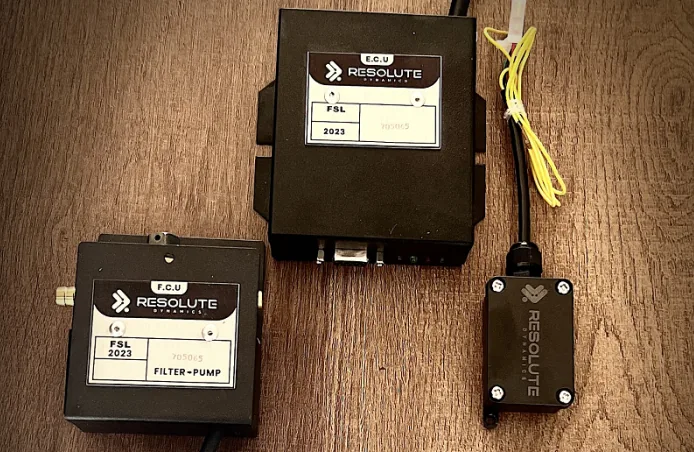
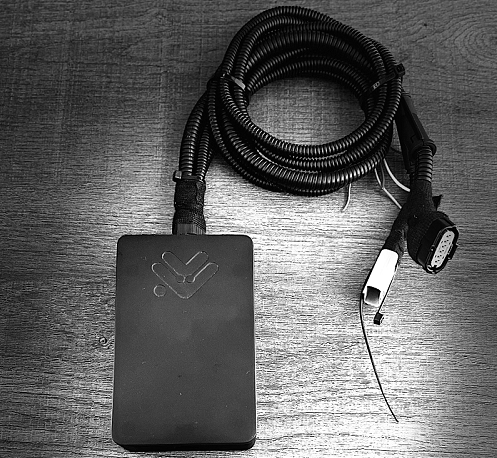
Fit a speed limiter and speed governor that meets the GSO 1711:2005 (the GCC standard for inspection, certification and type approval of speed limiters) standards. The device wires into the engine’s fuelling or throttle control so the vehicle physically cannot exceed its set ceiling.
A certified technician handles this, because the wiring, the sensor placement, and the firmware all have to match the homologated spec. A cheap, non-compliant box might cap the speed, but it won’t earn a certificate, and that’s the only thing the inspector cares about.
Step 3: Calibrate and Tamper-Seal the Device
Calibrate the governor to your vehicle’s legal speed ceiling, then seal it so it can’t be altered. Calibration ties the limiter to your specific axle ratio and tyre size, which is why two identical trucks can need slightly different settings.
Once it’s dialled in, the technician applies a tamper-evident seal. If that seal is later broken or the wiring is messed with, the certificate is automatically void, the device fails its next check, and you’re back to square one.
Step 4: Pass Vehicle Inspection and Receive the Certificate
Take the vehicle to an authorised inspection centre, where the limiter is tested and the certificate is issued on a pass. The inspector checks three things: that the device functions, that the seal is intact, and that the speed ceiling matches your vehicle category. Pass all three and you walk away with the document. This certificate is the one your Mulkiya renewal depends on, so guard it.
Step 5: Upload the Certificate to Naql for Your Vehicle Operating Card (VOC)
Link the certificate on the Naql platform to obtain or unblock your Vehicle Operating Card (VOC). Naql is Oman’s digital home for commercial-vehicle compliance, and a valid speed limiter certificate is a prerequisite for the VOC that lets you operate legally. Skip this and your permits can get blocked even if the physical paperwork is fine. The digital record and the printed certificate need to agree.
Speed Limiter Certificate and Mulkiya Renewal
A valid speed limiter certificate is a prerequisite for renewing your vehicle registration, the Mulkiya, at any ROP licensing centre. This is the moment most operators discover the certificate’s true weight.
You can have insurance sorted, fines cleared, and your inspection booked, and still get turned away because the limiter certificate has lapsed or doesn’t match the record. Renew the certificate before, not during, the Mulkiya rush, and the registration step becomes a formality instead of a fire drill.
Naql Platform Integration and the Vehicle Operating Card (VOC)
The certificate must be linked on Naql before a commercial Vehicle Operating Card is issued or reactivated. There’s a clean dependency chain here that’s worth memorising: certificate → Naql record → VOC → operating permit.
Each link feeds the next. A broken seal voids the certificate, which invalidates the Naql record, which blocks the VOC, which freezes the permit. When fleet managers tell me their trucks are “stuck on the system,” nine times out of ten the trail leads back to a limiter certificate that never got uploaded or quietly expired.
Speed Limiter Certificate Cost in Oman
Speed limiter certification in Oman is priced as a package, combining the device, the installation, and the calibration, rather than as a single flat fee. The total shifts with your vehicle type and the kind of limiter you need.
A standard single-speed governor for a delivery truck sits at the lower end, while a dual or multi-speed unit for oilfield work costs more because the hardware and the geofencing logic are more advanced. I’d avoid quoting you a fixed number, because anyone who promises one price for every vehicle is guessing. Ask your supplier for a quote tied to your exact make, weight class, and route profile.
Validity and Renewal of the Certificate
The speed limiter certificate is renewed every year and re-verified during each ROP technical inspection. Compliance isn’t a one-and-done event.
Over twelve months, seals wear, firmware drifts, and devices occasionally fault, so the annual re-check exists to confirm the governor still holds its limit and the seal is untouched. Book the renewal a little ahead of expiry. A lapsed certificate doesn’t just risk a fine; it pauses your registration and your VOC until it’s sorted.
What Happens Without a Valid Certificate
A vehicle without a valid speed limiter certificate fails ROP inspection and cannot complete its Mulkiya renewal. Beyond the registration block, ROP conduct random roadside checks, and a faulty or tampered limiter can draw fines or even impoundment.
I’ll leave the detailed penalty structure to the speed limiter laws in Oman guide, but the headline is plain: no valid certificate means no legal commercial operation.
Multi-Speed Limiters for PDO and OQ Oilfield Fleets
Fleets working inside Petroleum Development Oman (PDO) or OQ concession areas need a Multi-Speed Limiter Device (MSLD) certified to OPAL SP-2000 road safety standards. This is where generic guides go quiet, so pay attention if you run rig support, haulage, or water tankers in the interior.
A multi-speed limiter device uses geofencing to change the vehicle’s speed cap automatically by location: a higher ceiling on public blacktop, a lower one on graded desert roads, and a crawl speed inside hazardous rig sites. OPAL’s SP-2000 framework is non-negotiable for contractors in these zones, and a single-speed governor simply won’t satisfy the audit.
Why Choose Resolute Dynamics for ROP-Approved Certification
Resolute Dynamics issues valid Oman speed limiter certificates through its authorised local distributor, Alsarray Global LLC, based in Al Seeb, Muscat. That local anchor is the part I’d weigh most heavily. It means you get stock on hand, mobile installation to cut downtime, and warranty support inside the Sultanate instead of a phone queue to another country.
The team works across Muscat, Sohar, Salalah, and Duqm, handling everything from school buses in the capital to water tankers in the interior. If you’d rather talk it through before committing, contact Resolute Dynamics and get a quote matched to your fleet.
Frequently Asked Questions
Is a speed limiter certificate mandatory in Oman? Yes. Every commercial vehicle needs a valid certificate before its Mulkiya can be renewed.
Which authority approves speed limiters in Oman? The Royal Oman Police (ROP), alongside the MTCIT, under the GSO 1711:2005 (the GCC standard for inspection, certification and type approval of speed limiters) standards.
What speed are heavy trucks limited to in Oman? Heavy-duty trucks are typically certified at a maximum of 80 km/h, with the exact figure set by weight class.
Do I need the certificate for a Naql Vehicle Operating Card? Yes. A valid certificate must be linked on Naql before your VOC is issued or reactivated.
How often is the certificate renewed? Annually, and it’s re-verified at each ROP technical inspection.
What happens if my speed limiter is tampered with? The seal breaks, the certificate is voided, the vehicle fails inspection, and ROP penalties can follow.
Are oilfield fleets in PDO or OQ areas treated differently? Yes. They require a Multi-Speed Limiter Device certified to OPAL SP-2000, not a standard single-speed governor.
Related GCC guides: GCC tanker/oilfield rules – Saudi SASO certification – Oman installation service.

The Resolute Dynamics team designs and manufactures speed limiters (SLD), GPS tracking, and automotive safety systems used on 200,000+ vehicles across 20+ countries. We write about fleet compliance, road-safety regulation, and vehicle-safety technology, including Malaysia’s JPJ SLD mandate, UAE RTA rules, and global standards like UN R89, to help fleet operators and transport businesses stay safe and compliant.