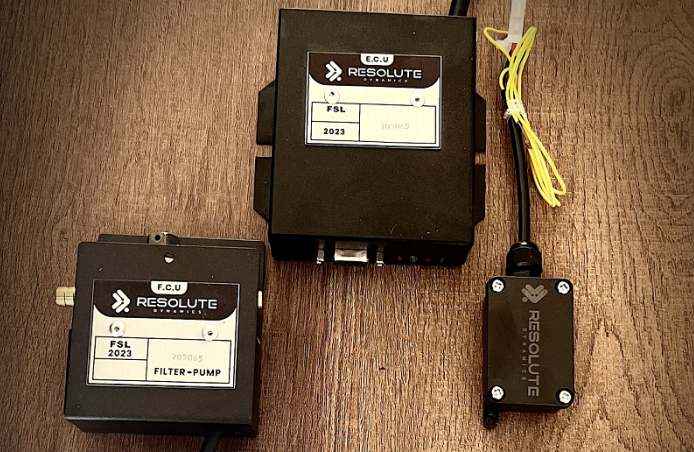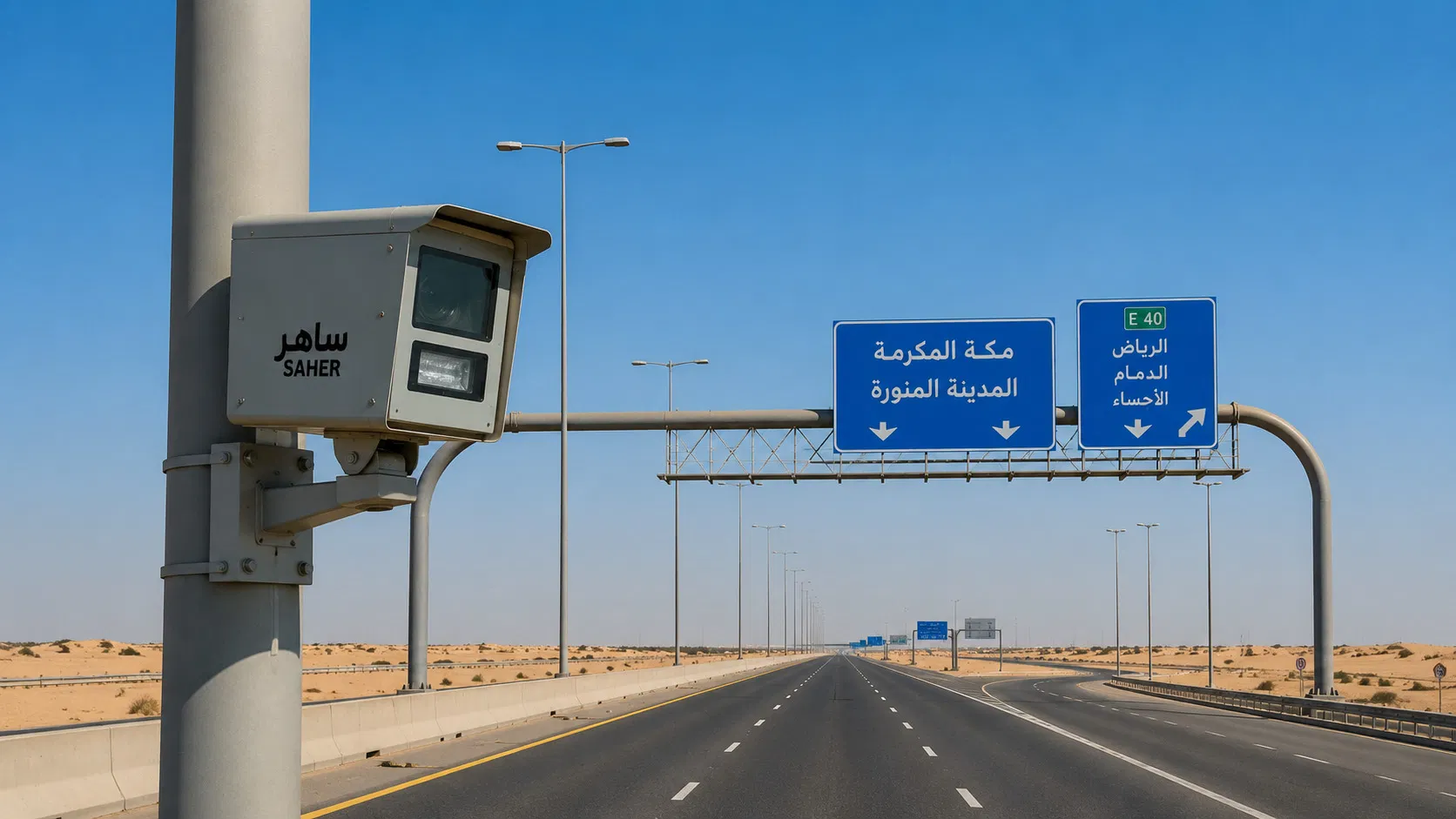
Speed limiter SASO certification in Saudi Arabia is a conformity approval that confirms a speed-limiting device meets Gulf technical standards and is cleared to enter and operate in the Kingdom.
It runs through the SABER platform, it is checked against three Gulf standards (GSO 1625, GSO 1626, and GSO 1711), and it sits across three separate layers: the device standard, the import conformity step, and the on-road operating rules. Most people lump all three into one “law.” They are not the same thing, and knowing the difference saves fleets a lot of money and stress.
We work with commercial fleets across Saudi Arabia every week, and the same confusion comes up again and again. So let us walk through exactly what this certification is, who it applies to, and how you actually get one.
What Is Speed Limiter SASO Certification in Saudi Arabia?
Speed limiter SASO certification is a conformity certificate issued through the SABER platform that proves a speed limiter device meets the standards set by SASO, the Saudi Standards, Metrology and Quality Organization.
SASO is the national body that writes and enforces product standards in the Kingdom, and it is the gatekeeper for almost anything that enters the Saudi market, from electronics to brake pads to speed governors.
Think of SASO as the referee. It does not manufacture anything. It sets the rulebook, decides what is safe, and signs off on whether a product is allowed in. A speed limiter that wants to be sold, imported, or fitted to a commercial vehicle in Saudi Arabia has to play by that rulebook.
SASO, SABER, and the SALEEM Program
SASO runs its product approvals through a digital system called SABER, which launched on January 1, 2019. SABER is the online portal where importers and manufacturers register products, upload test reports, and receive their certificates. Sitting behind SABER is the SALEEM program, the Saudi Product Safety Program, which is the broader framework of technical regulations that SABER enforces.
The flow is simple once you see it. SALEEM is the law. SABER is the website where you prove you follow the law. SASO is the authority that owns both. When someone says they “need SASO certification for a speed limiter,” what they really mean is that they need to pass conformity assessment on SABER under a SALEEM technical regulation.
How SASO Certification Differs From a UAE RTA Speed Limiter Certificate
A SASO certificate and a Dubai RTA certificate are not interchangeable, and treating them as the same thing is a common and costly mistake. The UAE runs its speed limiter approvals through the Roads and Transport Authority (RTA), with its own device list, its own inspection cycle, and its own installer network. Saudi Arabia runs its approvals through SASO and SABER, tied to Gulf standards.
A device certified in Dubai is not automatically blessed in Riyadh, and a fleet crossing the border cannot assume one piece of paper covers both. If your trucks run cross-border routes, you want a limiter that satisfies the strictest regime in your corridor and carries the paperwork for each country.
We cover the Dubai side in detail on our speed limiter certificate page, but the Saudi route is the one this guide is built around.
Is a Speed Limiter Mandatory for Commercial Vehicles in Saudi Arabia?
Speed limiter compatibility is required when a vehicle goes through type approval in Saudi Arabia, but as of 2026 there is no nationwide rule forcing every commercial vehicle to actively run a speed limiter on the road. This is the single most misunderstood fact in the whole topic, so let us be precise about it.
Saudi Arabia leans heavily on posted speed limits for enforcement. Passenger cars can legally travel up to 140 km/h on certain highways, with lower caps for heavy and commercial vehicles.
The Kingdom backs this up with automated cameras, radar, and digital monitoring rather than a blanket “install this box in every truck” law. That is a very different model from the UAE, and the gap trips up a lot of fleet owners.
Type-Approval Requirement vs. On-Road Operating Requirement
There is a clean line between getting a vehicle approved and operating it day to day. At the type-approval stage, Gulf standards expect a vehicle to be compatible with a compliant speed limiter, and any limiter that is fitted must meet the GSO device standards. That is a product and homologation matter, handled before the vehicle is sold.
On the road, the obligation shifts to obeying speed limits and any sector-specific rules, such as those for buses or hazardous-goods carriers. So a fleet can be fully legal without a speed limiter on every axle, yet still be expected to fit one the moment it imports a device or operates under a contract that demands it. The certification you need depends entirely on which side of that line you are standing on.
The 2025 Road Transport Law, TGA, MOI, and Wasl
Road transport in Saudi Arabia is governed by the Road Transport Law, issued as Royal Decree No. M/188 in 2025. Oversight belongs to the Transport General Authority (TGA), while enforcement on the street comes from the Ministry of Interior (MOI) through its General Department of Traffic. These are the entities a fleet manager actually answers to.
Compliance is increasingly digital. The Wasl platform, run under TGA, registers commercial vehicles and drivers, monitors fleet activity, and ties operators into the Kingdom’s road-safety oversight. Wasl is where telematics, vehicle tracking, and operating permits come together, which is why a GPS-enabled speed limiter pairs so naturally with the way Saudi already supervises fleets.
Vision 2030 and Voluntary Fleet Adoption

Vision 2030 is quietly pushing speed limiters into the mainstream even without a hard mandate. The Kingdom’s road-safety targets, its mega-project logistics, and its drive to cut traffic deaths are all nudging fleets toward voluntary adoption.
Large logistics operators, school transport providers, and oil-and-gas contractors are fitting limiters because it lowers insurance exposure, protects drivers, and reads well against national safety goals. The direction of travel is obvious, and getting ahead of it is cheaper than scrambling later.
The GSO Standards Behind SASO Speed Limiter Certification
Three Gulf standards define what a compliant speed limiter must do: GSO 1625:2002, GSO 1626:2002, and GSO 1711:2005. SASO adopts these Gulf Standardization Organization (GSO) regulations, and the GSO itself is headquartered in Riyadh, which keeps Saudi tightly aligned with the wider Gulf rulebook. A device that satisfies these three earns the technical foundation for a SABER certificate.
GSO 1625:2002 — Speed Limiters Part 2: Technical Requirements
GSO 1625 sets the build-quality and performance rules a speed limiter must meet. It covers how the device caps maximum speed, how it integrates with the engine and fuel system, and how reliably it holds the set limit. This is the standard that separates a serious, tamper-resistant governor from a cheap aftermarket gadget that drifts out of spec within months.
GSO 1626:2002 — Speed Limiters Part 3: Methods of Test
GSO 1626 lays out the laboratory tests that prove a limiter survives real-world abuse. The standard puts devices through environmental stress, including temperature endurance, humidity, and salt exposure. One published requirement, for example, is that the system must keep working correctly after roughly 10 hours at 20°C inside a controlled chamber at maximum throttle. These methods exist so a limiter does not quietly fail in the heat of a Saudi summer.
GSO 1711:2005 — Inspection, Certification, and Type Approval
GSO 1711 governs the actual approval process for speed-limiting devices. It is the standard concerned with the general requirements for the inspection, certification, and type approval of speed limiters for motor vehicles. Where 1625 says what the device must be and 1626 says how to test it, 1711 says how it gets officially blessed. Together they form the technical spine that SASO and SABER rely on.
Which Commercial Vehicles Are Affected?
The vehicles most affected are heavy trucks, buses, school buses, taxis, and light commercial fleets, because these classes carry the highest road-safety stakes. Passenger transport and goods movement attract the most regulatory attention, and they are also where speed-related crashes do the most damage. Below is how the obligation tends to break down by class.
Heavy Goods Vehicles and Trucks
Heavy goods vehicles sit at the top of the priority list. Long-haul tractors, tippers, tankers, and rigid trucks move at high speed over long distances, and their mass makes any collision severe. Fleets running these vehicles are the first to feel pressure from insurers, contract clients, and cross-border rules, even where a national mandate has not yet landed.
Buses and Passenger Transport
Buses carry the second-highest exposure, because a single crash can injure dozens of passengers at once. Intercity coaches, staff-transport buses, and especially school buses are prime candidates for speed governing. School transport in particular tends to attract the strictest internal safety policies, which is why we build dedicated school bus safety solutions around this exact need.
Taxis and Light Commercial Fleets
Taxis, ride-hail vehicles, and light commercial vans round out the list. These vehicles rack up enormous mileage in dense urban traffic, where aggressive driving and overspeeding raise both crash risk and fuel bills. Fitting a limiter here is less about a single dramatic accident and more about controlling a thousand small risks across a busy fleet.
How to Get a Speed Limiter SASO Certificate (Step-by-Step)
Getting a speed limiter SASO certificate takes five clear steps, from picking the right device to clearing customs. The process is paperwork-heavy but logical, and missing a step usually means a shipment stuck at the port. Here is the route we walk our clients through.
- Select a speed limiter that already conforms to GSO 1625 and GSO 1626.
- Test the device in a SASO-accredited laboratory.
- Register the product on SABER and obtain the Product Certificate of Conformity.
- Obtain a Shipment Certificate of Conformity for each consignment.
- Install, calibrate, and document the device for inspection and fleet records.
Step 1 — Select a GSO-Compliant Speed Limiter Device
Start by choosing a limiter that is engineered against the Gulf standards from the outset. A device built only for a European or Asian market may not carry the documentation SABER expects, and retrofitting compliance after purchase is painful.
Look for a governor with a clean test history, tamper-evident design, and the ability to hold multiple preset speeds, like our dual speed limiter and multi speed limiter units, which handle highway and urban caps without manual fiddling.
Step 2 — Test in a SASO-Accredited Laboratory
Send the device for conformity testing at a laboratory recognized by SASO. The lab can sit inside Saudi Arabia or be a foreign laboratory that SASO formally accredits, which matters for manufacturers who produce overseas.
The lab runs the product against the GSO methods and issues an official test report or compliance report. If the device passes, it moves toward certification; if it fails, the importer fixes the issue and retests.
Step 3 — Register the Product and Obtain the PCoC on SABER
Register the speed limiter on the SABER platform and apply for a Product Certificate of Conformity (PCoC). The PCoC is issued per product model and confirms that the specific device meets its SALEEM technical regulation. This is the certificate that says, in effect, “this model is legitimate in the Kingdom.” It is the foundation every shipment then builds on.
Step 4 — Obtain the SCoC for Each Shipment
For every consignment entering the country, obtain a Shipment Certificate of Conformity (SCoC) through SABER. The SCoC is tied to a single shipment, not a model, and Saudi customs will not release automotive goods without it. Importers who hold a valid PCoC but forget the per-shipment SCoC are the ones whose containers sit at the port racking up demurrage charges.
Step 5 — Install, Calibrate, and Document
Once the device clears customs, install it correctly, calibrate it to the right speed cap, and keep the records. Calibration matters because a limiter set to the wrong threshold is both unsafe and non-compliant during inspection. Hold onto the installation record, the calibration sheet, and the conformity certificates, because these are exactly what an inspector or a contract auditor will ask to see.
Required Documents and Conformity Evidence
The paperwork falls into a short, predictable set of documents, and keeping them organized is half the battle. The table below maps each document to who issues it and when you need it.
| Document | Issued by | Purpose | When required |
|---|---|---|---|
| Test report / compliance report | SASO-accredited laboratory | Proves the device passed GSO testing | Before certification |
| Product Certificate of Conformity (PCoC) | SABER (SASO) | Approves the device model for the market | Once per product model |
| Shipment Certificate of Conformity (SCoC) | SABER (SASO) | Clears a specific consignment through customs | Every shipment |
| GCC / type-approval certificate | GSO notified body | Confirms Gulf-wide conformity | At type-approval stage |
| Calibration & installation record | Installer / fleet | Shows correct setup and speed cap | At inspection and audit |
| Technical file | Manufacturer | Holds drawings, specs, and supporting data | On request |
Penalties, Enforcement, and Tampering
Enforcement in Saudi Arabia mixes physical inspection with digital monitoring, and the penalties for cheating safety and emission systems are steep. The Kingdom cross-checks inspection results against maintenance records to spot tampering, and it does not treat interference lightly.
Emission-system tampering, such as removing a catalytic converter, can draw fines reaching SAR 50,000, with license suspension for repeat offenders. While that figure is an emissions example, it signals how seriously the authorities treat any deliberate defeat of a regulated system.
How Enforcement Works
Enforcement leans on a blend of roadside checks, periodic technical inspection, and platform data. Vehicles registered on Wasl leave a digital trail, automated cameras catch overspeeding, and inspection centers verify that safety systems are intact and unmodified. The trend across the Gulf is unmistakable: more sensors, more data, and less room to quietly disable a device.
Why Tamper-Resistant, GPS-Enabled Limiters Reduce Risk
A tamper-evident, GPS-enabled limiter is the safest way to stay clean under this kind of scrutiny. Devices that log their own activity, resist physical interference, and integrate with tracking platforms make it almost impossible for a driver to defeat the system unnoticed.
That protects the fleet from fines and protects the operator from liability if something goes wrong. Our speed limiter and speed governor range is built around exactly this kind of tamper resistance and data logging.
Choosing a Compliant Speed Limiter Supplier in Saudi Arabia

The right supplier is one that hands you a device and the paperwork, not just a box. Compliance lives in the documentation as much as the hardware, and a supplier who cannot produce SABER-ready evidence leaves you exposed at the port and during inspection. A few criteria separate a safe choice from a risky one.
What to Verify Before You Buy
Run any potential supplier through a short compliance checklist before committing.
- Confirm the device conforms to GSO 1625 and GSO 1626.
- Confirm the supplier provides SABER-ready documentation, including PCoC support.
- Confirm the limiter is tamper-evident and capable of GPS integration.
- Confirm local installation, calibration, and after-sales support exist in the Kingdom.
- Confirm the device can hold the multiple speed caps your routes demand.
Our Speed Limiters and Speed Governors for Saudi Arabia
We supply GSO-aligned speed limiters and speed governors built for the realities of Saudi roads, heat, and enforcement.
The full lineup, including dual and multi-speed units, RPM regulators, and smart-lift monitoring, lives on our Saudi Arabia speed limiters and automotive safety solutions hub, with local support to carry you from device selection through SABER paperwork and installation. The goal is simple: a fleet that is safe, certified, and never stuck at customs.
Frequently Asked Questions
Is a speed limiter legally required for all commercial vehicles in Saudi Arabia?
No nationwide rule forces every commercial vehicle to actively run a speed limiter as of 2026. Speed limiter compatibility is expected at type approval, and specific contracts or sectors may demand one, but enforcement mainly targets posted speed limits and digital monitoring.
What is the difference between SASO certification and GSO certification?
GSO certification confirms a product meets Gulf-wide standards and is valid across all GCC member states. SASO certification, delivered through SABER, is the Saudi national conformity step required for market entry into the Kingdom specifically.
Which GSO standard covers speed limiters?
Three standards apply: GSO 1625:2002 for technical requirements, GSO 1626:2002 for test methods, and GSO 1711:2005 for inspection, certification, and type approval. SASO adopts all three.
Do I need a SABER certificate for an imported speed limiter?
Yes. Imported speed limiters need a Product Certificate of Conformity for the model and a Shipment Certificate of Conformity for each consignment, both issued through SABER. Customs will not release the goods without valid conformity.
What speed are commercial vehicle limiters typically set to in Saudi Arabia?
Caps depend on vehicle class and the operator’s policy, and they sit below the 140 km/h ceiling allowed for passenger cars on certain highways. Heavy vehicles and buses are usually held to noticeably lower speeds for safety.
How long does SASO and SABER certification take?
Timelines vary with the device, the laboratory queue, and the completeness of the technical file. A clean submission with full test reports moves far faster than one that bounces back for missing documents.
Is the Saudi requirement the same as the UAE RTA requirement?
No. The UAE runs a stricter, RTA-driven speed limiter regime with mandatory installation for several commercial classes, while Saudi Arabia relies on GSO standards, SABER conformity, and posted limits. Cross-border fleets should satisfy the strictest regime on their route.
Related GCC compliance: Oman ROP guide – Dubai RTA process – GCC oilfield rules.

The Resolute Dynamics team designs and manufactures speed limiters (SLD), GPS tracking, and automotive safety systems used on 200,000+ vehicles across 20+ countries. We write about fleet compliance, road-safety regulation, and vehicle-safety technology, including Malaysia’s JPJ SLD mandate, UAE RTA rules, and global standards like UN R89, to help fleet operators and transport businesses stay safe and compliant.