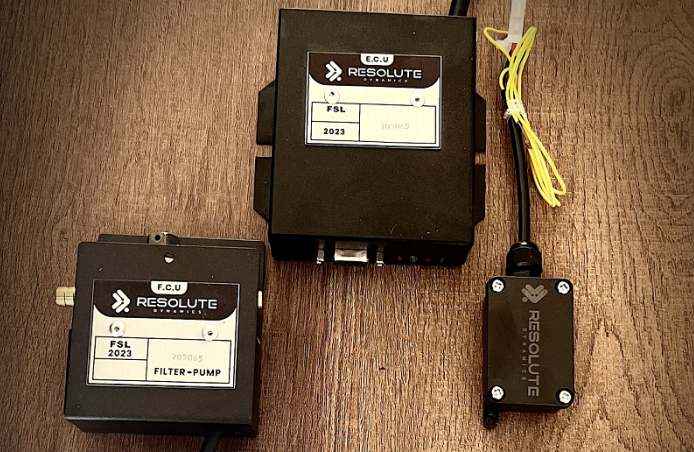
If your transport company is working toward bizSAFE certification, here is something many operators miss until the auditor is standing in the yard: your lorries are part of the audit. bizSAFE is Singapore’s workplace safety and health recognition scheme run by the WSH Council, and it is built on one idea, that you manage the real risks of your work.
For a transport or logistics business, few risks are bigger than a heavy vehicle on the road, and the Risk Management auditor, the RM auditor, knows it.
So when they review your risk assessments, they will look closely at how you control the danger of speeding lorries. This is exactly where your speed limiters come in. They are not just a vehicle rule you tick off with the LTA. Inside a bizSAFE audit, a fitted, working, well-documented speed limiter is one of the strongest pieces of evidence you can show that you take road risk seriously.
Let me walk you through what the RM auditor actually checks, and how to have your lorries ready before they arrive.
Why Speed Limiters Matter in a bizSAFE Audit
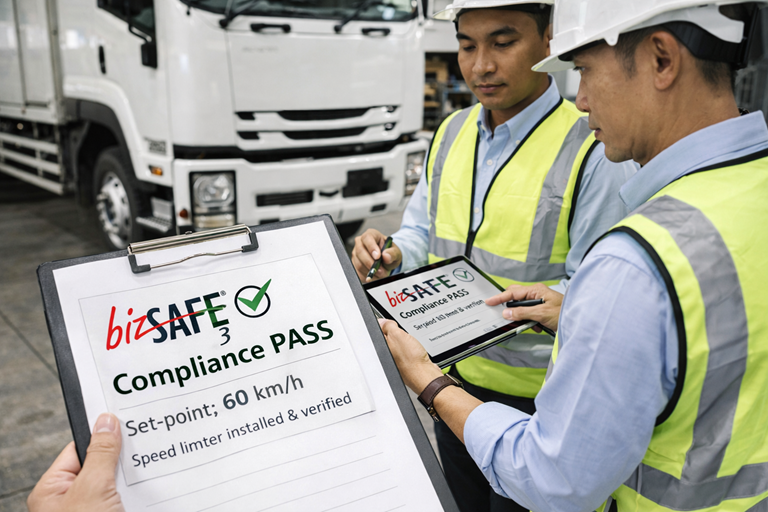
Speed limiters matter in a bizSAFE audit because they are a direct, physical control against one of your fleet’s biggest workplace hazards: speeding and road traffic accidents.
The whole scheme rests on the Workplace Safety and Health Act and the WSH Risk Management Regulations, which require you to identify hazards and put real controls in place for every work activity. Driving a lorry is a work activity, and speeding is its most obvious hazard.
Here is the mindset shift that helps. Most operators think of a speed limiter as something the Land Transport Authority makes them fit. That is true, and our Singapore LTA compliance guide for fleet operators covers that side.
But an RM auditor looks at the same device through a different window. To them, it is proof that you have taken a serious road hazard and engineered it down, so a tired or rushed driver simply cannot push the vehicle past a safe speed.
That is precisely the kind of control the WSH framework wants to see. The device does double duty: it keeps you legal with the LTA and it strengthens your safety case with bizSAFE at the same time.
How Driving Fits Into Your Risk Management Framework
Driving fits into bizSAFE as a work activity that must have its own risk assessment, just like any task on a factory floor. The auditor does not treat your lorries as separate from your workplace.
Under the WSH Risk Management Regulations, the road is your workplace when your staff are driving for work, and it needs the same documented risk thinking as everything else.
Work-related traffic as a workplace hazard
A lorry on the expressway is a hazard with serious consequences: injury or death to your driver, to other road users, and liability landing back on your company. bizSAFE asks you to name that hazard in a written risk assessment for your driving and delivery activities, rate how likely and how severe it is, and then show what you are doing to reduce it.
An auditor who opens your risk assessments and finds nothing about driving has found a real gap, because your highest-risk activity is undocumented.
The Hierarchy of Control, and where speed limiters sit
WSH risk management follows a Hierarchy of Control, ranking controls from strongest to weakest: eliminate the hazard, substitute it, engineer it out, manage it with rules and training, then fall back on personal protective equipment.
Engineering controls sit near the top because they do not rely on a person choosing to behave. A speed limiter is exactly that, an engineering control. It physically caps the speed rather than just asking a driver to slow down. That is why it carries real weight in an audit: it is a high-order control on your worst hazard, not a poster in the canteen.
What the RM Auditor Checks on Your Lorries
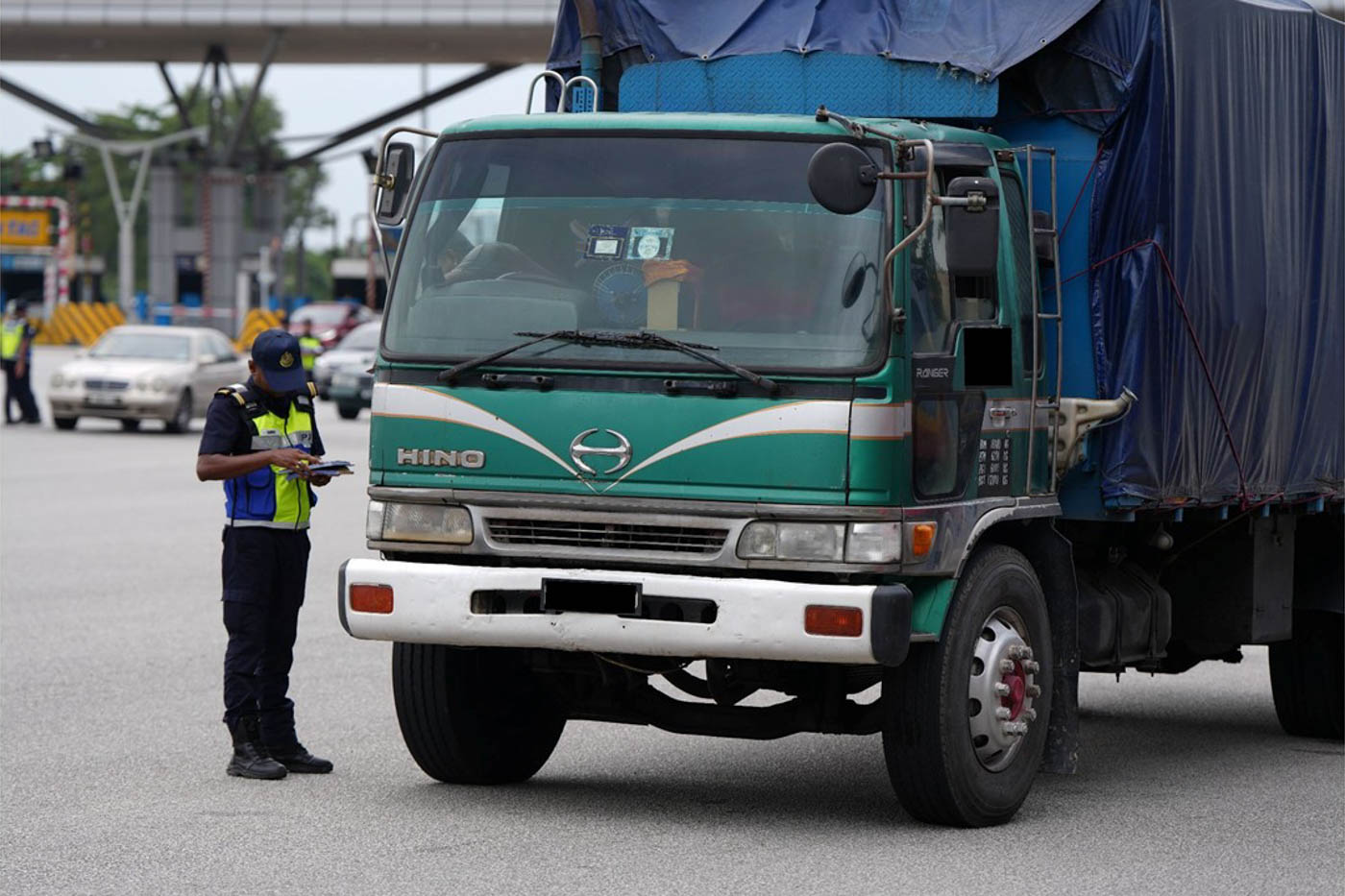
The RM auditor checks whether your speeding risk is assessed, controlled, recorded, and monitored, in that order. They are not just looking for a device bolted to the dashboard. They are looking for a complete, honest chain from hazard to control to evidence. Here is what that means in practice.
A documented risk assessment covering driving
First, they check that your risk assessments actually include vehicle and driving activities, with speeding named as a hazard and the speed limiter listed as a control.
A risk assessment that covers your warehouse but goes silent the moment a lorry leaves the gate is the most common failure. The driving activity must be there in writing.
Speed limiters as an implemented control
Next, they confirm the control is real, not just on paper. That means limiters actually fitted to the lorries, set to the correct speed, and working. An auditor may cross-check your risk assessment claim against the vehicles themselves, so what you wrote and what is installed need to match.
Calibration and maintenance records
Then they look for proof the device stays reliable. Calibration certificates and maintenance records show the limiter is not just present but accurate and maintained over time.
Our guide on how often speed governors should be calibrated explains the intervals, and keeping the speed limiter certificate on file is what turns a claim into evidence.
Safe work procedures and driver briefing
Auditors also check the human layer around the device. Do you have a safe work procedure for driving, and can you show drivers were briefed on speed rules and on how the limiter behaves? The engineering control is strongest when it sits alongside trained, informed drivers, and the auditor wants to see both.
Monitoring and records
Finally, they look for evidence you keep watching. Telematics reports, over-speed logs, and incident records show the control is monitored and improved, not fitted and forgotten. Our guide to telematics and speed limiters in Singapore covers the kind of monitoring data that makes this part of the audit easy.
The Documents to Have Ready
Have your risk assessment, procedures, device records, and monitoring reports assembled before the audit, not scrambled together on the day. An auditor forms a strong impression when the evidence is organized and complete. This table is your prep list.
| Document | What it proves |
|---|---|
| Risk assessment for driving activities | Speeding hazard identified and rated |
| Speed limiter as listed control | The engineering control is in your RA |
| Speed limiter certificates | Devices are certified and compliant |
| Calibration and maintenance records | The control stays accurate over time |
| Safe work procedure for drivers | The human layer is defined |
| Driver training and briefing records | Drivers understand the controls |
| Telematics and over-speed reports | The control is monitored |
| Incident and corrective action logs | You act on what monitoring shows |
Common Gaps That Trip Up Transport Companies
The gaps that fail transport companies are almost always missing documentation, not missing devices. Most operators have limiters fitted, because the LTA requires it. Where they slip is proving the control inside the WSH framework. A few traps come up again and again.
The risk assessment does not mention driving at all, so the biggest hazard is undocumented. The limiters are fitted but there are no calibration or maintenance records to back them up. A certificate has quietly expired.
There is no monitoring, so you cannot show the control is watched. Drivers were never formally briefed, leaving the human layer blank.
And most fundamentally, the company treats speed limiters purely as an LTA vehicle matter and never connects them to its WSH risk management, so the auditor has to join dots the company should have joined itself. Each of these is easy to close once you know it is coming.
How Speed Limiters Strengthen Your bizSAFE Position
Done properly, speed limiters turn your worst road hazard into one of your strongest audit answers. Because they are a high-order engineering control on a serious hazard, a well-documented limiter programme demonstrates exactly the kind of risk management bizSAFE is designed to reward.
This matters beyond the certificate itself. bizSAFE Level 3, where your risk assessments are reviewed by an approved auditing organisation, is the minimum many government and larger private tenders now expect before they will work with you.
Showing that you have engineered down your speeding risk, with records to prove it, helps you clear that bar and signals to clients that your fleet is run responsibly. Your LTA compliance and your WSH compliance stop being two separate chores and start reinforcing each other. The same device that keeps you legal on the road also helps win the contracts that keep your lorries busy.
Getting Your Lorries bizSAFE-Ready
Getting ready is a short, practical sequence: fit and certify, document, monitor, and brief. None of it is complicated once you treat the limiter as a WSH control and not just a vehicle part.
Start by confirming every lorry has a compliant, correctly set speed limiter or speed governor fitted, calibrated, and certified, with the paperwork on file. Then build driving into your risk assessment, naming speeding as a hazard and the limiter as its control, and write a simple safe work procedure for your drivers.
Add monitoring through telematics so you can show over-speed events are tracked and acted on, and keep tamper-evident integrity on the devices, as our guide on tamper-proof fleets in Singapore explains, since an auditor trusts a control that cannot be quietly defeated.
Finally, brief your drivers and record that you did. Work through that list and your lorries will not just pass the RM auditor’s checks, they will show a fleet that genuinely manages its road risk.
Frequently Asked Questions
Do speed limiters count toward bizSAFE certification?
Yes. While bizSAFE does not name speed limiters directly, it requires you to control the hazards of every work activity. For driving, speeding is the key hazard, and a speed limiter is an engineering control that reduces it.
Documented properly in your risk assessment, it is strong evidence of good risk management during the audit.
What does an RM auditor check on fleet vehicles?
An RM auditor checks that your risk assessments cover driving activities, that speed limiters and other controls are actually fitted and working, that calibration and maintenance records exist, that drivers have safe work procedures and briefings, and that you monitor speeding through telematics or logs and act on what you find.
Is a speed limiter an engineering or administrative control?
A speed limiter is an engineering control. It physically prevents the vehicle from exceeding a set speed, rather than relying on a driver to choose to slow down. Engineering controls rank higher in the WSH Hierarchy of Control than administrative controls like rules and training, which makes them strong audit evidence.
Does bizSAFE require speed limiters?
bizSAFE does not specifically mandate speed limiters, but it does require you to control your work hazards, and speeding lorries are a major one. Speed limiters are also separately required by the LTA for many commercial vehicles, so fitting them satisfies both the road regulator and your bizSAFE risk management at once.
How long is bizSAFE certification valid?
bizSAFE Level 3, Level 4, and Star certifications are generally valid for three years, after which you must renew. Keeping your risk assessments, speed limiter records, and monitoring current across that period makes each renewal far smoother than rebuilding the evidence from scratch.
Final Thoughts
For a Singapore transport company, a bizSAFE audit is not the moment to discover that your lorries live in a blind spot. Your heavy vehicles carry your biggest road risk, and the RM auditor will go looking for how you control it.
Treat your speed limiters as what they truly are, a high-order engineering control, document them properly, monitor them, and brief your drivers, and that risk becomes one of the clearest strengths in your safety case. You walk into the audit knowing the answer to the question they came to ask, which is the whole point of being bizSAFE in the first place.

The Resolute Dynamics team designs and manufactures speed limiters (SLD), GPS tracking, and automotive safety systems used on 200,000+ vehicles across 20+ countries. We write about fleet compliance, road-safety regulation, and vehicle-safety technology, including Malaysia’s JPJ SLD mandate, UAE RTA rules, and global standards like UN R89, to help fleet operators and transport businesses stay safe and compliant.