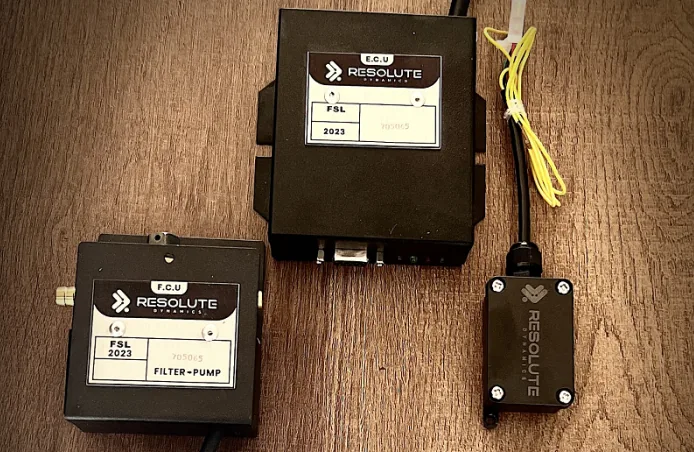
AIS-140 and speed limiter compliance are often confused as one requirement in India, but they’re separate regulatory frameworks that intersect rather than overlap completely — AIS-140 governs Vehicle Tracking Device standards under MoRTH and ARAI, while speed governance sits under the Central Motor Vehicle Rules (CMVR) with state-level enforcement variations. Understanding where they connect matters for Indian commercial fleets.
For fleet operators evaluating ARAI-certified speed limiters alongside their AIS-140 VTD compliance, this article explains how the two frameworks interact, what each actually requires, and where the integration points typically are.
What is AIS 140?

When I first explain AIS 140 to fleet operators, I keep it simple.
AIS 140 stands for Automotive Industry Standard 140. It is a technical regulation developed under the authority of the Ministry of Road Transport and Highways (MoRTH) and standardized through the Automotive Research Association of India (ARAI).
But AIS 140 is not just a technical paper.
It is a national vehicle safety compliance framework designed to make commercial transport safer, traceable, and digitally accountable.
Why AIS 140 Was Introduced
India has one of the highest road accident rates in the world. A large percentage of serious accidents involve:
-
Over-speeding
-
Route deviation
-
Fatigue driving
-
Unmonitored commercial vehicles
Before AIS 140, enforcement depended heavily on physical checks and manual inspections. That system had gaps.
AIS 140 introduced real-time digital oversight.
Instead of waiting for violations, authorities can now:
-
Track vehicle location in real time
-
Monitor speed behavior
-
Receive instant emergency alerts
-
Maintain centralized compliance records
This shifts road safety from reactive enforcement to proactive monitoring.
Core Objectives of AIS 140
The regulation focuses on four foundational pillars:
Vehicle Tracking Devices (VTDs)
Every applicable vehicle must install an AIS 140-certified Vehicle Tracking Device.
This device:
-
Uses GNSS (Global Navigation Satellite System)
-
Supports NavIC (India’s regional satellite system)
-
Transmits location data to government servers
-
Logs speed and ignition status
It creates a continuous digital footprint of vehicle movement.
Real-Time GPS Monitoring
The system provides:
-
Live location tracking
-
Route history
-
Speed data logging
-
Time-stamped movement records
Data is transmitted through GSM/GPRS networks to state transport monitoring systems.
This improves transparency and traceability.
Emergency Panic Button Integration
AIS 140 mandates a panic button inside the vehicle.
In case of emergency:
-
The driver or passenger presses the button
-
A distress signal is sent to the state control room
-
Vehicle coordinates are transmitted instantly
This is especially critical for:
-
School buses
-
Public transport vehicles
-
Women passenger safety
The system reduces emergency response time.
Backend Data Integration
AIS 140 is not just about hardware. It is about system interoperability.
The vehicle device must connect to:
-
State transport department servers
-
Emergency response control rooms
-
Centralized monitoring platforms
Data synchronization ensures authorities can verify:
-
Whether the device is active
-
Whether the vehicle is online
-
Whether it is transmitting compliant data
This eliminates loopholes where devices are installed but not functional.
Is AIS 140 a Guideline or a Legal Mandate?
AIS 140 is a mandatory compliance regulation, not a recommendation.
It is enforced under the framework of the Central Motor Vehicles Rules (CMVR) by the Ministry of Road Transport and Highways.
State RTOs (Regional Transport Offices) check compliance during:
-
Vehicle registration
-
Permit issuance
-
Fitness certificate renewal
-
Roadside inspections
Non-compliance can result in:
-
Monetary fines
-
Fitness certificate rejection
-
Permit suspension
-
Vehicle impoundment in severe cases
Digital compliance records make enforcement stricter in 2025.
Technical Architecture Behind AIS 140
Many people assume AIS 140 is just a GPS tracker. It is much more structured.
An AIS 140 device typically includes:
-
GNSS module (GPS + NavIC compatibility)
-
GSM/GPRS communication module
-
Embedded SIM card
-
Microcontroller unit
-
Internal battery backup
-
Tamper detection mechanism
The device must also:
-
Store data during network loss
-
Push buffered data when signal resumes
-
Follow defined data packet formats
-
Use encrypted communication protocols
This structured architecture ensures reliability and cybersecurity.
Who Must Comply with AIS 140?
AIS 140 primarily applies to commercial and public transport vehicles.
Vehicles Covered Include:
-
Public transport buses
-
School buses
-
Taxis and ride-hailing vehicles
-
Tourist vehicles
-
Stage carriage and contract carriage vehicles
-
Certain categories of goods vehicles (state dependent)
Vehicle categories often fall under:
-
M2 and M3 (Passenger vehicles with more than 8 seats)
-
N2 and N3 (Heavy goods vehicles)
Private passenger cars for personal use are generally not covered under the core AIS 140 mandate.
However, state-level notifications may vary.
Why Compliance Is Strictly Enforced in 2025
In earlier years, implementation was uneven. Today, enforcement is digital.
Authorities can now:
-
Verify IMEI and device ID remotely
-
Check real-time connectivity
-
Validate whether a vehicle is transmitting data
-
Cross-check compliance during e-permit issuance
Compliance is no longer symbolic. It is measurable.
How AIS 140 Connects with Speed Limiter Compliance
AIS 140 focuses mainly on tracking and emergency systems.
However, speed monitoring through the tracking device supports enforcement of:
-
Speed governor mandates
-
Geo-fenced speed regulation
-
Overspeed event logging
In modern fleet systems, GPS tracking and speed limiting work together to create an integrated compliance ecosystem.
The Bigger Picture: Digital Road Safety Ecosystem
AIS 140 represents a shift toward:
-
Intelligent transportation systems (ITS)
-
Data-driven fleet governance
-
Satellite-based enforcement
-
Real-time mobility analytics
It forms the backbone of India’s move toward structured, technology-enabled road safety management.
Why Speed Limiter Compliance Matters in 2025

Speeding remains one of the top causes of road accidents. A traditional driver warning system is no longer enough.
A speed limiter India (also called speed governor) ensures a vehicle does not exceed a predefined maximum speed. When combined with GPS, it becomes even more powerful.
In 2025, compliance is moving toward:
-
Geo-fenced speed regulation
-
Digital speed logging
-
Remote monitoring
-
Tamper detection
This is where smart speed control systems are replacing older mechanical devices.
AIS 140 Speed Limiter Requirement Explained
Many people think AIS 140 only talks about GPS. That’s incomplete.
While AIS 140 focuses heavily on tracking and emergency systems, state-level regulations and transport safety policies require speed-limiting mechanisms in many commercial vehicles.
What Speed Limiter Compliance Includes
-
Fixed speed cap (example: 60 km/h, 80 km/h depending on vehicle type)
-
ECU integration
-
Sealed installation
-
Tamper-proof hardware
-
Data recording capability
Modern fleets are now using GPS-integrated speed limiters. These devices adjust speed based on location—like reducing speed in school zones.
This is known as geo-fenced speed governance.
GPS Tracking Compliance Under AIS 140
When people hear “AIS 140 compliance,” most think it just means installing a GPS tracker. That is not accurate.
AIS 140 mandates installation of a certified Vehicle Tracking Device (VTD) that follows strict hardware, software, communication, and data transmission standards defined by the Ministry of Road Transport and Highways and validated by the Automotive Research Association of India.
This is not a generic tracking unit. It is a regulated telematics system built for government integration.
Let’s break it down clearly.
What Is an AIS 140 Vehicle Tracking Device (VTD)?
A Vehicle Tracking Device under AIS 140 is a certified telematics control unit installed inside commercial vehicles. It continuously collects and transmits operational data to state government servers.
It acts as:
-
A real-time location monitor
-
A digital compliance recorder
-
An emergency alert transmitter
-
A speed monitoring system
The device must pass type-approval testing before it can be legally deployed.
Mandatory Technical Requirements of AIS 140 GPS Devices
AIS 140 defines very specific technical parameters. These are not optional features. They are compliance requirements.
Real-Time GNSS Positioning
The device must support GNSS (Global Navigation Satellite System) positioning.
This includes:
-
Latitude
-
Longitude
-
Speed
-
Direction (heading)
-
Timestamp
The location accuracy must fall within approved tolerance limits.
The system typically works with:
-
GPS (Global Positioning System)
-
GLONASS (Russia)
-
NavIC (India’s regional satellite system)
Multi-constellation support improves accuracy and signal stability.
Support for NavIC (IRNSS)
AIS 140 devices must support India’s regional navigation system known as:
Indian Regional Navigation Satellite System
Also called NavIC (Navigation with Indian Constellation).
Why is NavIC important?
-
It improves regional accuracy over India
-
It reduces dependency on foreign satellite systems
-
It enhances signal reliability in urban and rural terrain
A compliant device must be NavIC-compatible. This is not a cosmetic feature—it is part of the regulatory framework.
Data Transmission to State Servers
One of the most critical aspects of AIS 140 compliance is backend integration.
The device must:
-
Transmit data at predefined intervals
-
Follow structured data packet formats
-
Push information to government-designated IP addresses
-
Maintain connectivity via GSM/GPRS networks
Data transmission includes:
-
Vehicle ID
-
Device IMEI
-
Speed
-
Ignition status
-
Panic alert status
-
Location coordinates
Even if network connectivity drops, the device must:
-
Store data locally (data buffering)
-
Automatically upload stored data once connectivity resumes
This ensures continuous traceability.
Panic Button Integration
AIS 140 mandates an emergency response mechanism.
Each vehicle must have a panic button installed in an accessible location.
When pressed:
-
An emergency alert signal is triggered
-
The alert is transmitted to the state emergency response center
-
The vehicle’s live location is shared
This is especially critical in:
-
School buses
-
Public transport vehicles
-
Women passenger transport services
The panic system must function independently of driver approval. It is a direct distress trigger.
Internal Battery Backup
The AIS 140 device must include an internal battery.
Why?
If someone disconnects the main vehicle battery to disable tracking, the system should:
-
Continue functioning temporarily
-
Detect power tampering
-
Send tamper alerts
Battery backup ensures that compliance cannot be easily bypassed.
This improves enforcement integrity.
Over-the-Air (OTA) Firmware Updates
Technology evolves. Regulations change. Security threats increase.
AIS 140 devices must support:
-
Remote firmware updates
-
Security patch installation
-
Protocol upgrades
OTA capability ensures devices remain compliant without requiring physical removal and reinstallation.
It also strengthens cybersecurity resilience.
Device Architecture: What Happens Inside the System?
An AIS 140 GPS device typically contains:
-
GNSS module
-
GSM communication module
-
Embedded SIM card
-
Microcontroller
-
Flash memory storage
-
Tamper detection circuit
-
Backup battery
The microcontroller manages:
-
Data formatting
-
Encryption
-
Event triggers
-
Communication scheduling
All data packets follow defined protocol structures so they can be parsed by state transport monitoring systems.
This is structured telematics, not basic GPS tracking.
Types of Speed Limiter & GPS Devices

Understanding device types helps you choose correctly.
1. Mechanical Speed Governors
Old-school systems.
Installed mechanically.
Fixed speed control only.
Easy to bypass.
Used earlier but less common now.
2. Electronic Speed Limiters (ECU-Based)
Integrated into the vehicle’s Engine Control Unit (ECU).
More accurate.
Harder to tamper.
Better than mechanical models.
3. GPS-Based Smart Speed Limiters
These are advanced systems.
They:
-
Use satellite data
-
Apply geo-fencing
-
Adjust speed based on zones
-
Log violations
-
Offer telematics dashboards
This is where innovation meets regulation.
4. Adaptive or Intelligent Speed Assistance (ISA)
Globally, systems are moving toward ISA (Intelligent Speed Assistance).
In Europe, under European Commission safety mandates, ISA is becoming compulsory in new vehicles.
India may gradually align with these standards.
Certification & Type Approval Process
Not every device qualifies as AIS 140 compliant.
The device must undergo testing and certification from:
-
Automotive Research Association of India
-
International Centre for Automotive Technology
What Certification Verifies
-
Hardware integrity
-
Communication protocol
-
Data encryption
-
Environmental durability
-
Tamper resistance
Fleet operators must ensure they receive:
-
Valid AIS 140 certificate
-
Installation certificate
-
Device IMEI and firmware details
Always verify authenticity with official approval documents.
Installation Best Practices
Improper installation can void compliance.
Important Steps:
-
Secure wiring harness integration
-
ECU calibration
-
GPS antenna placement with clear sky view
-
Panic button placement within driver reach
-
Seal application to prevent tampering
After installation:
-
Conduct speed calibration test
-
Verify backend server communication
-
Check live data feed
A proper compliance audit prevents future penalties.
Fleet Implementation Strategy
For large fleets, compliance is a logistical challenge.
Here is a practical approach:
-
Audit all vehicles
-
Categorize by compliance requirement
-
Choose certified devices
-
Phase-wise installation
-
Conduct driver training
-
Monitor compliance dashboard
Using telematics software helps in:
-
Behavior analytics
-
Predictive maintenance
-
Speed violation heatmaps
-
Fuel efficiency tracking
This transforms compliance into operational intelligence.
Penalties & Enforcement in 2025
Transport departments are now using digital surveillance systems.
Enforcement mechanisms include:
-
RTO inspections
-
Remote compliance verification
-
Roadside checks
-
Fitness certificate validation
If a vehicle lacks AIS 140-compliant GPS or speed control:
-
Permit suspension is possible
-
Monetary fines apply
-
Insurance claims may be affected
Compliance is no longer reactive—it is proactive monitoring.
Safety & Business Impact
Many operators see compliance as a cost.
In reality, it is a risk mitigation tool.
Benefits Include:
-
Reduced accidents
-
Improved driver discipline
-
Lower insurance premiums (case dependent)
-
Reduced legal exposure
-
Brand credibility
Speed analytics allow fleet managers to identify high-risk drivers and apply corrective training.
Data-driven fleets perform better.
Common Problems & Troubleshooting
Even certified systems can face issues.
Frequent Challenges
-
Weak GPS signal in tunnels
-
Firmware corruption
-
ECU miscalibration
-
Battery backup failure
-
SIM connectivity problems
Solutions
-
Regular diagnostics
-
OTA firmware updates
-
Preventive inspection
-
Tamper alert monitoring
Proactive system maintenance prevents compliance lapses.
Global Outlook & Future Trends
India’s transport compliance framework is evolving.
Globally, regions like the EU are adopting:
-
Mandatory ISA systems
-
AI-powered traffic sign recognition
-
V2X (Vehicle-to-Everything) communication
-
Autonomous compliance systems
As regulatory convergence increases, Indian standards may gradually align with global best practices.
The future of speed control is:
-
Context-aware
-
Satellite-assisted
-
AI-driven
-
Predictive
Frequently Asked Questions
Is GPS mandatory for AIS 140 compliance?
Yes. AIS 140 mandates certified vehicle tracking devices with GNSS support.
Can old vehicles be retrofitted?
Yes, if compatible. Installation must follow certification standards.
Is a speed governor alone enough?
No. In many cases, GPS tracking and speed regulation must work together.
How often should devices be checked?
Periodic inspection is recommended during vehicle fitness renewal.
Final Thoughts
AIS 140 speed limiter and GPS compliance is not just about avoiding penalties. It is about creating safer roads, smarter fleets, and accountable transport systems.
With intelligent speed governance, telematics integration, and certified devices, compliance becomes a strategic advantage rather than a burden.
Fleet operators who act early gain operational clarity, regulatory peace of mind, and improved safety outcomes.
2025 is not about reacting to mandates.
It is about building structured, data-driven mobility ecosystems.