South Korea · 최고속도제한장치 · Buses · Trucks over 3.5 t
Speed limiter rules in South Korea for buses and trucks
In Korea, the speed limiter is fitted at the factory. New buses are capped at 110 km/h and new trucks over 3.5 t at 90 km/h. The risk today is tampering, now checked with expressway cameras and tachograph data. Resolute Dynamics can supply limiters for older vehicles outside the factory mandate.
Checked in October 2026 against Vehicle Standards Rules, Art. 54 and the Motor Vehicle Management Act on law.go.kr.
Who and what speed
Which vehicles must have a speed limiter
Article 54 of the vehicle standards rules sets the speed. Emergency vehicles and vehicles whose design top speed does not exceed the cap are exempt.
| Vehicle | Speed cap |
|---|---|
| Buses (승합자동차, generally 11 seats or more), including child-transport buses | 110 km/h |
| Trucks and special vehicles over 3.5 t gross weight, including tractor units | 90 km/h |
| High-pressure gas tank trucks, any weight | 90 km/h |
| Low-speed electric vehicles | 60 km/h |
Mandated vehicles use a fixed-type limiter that cannot be changed or released while driving. On buses and trucks over 3.5 t, it must work without using the service brake.
Sources: Vehicle Standards Rules, Art. 54, Art. 110-2 and Annex 26, MOLIT. Checked October 2026.
Phase-in
How the 2012 amendment widened the rule
Each date applies to vehicles made or imported from that day. Vehicles made or imported earlier did not have to be retrofitted.
- Before 2012Already covered: trucks of 16 t and over (or 8 t payload), buses of 10 t and over
- 16 Aug 2012Trucks over 3.5 t and under 16 t, buses over 4.5 t and under 10 t
- 16 Aug 2013Buses (vans) of 4.5 t and under
The gap: older trucks and buses
A truck over 3.5 t and under 16 t, or a bus over 4.5 t and under 10 t, made or imported before 16 August 2012, or a small bus made or imported before 16 August 2013, may have no limiter at all. A limiter can be fitted voluntarily, as a fixed or adjustable type that meets Annex 26 of the rules (Article 110-2).
Sources: 2012 amendment, 2012 old/new comparison, Art. 110-2 and Annex 26. Checked October 2026.
Tampering
Tampering, not fitting, is what gets fleets fined
Disabling a factory limiter (속도제한장치 해제) is a criminal offence for the person who does it and for the driver who knowingly uses the vehicle.
Police checked trucks over 3.5 t from 26 May to 25 July 2026, using expressway camera data and joint checks with MOLIT and the Korea Transportation Safety Authority.
Read moreRemoving or manipulating a speed limiter (Article 79).
Knowingly driving, or letting someone drive, a tampered vehicle (Article 81).
For the driver under the Trucking Transport Business Act (₩500,000 for the carrier). The carrier’s vehicle is also suspended for 30 days on a first offence.
A tampered limiter must be restored by a registered repair business.
Digital tachograph (DTG, 운행기록장치) data can be analysed to find a released limiter, and a missing or badly installed limiter fails periodic inspection.
Sources: Motor Vehicle Management Act, Art. 35, Art. 79, Art. 81, Trucking Transport Business Act, Trucking Act Enforcement Decree, Enforcement Rule, Art. 63, Traffic Safety Act, Art. 55, Enforcement Rule, Art. 80, Hankyung, Segye Ilbo. Checked October 2026.
Context
Speed on Korean expressways
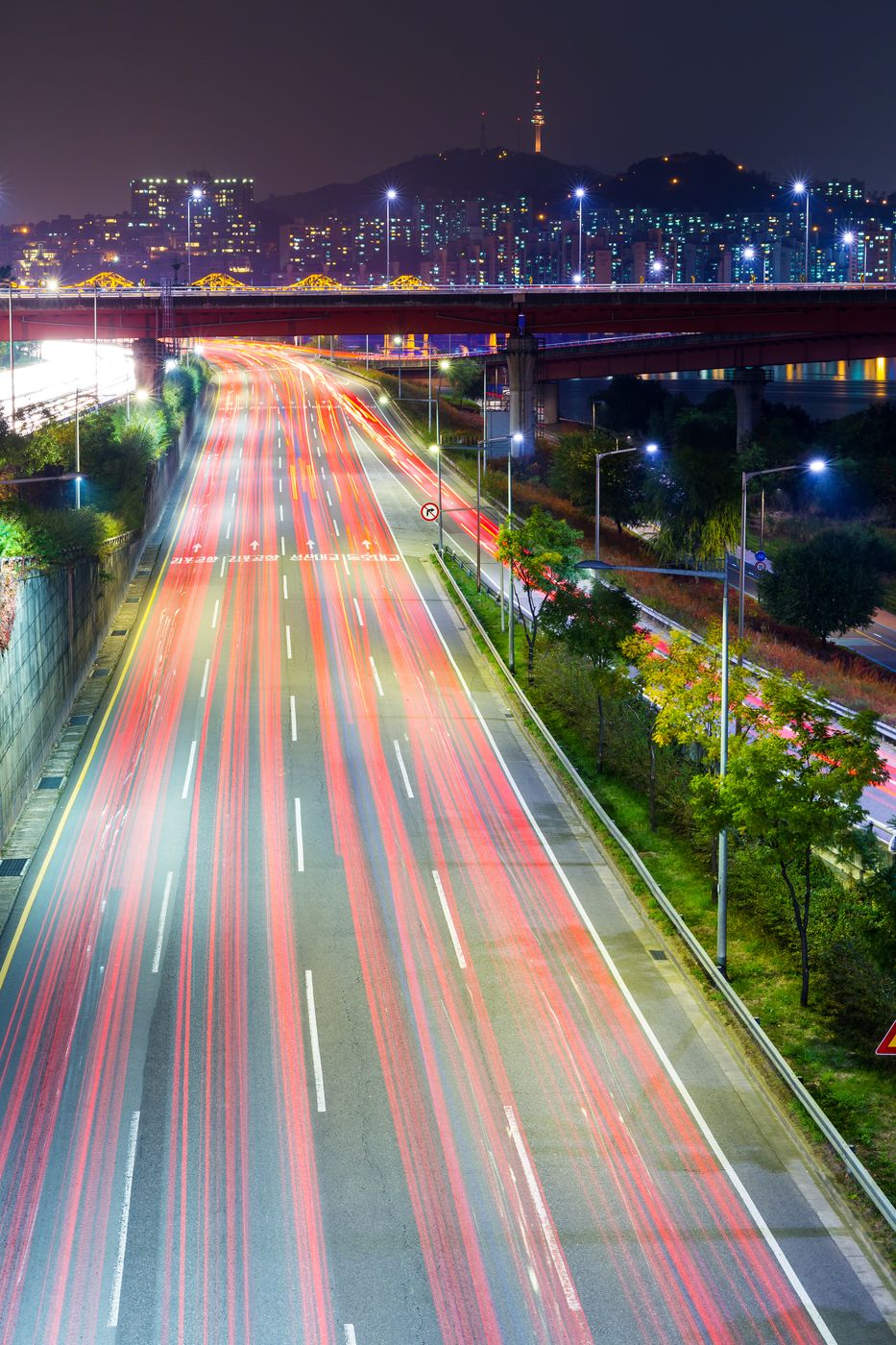
Truck-related deaths on expressways rose for two years in a row, and police reported a further rise in early 2026. In a 2013 Q&A, the transport ministry said speed limiters cut speeding crashes by up to about 30%, and truck and bus deaths by about 43% and 70%.
road deaths in Korea in 2025
truck-related expressway deaths in 2025, up from 71 in 2023
fewer speeding crashes with limiters, according to the transport ministry (2013)
Sources: Kyunghyang Shinmun, Financial News, MOLIT. Checked October 2026.
Devices
Speed limiters for vehicles outside the factory mandate
For trucks and buses made or imported before the phase-in dates. Mandated vehicles keep their factory limiter.
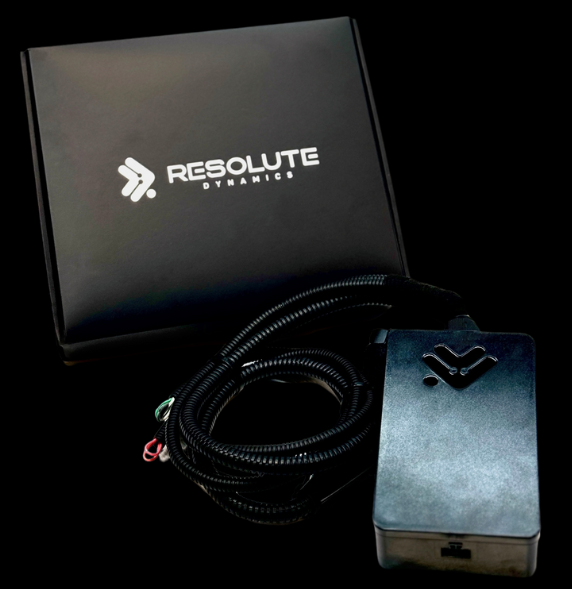
Electronic Speed Limiter (ESL)
For older vehicles with an electronic accelerator. Caps the throttle signal at the set speed.
Electronic throttle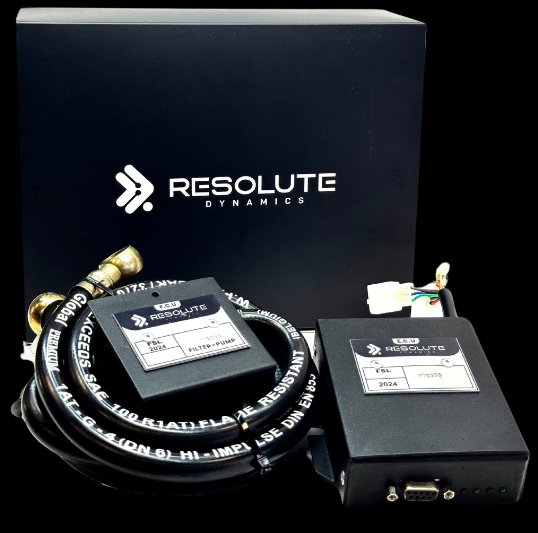
Fuel Type Speed Limiter (FSL)
For older vehicles with a mechanical accelerator pedal. Limits fuel delivery at the set speed.
Mechanical pedal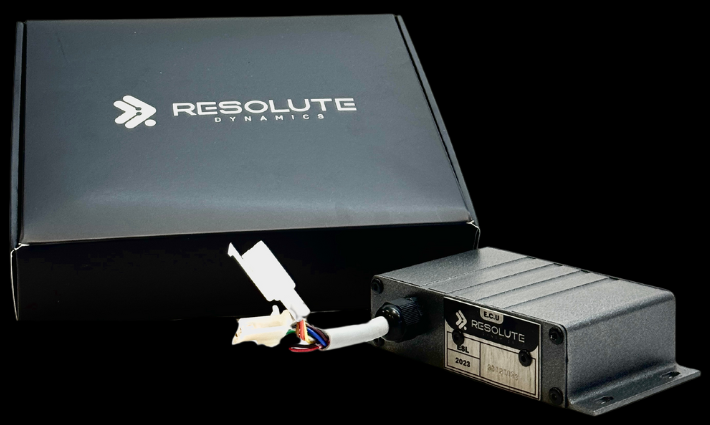
Dual and Multi-Speed Limiter
Two or more GPS-geofenced speed profiles, for lower limits in yards or depots.
GPS profiles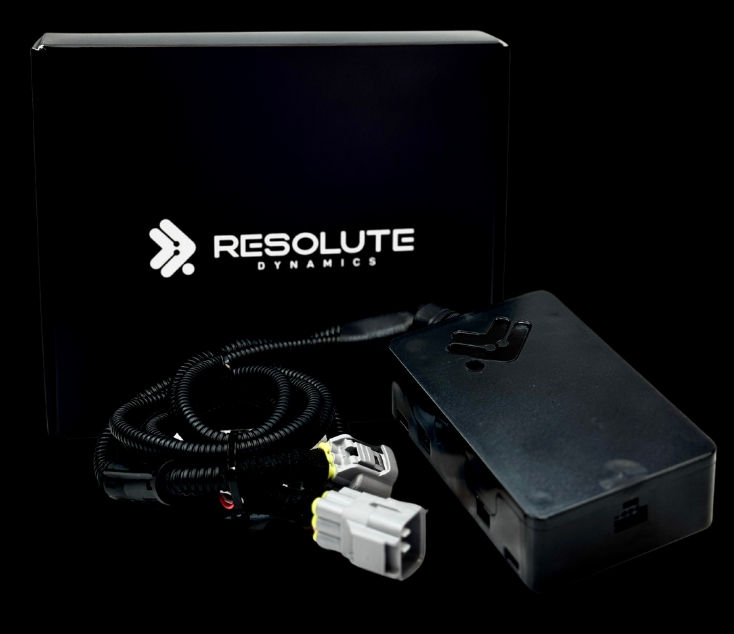
RPM Regulator
Holds engine speed steady while a power take-off (PTO) runs, protecting hydraulic pumps on tankers and tippers.
PTO equipmentBefore fitting an aftermarket device in Korea, confirm KC conformity for the electronics (Radio Waves Act) and ask the Korea Transportation Safety Authority whether tuning approval is needed. Any limiter fitted must also meet the Annex 26 standard (Article 110-2).
FAQ
Speed limiter questions about South Korea
Do Korean trucks need an aftermarket speed limiter?
No. Trucks over 3.5 t made or imported on or after the phase-in dates have a factory-fitted limiter, and trucks over 3.5 t and under 16 t made or imported before 16 August 2012 were never required to retrofit one. Fitting one to an older truck is voluntary.
What speed are Korean buses limited to?
110 km/h for buses (승합자동차), including child-transport buses. Buses over 4.5 t and under 10 t made or imported before 16 August 2012, and buses of 4.5 t or less made or imported before 16 August 2013, may have no limiter.
What happens if a speed limiter is disabled?
The person who tampers with it faces up to 3 years in prison or a 30 million won fine. A driver who knowingly uses the vehicle faces up to 1 year in prison or a 10 million won fine.
How do police find a disabled limiter?
Through expressway camera data, roadside checks with MOLIT and the Korea Transportation Safety Authority, and analysis of digital tachograph data.
Who restores a tampered limiter?
A registered repair business, by the deadline in the restoration order, which can be no more than 10 days.
What is the Korean term?
최고속도제한장치 in the law, often shortened to 속도제한장치.
Questions about limiters for your fleet in Korea?
Send your vehicle types and registration years. We will tell you honestly whether a device makes sense.