
Speed limiters are changing the way fleets operate on the road. They don’t just help vehicles follow the law—they save lives, reduce fuel costs, and keep operations under control. But not all fleets adopt them at the same pace. Public fleets and private fleets each face unique reasons for either jumping on the technology or holding back.
Let’s take a deeper look at how speed limiter adoption differs between these two sectors and why that matters for safety, compliance, and performance.
What Are Speed Limiters and How Do They Work?

A speed limiter, sometimes called a speed governor, is a small electronic device installed in a vehicle that restricts the top speed. Instead of relying on the driver’s judgment, the system automatically prevents the vehicle from crossing a set speed threshold.
Modern systems—like the ones built by Resolute Dynamics—go beyond just cutting engine power. They can be terrain-sensitive, adjusting limits depending on the area. Others work with GPS tracking systems and ECUs (engine control units) to create a fully connected safety net for fleet managers.
These tools help reduce crashes, save fuel, and ensure regulatory compliance. But adoption looks very different between public and private players.
Public Fleet Adoption: Safety First, Mandates Second
Public fleets are typically owned or funded by government bodies. Think of school buses, municipal vehicles, and public transit. Safety is the number one concern here.
In many regions, laws require speed limiters in school buses or government vehicles. Agencies aren’t as worried about ROI—they care about public safety and regulatory compliance. For example, a city’s transportation department might install speed limiters in every bus it operates to meet national road safety standards.
Resolute Dynamics offers a dedicated school bus speed limiter, designed specifically for this use case. It ensures that no matter what the road conditions are, the bus won’t exceed a safe limit. Some systems even integrate with RFID-based student tracking and route monitoring.
Because of this, adoption in public fleets is often high—not optional, but mandated.
Private Fleet Adoption: A Cost-Benefit Equation
In the private sector, every investment is judged through one lens—profitability. Unlike public agencies that follow regulatory mandates or safety-first initiatives, private fleet operators have to balance safety goals with operational efficiency, cost control, and return on investment (ROI).
These fleets include delivery services, logistics firms, mining and construction companies, taxi services, and even car rental businesses. Each one has its own set of priorities, but they all face a common question: Is a speed limiter worth the cost?
The Cost Side of the Equation
Let’s be honest—adopting speed limiters isn’t free. Here are the main cost-related concerns that make some fleet owners hesitate:
1. Installation Costs
Installing speed limiters across an entire fleet means buying hardware, possibly modifying vehicle control systems, and paying for labor. The more specialized the vehicle, the more complex (and expensive) the integration can be.
For instance, integrating with the CAN bus or engine control unit (ECU) in older models may require custom work, which adds to the bill.
2. Downtime During Retrofitting
When vehicles are off the road for upgrades, they’re not making money. A company with tight delivery schedules or thin margins can’t afford multiple vehicles out of rotation.
3. Driver Pushback
Some drivers feel that speed limiters interfere with their judgment or productivity. They worry about meeting delivery windows or losing overtime pay due to enforced speed caps. This can lead to morale issues or even higher turnover.
4. Uncertainty About ROI
If a fleet has never had major crash incidents or fuel problems, leadership might struggle to justify the investment. There’s often a lack of immediate, tangible benefits, making it harder to get buy-in from stakeholders.
The Value Side: Tangible & Intangible Benefits
Despite these concerns, data shows that speed limiters can create measurable, long-term gains when implemented strategically.
1. Lower Fuel Consumption
Speed has a direct impact on fuel efficiency. According to multiple fleet studies, even reducing top speeds by 5 to 10 mph can cut fuel costs by up to 12%. Over thousands of miles and dozens of vehicles, that adds up fast.
This is especially true for long-haul trucks, where even small reductions in RPMs during cruising can drastically reduce fuel burn.
2. Fewer Accidents and Liability Claims
Speeding is a leading cause of crashes. By capping maximum speeds, companies can reduce the risk of collisions—and the legal and financial fallout that follows. This includes fewer injury claims, lawsuits, and vehicle repair costs.
3. Insurance Incentives
Some insurers offer premium discounts to fleets using speed governors. The reasoning is simple: lower speeds mean lower risk, and that lowers the insurer’s exposure.
Over time, this can significantly reduce total cost of risk (TCOR) for a fleet.
4. Improved Driver Behavior
When paired with driver behavior monitoring tools—like dash cams or telematics systems—speed limiters help create a culture of safety. Drivers become more consistent and predictable, and coaching becomes easier.
Using Telematics to Maximize ROI
Today’s top fleets are going beyond just installing a speed limiter—they’re integrating it into a full driver performance ecosystem.
Telematics systems, such as those from Resolute Dynamics, allow fleet managers to:
-
Track real-time vehicle speed vs. speed limits
-
Monitor sudden braking, harsh acceleration, and idling
-
Use geofencing to adjust limits based on routes or zones
-
Analyze fuel consumption tied to driving patterns
This data-driven feedback loop helps fleets optimize performance while reinforcing safe driving. And because it’s based on real-world usage, it provides clear ROI metrics to justify the investment.
Why Resolute Dynamics’ Dual-Speed Limiter Stands Out
One of the most powerful tools in this space is the Dual-Speed Limiter from Resolute Dynamics. Unlike basic systems that apply a fixed speed cap, this model allows for dynamic speed control:
-
One speed limit for highways
-
A different one for urban or local roads
-
All adjustable remotely via a management interface
This makes it ideal for mixed-use fleets—those delivering both in cities and between states. It avoids the “one size fits all” trap and gives fleet managers the flexibility they need without sacrificing safety or control.
Public vs. Private Fleets: A Deeper Look at Speed Limiter Adoption
Understanding how public and private fleets differ isn’t just about who owns the vehicles. It’s about the mindset, goals, and limitations each sector operates under. These differences directly affect how quickly (or reluctantly) they adopt technologies like speed limiters.
Let’s break it down feature by feature:
1. Main Motivation
-
Public Fleets: Compliance & Safety
Public fleets exist to serve the community. Their primary duty is to ensure the safety of passengers, pedestrians, and other drivers. Government policies often set strict safety standards—especially for school buses, ambulances, or municipal transport. Adoption of speed limiters is frequently a compliance issue, not a choice.Example: A school district must install speed limiters in all buses to meet national child safety mandates.
-
Private Fleets: Cost Savings & Risk Management
In contrast, private fleets—whether they belong to logistics companies, contractors, or service providers—are primarily focused on profit margins. Their motivation to adopt speed limiters is usually tied to lowering insurance premiums, reducing fuel use, and avoiding costly accidents or legal risks. Safety matters, but it must make financial sense.Example: A delivery company might install limiters after analyzing that speeding-related crashes are costing them in downtime and repairs.
2. Adoption Rate
-
Public Fleets: High (Often Mandated)
Since many public fleet operations are government-regulated, adoption of speed limiters tends to be swift and widespread. In some countries, it’s illegal to operate certain public vehicles without one. These mandates leave little room for delay or debate.Countries like Kenya and India have required school buses and certain public service vehicles to be equipped with speed governors.
-
Private Fleets: Moderate to Low (Voluntary)
Without mandates, adoption in the private sector tends to be slower and more strategic. It depends on the company’s size, risk profile, and leadership’s openness to tech. Some large fleets are early adopters; others wait for external pressure like rising fuel prices or insurance penalties.Smaller companies may skip the tech due to cost concerns, while enterprise-level fleets may pilot it in a few regions first.
3. Customization Needs
-
Public Fleets: Low
Most public fleets are relatively uniform in usage. For example, school buses run fixed routes at fixed times, and speed requirements are predictable. This makes customization simple—set a fixed speed cap and you’re done. There’s no need for advanced configurations.A city’s sanitation trucks might all operate in residential zones, so one universal limiter setting works.
-
Private Fleets: High (Depends on Routes/Types)
Private fleets are more diverse in both vehicle type and usage. One company might operate heavy-duty trucks on highways and compact vans in urban centers. These fleets require flexible speed limiting solutions, like Resolute Dynamics’ dual-speed limiter, which can change speed caps based on terrain or route.A fleet of ride-hailing vehicles needs different settings than long-haul trailers on expressways.
4. Technology Integration
-
Public Fleets: GPS, School Bus Safety Systems
Public fleets often rely on essential safety tech like basic GPS tracking, driver identification, and school bus safety systems (e.g., stop-arm cameras, RFID check-ins for students). They need straightforward tools that improve oversight and public trust but are usually not integrated into complex data systems.A district transport office uses GPS logs to ensure school buses stay within assigned zones.
-
Private Fleets: Telematics, Fleet Analytics
Private fleets go deeper. They adopt smart fleet management platforms, combining GPS, engine diagnostics, driver behavior analysis, and route optimization. These systems generate actionable data that drive cost-saving strategies. Speed limiters are often integrated into these telematics ecosystems, giving real-time feedback to operations teams.Fleet managers get dashboards showing which vehicles exceeded speed limits, where, and why.
5. Budget Constraints
-
Public Fleets: Funded by Public Sector
Public fleets often operate under government budgets, which can be both a blessing and a curse. If the funding exists, purchasing speed limiters for 200 buses can be done in a single contract. However, if budgets are tight, projects may be delayed due to bureaucratic red tape, not lack of need.A transportation department might allocate a portion of its annual safety fund to speed limiters.
-
Private Fleets: ROI-Driven
Every dollar in a private fleet is expected to deliver measurable returns. That means purchasing decisions go through financial modeling, pilots, and approval cycles. If speed limiters don’t show clear value—like reducing accidents or fuel costs—they may be cut from the budget.A fleet may justify speed limiter costs only if fuel savings offset installation costs within 12 months.
6. Decision Makers
-
Public Fleets: Government Agencies
Decisions are made by transportation departments, school boards, or public safety authorities. These groups prioritize policy compliance, risk mitigation, and public accountability over profits. They tend to favor vendor relationships that can offer scale, certifications, and reliable servicing.RFPs (Request for Proposals) often include safety certifications and local service availability as mandatory criteria.
-
Private Fleets: Fleet Managers / CEOs
In private organizations, decisions rest with fleet managers, COOs, or even CEOs, depending on company size. These stakeholders need to see numbers, outcomes, and dashboards. They want flexibility, performance insights, and competitive pricing. Vendors must provide proof of value, not just promises.A CEO may greenlight a speed limiter rollout after reviewing quarterly crash statistics and TCO (total cost of ownership) models.
Why Some Fleets Still Resist Adoption
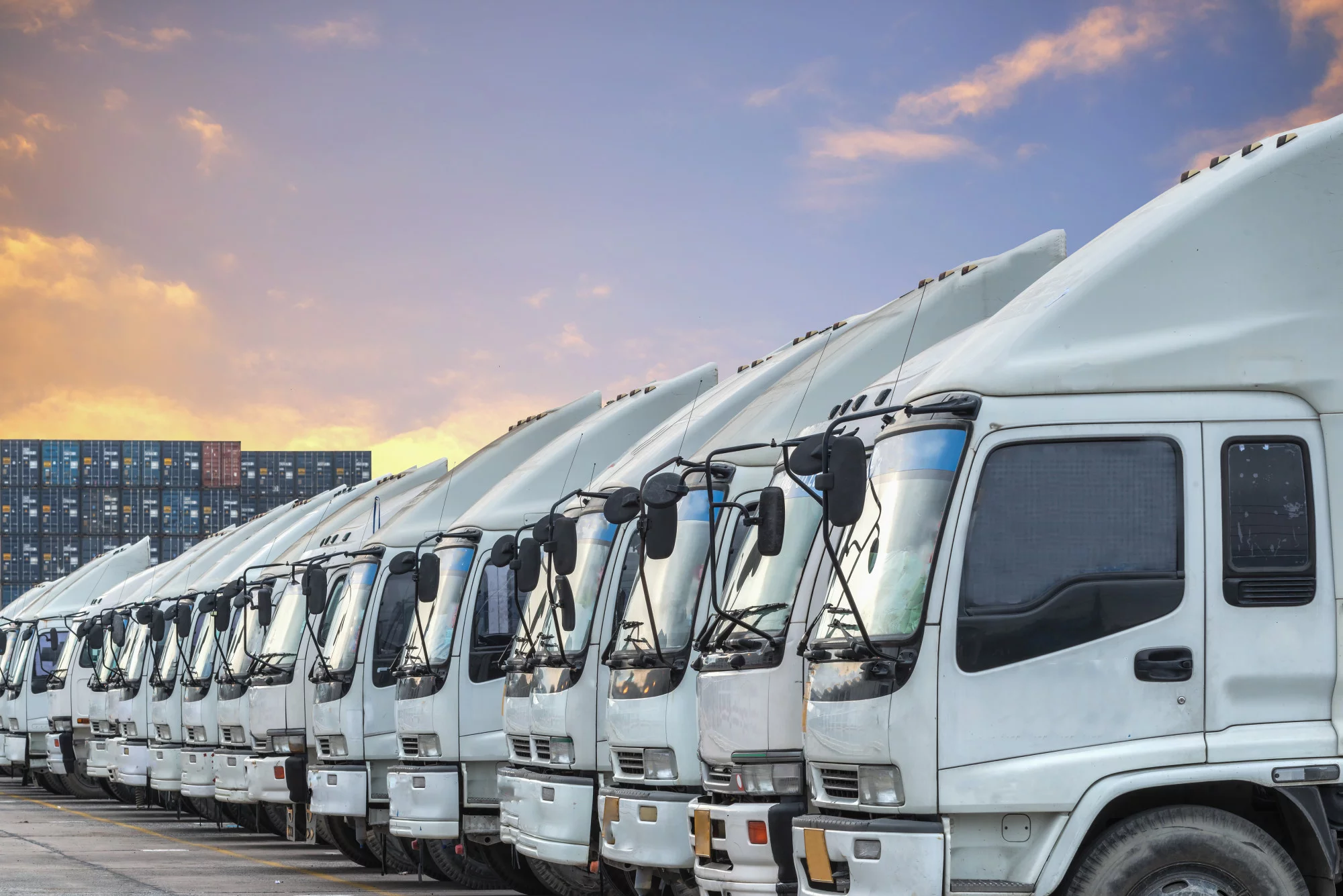
Despite clear benefits, both public and private fleets face barriers:
-
Legacy vehicles that are hard to retrofit
-
Complex terrain (e.g., rural areas) where uniform speed limits aren’t practical
-
Lack of awareness about smart limiter technologies
-
Driver complaints about reduced control or delayed trips
But as regulations tighten and road safety becomes a global priority, resistance is weakening. More companies are recognizing that the cost of not adopting safety tech is even higher—accidents, fines, and reputational damage.
Innovation That’s Changing the Game
The evolution of fleet technology isn’t just about doing things better—it’s about doing things smarter, faster, and safer. Traditional speed limiters were simple devices that cut off fuel supply once a vehicle hit a preset speed. While effective at a basic level, they often lacked adaptability, connectivity, or insights for modern fleet operations.
But today, companies like Resolute Dynamics are leading a revolution in how fleets manage speed—not just limit it. Let’s dive into the cutting-edge innovations that are reshaping the landscape of vehicle speed management.
1. Terrain-Based Speed Adaptation
Speed isn’t just a number—it’s context-sensitive. What’s safe on a highway might be dangerous on a rural hill or a crowded downtown road. That’s why terrain-based speed adaptation is such a game-changer.
This technology uses GPS, elevation mapping, and real-time geolocation data to adjust a vehicle’s speed limiter based on the terrain or road type. For example:
-
On a steep downhill grade, the system may lower the maximum speed to reduce brake strain and prevent rollovers.
-
In mountainous regions or poor road conditions, speed caps are adjusted dynamically to prevent accidents.
Think of it as a “smart limiter” that thinks with the road.
This is especially useful in regions with diverse geography—mining fleets, rural logistics, and intercity bus operators benefit enormously from this location-aware intelligence.
2. Integrated GPS + Speed Limiter Systems
Speed limiter hardware is no longer a standalone module. The latest systems are deeply integrated with GPS tracking, telematics, and vehicle diagnostics. This fusion creates a connected safety ecosystem, where decisions aren’t just made by hardware but by real-time data.
With GPS-linked speed limiting, the system can:
-
Map speed limits to specific roads and enforce them automatically
-
Detect when a vehicle enters restricted areas (like school zones) and lower the cap
-
Communicate location and speed data back to fleet managers for compliance reporting
Fleet operators can see exactly where, when, and why a limiter engaged—adding visibility and accountability.
The integration also means that route-based speed profiles can be assigned to individual vehicles or drivers. A delivery van in the city can follow different rules than a hauler on interstates—all controlled remotely.
3. Customizable Speed Profiles by Vehicle Type
Fleets are rarely made up of identical vehicles. You might have a mix of:
-
Light-duty vans for urban deliveries
-
Heavy-duty trailers for long hauls
-
Utility pickups for construction sites
-
School buses for local passenger transport
Each of these has different safety margins, braking power, acceleration capabilities, and use-cases. A one-size-fits-all limiter doesn’t cut it anymore.
Today’s advanced systems let you assign vehicle-specific speed profiles based on:
-
Axle configuration
-
Load type
-
Drive terrain
-
Fuel economy goals
These profiles can also be time-sensitive. For example, a fleet might reduce speeds during high-traffic hours or enforce stricter limits during night shifts to reduce crash risks.
Custom profiles give fleet managers surgical control over their safety strategy.
This not only boosts compliance and safety—it also enhances operational efficiency and aligns with duty-of-care requirements.
4. Remote Diagnostics and Control
The modern fleet is a digital organism—connected, trackable, and manageable from anywhere. Remote diagnostics have become essential, and now, speed limiters are joining that ecosystem.
With remote control capabilities, fleet operators can:
-
Change speed limits in real time based on route, weather, or behavior
-
Diagnose limiter malfunctions or tampering attempts
-
Update firmware or recalibrate settings over-the-air (OTA)
This is particularly powerful for large-scale operations or multi-country fleets, where sending technicians to each vehicle for adjustments is impractical.
Need to lower the speed for all vehicles during a snowstorm? Do it with a few clicks.
Remote access also discourages tampering. If a driver tries to bypass the limiter, the system can flag it, log it, and even lock down speed settings remotely for safety compliance.
5. Multi-Speed Limiter Functionality
Traditional speed limiters had one fixed value. That worked fine in the past—but modern driving requires contextual flexibility. This is where multi-speed limiter technology comes in.
It allows for multiple programmable speed limits on a single vehicle. These can switch automatically based on:
-
Road category (urban vs. highway)
-
Time of day
-
Payload weight
-
Driver behavior scores
For example, a delivery truck might have:
-
A 100 km/h limit on expressways
-
A 70 km/h cap in suburban areas
-
A 40 km/h cap in school or construction zones
And the transitions are seamless, with no input needed from the driver.
This boosts safety and compliance without slowing down operations.
Resolute Dynamics’ Dual Speed Limiter is a prime example of this kind of innovation. It bridges the gap between rigid safety enforcement and operational flexibility—making it practical for diverse, real-world scenarios.
Case Study: School Bus vs. Delivery Truck

A public school district in the UAE recently adopted Resolute Dynamics’ school bus limiter. Within six months, accident reports dropped by 35%. Parents reported increased trust in the transportation system, and compliance with national safety laws improved.
On the other hand, a private e-commerce delivery fleet tested the same company’s dual-speed limiter. The results? A 12% drop in fuel use, fewer traffic violations, and improved insurance rates after just three months.
These stories show how speed limiter adoption looks different but adds value on both sides.
What the Future Looks Like
The future of fleet safety is smart and automatic. We’re likely to see:
-
AI-based adaptive speed control
-
Real-time driver coaching via in-cabin alerts
-
Cloud-based limiter updates
-
Mandatory limiters for all new commercial vehicles
Governments may soon make these systems mandatory across both sectors. The pressure is rising on fleet owners to act now—before regulations catch up.
Fleet safety will no longer be a “nice-to-have.” It’ll be part of how companies and cities prove they care about human lives.
Final Thoughts
Speed limiters are more than electronic gadgets—they’re guardians on the road. Whether you’re moving school children or commercial goods, limiting speed means limiting risk. The public sector is already embracing the tech. The private sector is catching up fast.
With modern solutions like those from Resolute Dynamics, there’s no longer a reason to wait. The tech is ready. The roads need it. The question is—how soon will you adopt?