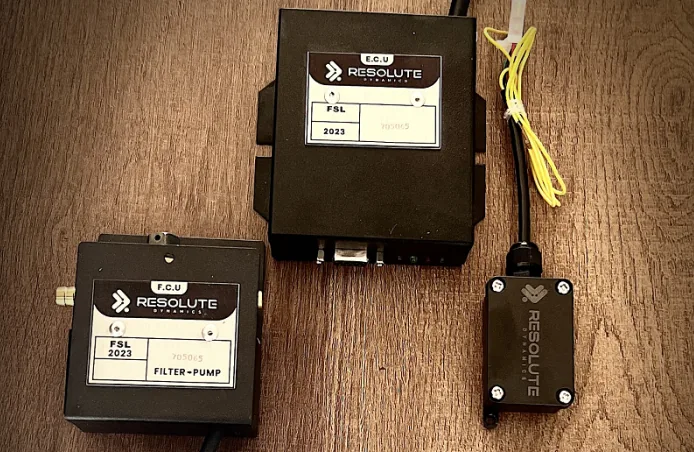
Speed limiters raise legitimate legal and ethical questions. Who decides the speed cap? Who’s liable if it fails? What happens to the data? This guide covers the ten most-asked legal and ethical questions about speed limiter deployment on commercial fleets — drawn from the practical experience of running fleets in the UAE, GCC, and internationally.
1. Who Has the Legal Authority to Mandate a Speed Limiter?
National and sub-national transport authorities. In the UAE that’s the RTA and equivalent emirate-level bodies backed by federal safety standards. In Malaysia it’s JPJ. In the EU it’s national implementation of UN R89 and the GSR. In Canada, provincial ministries. Mandates are usually implemented as fitment requirements at vehicle-registration or licence-renewal points.
2. Is a Speed Limiter Legal Under a Driver’s Right to Operate a Vehicle?
Yes. Speed limits are already law; the limiter is a mechanical enforcement of an existing legal obligation. Courts internationally have consistently upheld speed-limiter mandates as reasonable safety regulation of commercial vehicle operation.
3. Where Does Liability Sit If a Fitted Speed Limiter Fails?
Depends on the failure mode. Device malfunction traceable to a manufacturing defect sits with the device manufacturer under normal product-liability law. Installer error sits with the fitment centre. Driver tampering sits with the driver and operator. Contracts between operators and fitment centres typically define these boundaries explicitly.
4. Can a Fleet Operator Legally Set Caps Below the Legal Speed Limit?
Yes, and many do. Setting an operational cap below the road-legal limit (for example, 90 km/h on a 100 km/h motorway) is at the operator’s discretion. Insurance underwriters often reward this posture with reduced premiums.
5. What Are the Ethical Concerns Around Driver Autonomy?
The main ethical debate: does capping speed reduce driver skill and situational awareness? The consensus among road-safety researchers is that the safety gain from removing top-speed accidents outweighs the marginal cost to driver decision-making, especially on commercial vehicles operated for long hours.
6. What Data Does a Modern Speed Limiter Collect — and Who Owns It?
Modern devices log speed, location, engine parameters, overspeed events, and driver identification. Ownership of that data usually sits with the fleet operator under employment contracts, but access rights, retention periods, and third-party sharing must be handled under applicable data-protection law (GDPR in Europe, UAE Personal Data Protection Law, and equivalents elsewhere).
7. What About Driver Privacy in Continuous Tracking Systems?
Location and speed tracking during working hours is generally permitted where there is a legitimate safety and operational purpose, but the operator must:
- Disclose the monitoring at hire.
- Limit data use to the stated safety and operational purposes.
- Not track vehicles during personal use of the vehicle if that’s allowed.
- Comply with retention and deletion rules in the applicable jurisdiction.
8. Is Tampering With a Fitted Speed Limiter a Criminal Offence?
In most jurisdictions with a speed-limiter mandate, yes. Tampering typically results in fines for the driver, licence action for the operator, and potential invalidation of vehicle registration. In the UAE, tampering also risks black points on the driver’s record.
9. What Happens If a Vehicle Registered in One Country Enters Another With Different Rules?
The device stays as fitted; the driver must observe the local speed limits, which may be lower than the device cap. Cross-border operators (for example, UAE to Oman, or EU cross-border trucking) typically calibrate devices to the lowest applicable cap across their operating region.
10. Do Speed Limiters Discriminate Against Any Vehicle Class?
Mandates apply consistently by vehicle category (heavy trucks, buses, taxis, etc.), not by owner or driver. This is deliberate: the regulation targets vehicle risk profile, not the operator. Enforcement patterns are audited to ensure fair application.
Where the Debate Is Moving
The legal and ethical conversation is shifting from “should we have speed limiters” to “how much AI-driven adaptive control is acceptable.” As IoT and AI-enabled speed limiter systems get more capable, the questions become: how much should a device change caps based on driver behaviour history? Whose consent is required? Where is the audit trail? These are the questions the next generation of regulation is likely to address.
Deploying Speed Limiters Under a Clear Legal Framework?
Resolute Dynamics supplies certified devices used on 200,000+ vehicles across 20+ countries. We handle the certification, calibration, and audit-trail documentation that keeps deployments defensible from day one.
→ Talk to our compliance team or call +971 50 213 0225
→ Prefer email? sales@resolute-dynamics.com

The Resolute Dynamics team designs and manufactures speed limiters (SLD), GPS tracking, and automotive safety systems used on 200,000+ vehicles across 20+ countries. We write about fleet compliance, road-safety regulation, and vehicle-safety technology, including Malaysia’s JPJ SLD mandate, UAE RTA rules, and global standards like UN R89, to help fleet operators and transport businesses stay safe and compliant.