
When I work with fleet operators and OEM engineers, one question comes up often: How do ISO and SAE standards actually affect speed governors?
Most people know that a speed governor limits vehicle speed. But very few understand how international engineering standards influence the way these systems are designed, tested, validated, and certified.
Speed governors are not just mechanical limiters anymore. They are electronic control systems integrated into the Engine Control Unit (ECU), connected through CAN bus networks, and governed by strict compliance frameworks. ISO and SAE standards define how these systems should behave, communicate, and ensure safety.
Let me break it down clearly and practically.
Understanding Speed Governors
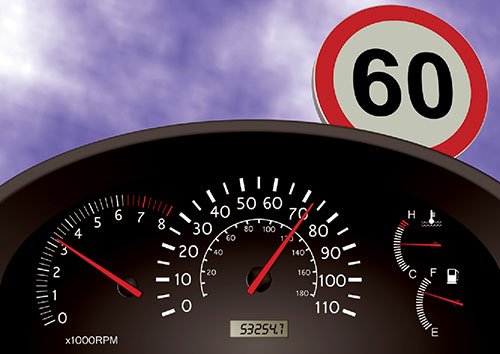
What Is a Speed Governor?
A speed governor, also called a speed limiter, is a system that restricts the maximum speed of a vehicle. It prevents the engine from exceeding a preset threshold.
In older vehicles, this was done using mechanical flyweights and throttle restrictions. Today, most vehicles use electronic speed governors integrated into:
-
Engine Control Module (ECM)
-
Electronic Throttle Control (ETC)
-
Fuel injection management systems
-
Telematics and fleet management platforms
The governor continuously monitors wheel speed sensors and engine RPM. When the vehicle reaches the programmed limit, the system restricts fuel delivery or throttle response.
This protects:
-
Engine durability
-
Road safety
-
Fuel economy
-
Emissions compliance
Why Speed Governors Matter for Commercial Fleets
In commercial transport, speed control is not just about preventing drivers from going too fast. It is about compliance, operational stability, financial protection, and risk management. When I look at fleet operations today—whether it is logistics, mining transport, passenger mobility, or hazardous cargo movement—speed governance plays a central role in keeping the entire system disciplined.
Governments across regions mandate speed limiting devices in:
-
Heavy Commercial Vehicles (HCVs)
-
Hazardous goods carriers
-
Public transport vehicles
-
Long-haul freight trucks
These mandates are not arbitrary. They are based on accident data, braking distance physics, vehicle mass dynamics, and public safety considerations.
But the importance of speed governors goes far beyond legal compliance.
Regulatory Compliance and Legal Exposure
Commercial vehicles operate under strict regulatory frameworks. In many jurisdictions, authorities require certified speed limiting devices that meet specific tolerance limits and tamper-resistance standards.
Without compliant speed governors, fleet operators face:
-
Vehicle impoundment
-
Heavy monetary penalties
-
Suspension of permits
-
Increased liability in accident investigations
In accident reconstruction, vehicle speed data is often extracted from the ECU (Engine Control Unit) or telematics system. If a vehicle exceeds mandated limits and lacks proper speed control validation, the legal consequences can escalate quickly.
This is why certified systems aligned with recognized engineering standards such as ISO and SAE become essential. They provide documented proof that the speed control system meets defined performance benchmarks.
Safety Risk Mitigation
Heavy vehicles have high kinetic energy due to mass and velocity. Even a small increase in speed dramatically increases stopping distance.
For example:
-
Braking distance increases exponentially with speed
-
Tire heat buildup rises at higher sustained speeds
-
Vehicle rollover probability increases during high-speed cornering
Speed governors reduce:
-
Overspeed incidents
-
Brake system overheating
-
Driveline stress
-
Loss-of-control events
For school buses and hazardous goods carriers, the margin for error is extremely small. A controlled maximum speed reduces the probability of catastrophic events.
In fleet safety analytics, speed compliance is one of the strongest predictors of accident reduction.
Fuel Efficiency and Operational Cost Control
Fuel consumption is highly sensitive to speed. Aerodynamic drag increases with the square of velocity. That means a truck traveling at 100 km/h consumes significantly more fuel than one traveling at 85–90 km/h.
When speed governors cap velocity within an optimized band:
-
Fuel burn becomes predictable
-
Engine load stabilizes
-
RPM fluctuation reduces
-
Idle-to-acceleration spikes decrease
Over a year, this can translate into measurable cost savings across large fleets.
Additionally, controlled speed improves:
-
Turbocharger lifespan
-
Transmission durability
-
Clutch and driveline longevity
These mechanical savings are not theoretical—they are observed in fleet maintenance data.
Tire Longevity and Asset Preservation
Tire degradation accelerates at higher speeds due to:
-
Increased friction
-
Heat accumulation
-
Road surface abrasion
High-speed operation causes uneven tread wear and thermal fatigue in commercial-grade tires. Since tire replacement is a major operating expense for fleets, maintaining optimal speed reduces premature failure.
Controlled speed also reduces:
-
Suspension stress
-
Axle load impact
-
Vibration-induced wear
Over time, this extends overall vehicle asset life.
Driver Behavior Management
Fleet management today relies heavily on telematics and behavioral analytics. Speed governors act as a structural behavioral control mechanism.
Instead of relying only on:
-
Driver training
-
Monitoring alerts
-
Post-trip reporting
A speed governor enforces compliance in real time.
This helps:
-
Reduce aggressive driving
-
Prevent competitive speeding among drivers
-
Improve route discipline
-
Lower driver fatigue
It creates a culture of controlled mobility rather than reactive supervision.
Insurance and Risk Profiling
Insurance companies assess fleet risk based on driving behavior metrics. Vehicles with enforced speed limitation often qualify for:
-
Lower risk categorization
-
Reduced insurance premiums
-
Improved claims defensibility
If a vehicle is equipped with a certified speed governor that meets recognized engineering standards, it strengthens the fleet’s risk mitigation profile.
Data Transparency and Audit Readiness
Modern commercial fleets operate in a data-driven environment. Speed compliance logs, ECU calibration records, and telematics reports are often audited.
Certified speed governors integrated through standardized communication protocols (such as CAN-based systems) provide:
-
Speed history traceability
-
Calibration documentation
-
Diagnostic trouble codes (DTC) tracking
-
Proof of non-tampering
This transparency becomes critical during inspections or regulatory audits.
The Importance of Recognized Standards
Here is the most important part: not all speed governors are equal.
For fleet deployment, systems must:
-
Maintain speed within strict tolerance margins
-
Resist tampering or bypass attempts
-
Communicate accurately with vehicle ECUs
-
Perform consistently under load variation and environmental stress
This is where internationally recognized engineering standards come in.
Standards from ISO and SAE define:
-
Performance testing methods
-
Functional safety requirements
-
Communication protocols
-
Diagnostic integrity
-
Calibration accuracy
Without compliance to these structured frameworks, a speed governor may function mechanically but fail under regulatory scrutiny.
What Are ISO and SAE Standards?
ISO – International Organization for Standardization
ISO develops global standards that ensure safety, interoperability, and quality across industries. In automotive engineering, ISO standards regulate:
-
Functional safety
-
Environmental testing
-
Emission measurement
-
Electronic system validation
-
Performance benchmarking
ISO standards create uniformity. A vehicle built in one country can meet the same engineering expectations as one built elsewhere.
SAE – SAE International
SAE International is a professional body that develops technical standards widely used in North America and globally.
SAE standards focus heavily on:
-
Automotive performance metrics
-
Vehicle network communication (like SAE J1939)
-
Testing protocols
-
Speed governing system requirements
SAE standards often define how systems should perform under real-world operating conditions.
Standards vs Regulations
This is important.
Standards are technical frameworks.
Regulations are laws.
However, governments frequently reference ISO and SAE standards inside regulatory frameworks. That means compliance with these standards often becomes mandatory.
Key ISO Standards That Influence Speed Governors
ISO 26262 – Functional Safety
ISO 26262 governs functional safety for road vehicles.
Electronic speed governors are part of a vehicle’s safety architecture. If the system fails, it could lead to dangerous overspeed conditions.
ISO 26262 requires:
-
Hazard analysis and risk assessment
-
Automotive Safety Integrity Level (ASIL) classification
-
Redundancy design
-
Fault detection and fail-safe strategies
This directly impacts how speed governors are engineered.
ISO 15622 – Adaptive Cruise Control
While ISO 15622 focuses on Adaptive Cruise Control (ACC), it influences integrated speed limiting systems.
Modern vehicles often combine:
-
Cruise control
-
Intelligent Speed Assistance (ISA)
-
Speed limiters
The standard defines how automated longitudinal control systems should behave safely.
ISO 8178 – Engine Emission Testing
ISO 8178 covers engine emission measurement procedures.
Speed governors indirectly support emission compliance by preventing engine overspeed and reducing excessive fuel injection at high RPM.
This helps manufacturers meet environmental regulations.
Key SAE Standards That Influence Speed Governors
SAE J1939 – Vehicle Network Communication
Modern speed governors communicate through the CAN bus system using SAE J1939 protocols.
This standard defines:
-
Message structure
-
Parameter Group Numbers (PGNs)
-
Engine speed signals
-
Vehicle speed data exchange
Without standardized communication, integration between ECUs would be chaotic.
SAE J2194 – Speed Governing Performance
SAE J2194 outlines performance requirements for speed governing systems in commercial vehicles.
It addresses:
-
Speed accuracy tolerance
-
Stability under load
-
Test conditions
-
Verification procedures
This ensures that the governor maintains consistent control even on gradients or during load variation.
How Standards Affect Speed Governor Design
From an engineering standpoint, standards do not just influence speed governors — they define them. Every layer of development, from hardware selection to firmware logic, must align with structured technical frameworks.
When ISO and SAE standards are applied properly, they shape the architecture, safety behavior, communication protocols, and validation process of the system.
Let me break this down into the three most critical design dimensions: hardware architecture, software calibration, and diagnostics management.
Hardware Architecture
The hardware layer is the physical backbone of a speed governor. It includes sensors, microcontrollers, wiring harnesses, connectors, and protection circuits. International standards — especially those related to functional safety and automotive electronics — require that this architecture be resilient, redundant, and fault-tolerant.
Robust Sensor Systems
A modern electronic speed governor relies on accurate speed measurement. This usually comes from:
-
Vehicle Speed Sensors (VSS)
-
Wheel speed sensors (ABS sensors)
-
Transmission output shaft sensors
-
Engine RPM sensors
Standards require that these sensors provide:
-
Stable signal output
-
Immunity to electrical noise
-
High precision under vibration
-
Temperature resistance
If the speed input signal fluctuates due to electromagnetic interference or poor grounding, the governor could behave unpredictably. That is why standards emphasize signal integrity and electromagnetic compatibility (EMC).
Redundant Signal Pathways
Functional safety standards such as ISO 26262 require redundancy for safety-critical systems.
In a compliant architecture:
-
Primary and secondary signal channels may be used
-
Cross-check algorithms compare sensor plausibility
-
Watchdog circuits monitor microcontroller behavior
If the primary speed signal fails, the system must either switch to a secondary input or activate a safe state.
This prevents uncontrolled overspeed conditions caused by a single point of failure.
EMI and EMC Resistance
Commercial vehicles operate in harsh electrical environments. Alternators, ignition systems, telematics modules, and external radio sources generate electromagnetic interference.
Speed governor hardware must withstand:
-
Voltage spikes
-
Load dump conditions
-
Ground shifts
-
Electromagnetic radiation
Standards require immunity testing under defined electrical stress scenarios. This ensures the governor maintains consistent behavior even during electrical disturbances.
Environmental Durability Testing
Commercial vehicles face extreme operating conditions:
-
High ambient temperatures
-
Cold start environments
-
Dust and moisture exposure
-
Mechanical vibration
-
Shock loads
Standards require environmental validation through:
-
Thermal cycling tests
-
Vibration bench testing
-
Ingress protection evaluation
-
Endurance stress testing
A compliant governor cannot just function in ideal lab conditions — it must survive real-world stress without performance degradation.
Software Calibration
If hardware is the skeleton, software is the intelligence layer. This is where standards heavily influence system behavior.
Electronic speed governors operate through ECU firmware that manages throttle mapping, torque control, and fuel injection timing.
Maintaining Speed Within Defined Tolerance Bands
Standards specify that speed limitation must remain within defined accuracy limits.
For example:
-
If the limit is set at 90 km/h
-
The system may only allow a small tolerance band
-
Overshoot must remain within predefined margins
This requires precise calibration of:
-
Throttle position control
-
Fuel injection pulse width
-
Torque limiting parameters
Without proper calibration, vehicles may exceed regulatory limits during downhill travel or heavy load variation.
Preventing Oscillation (Hunting Effect)
Poorly calibrated governors can cause “hunting,” a condition where speed fluctuates above and below the set limit.
This creates:
-
Passenger discomfort
-
Driveline stress
-
Fuel inefficiency
-
Driver frustration
Standards require stable closed-loop control logic.
To prevent oscillation, engineers use:
-
PID (Proportional-Integral-Derivative) control algorithms
-
Smoothing filters
-
Gradual torque reduction curves
-
Adaptive response calibration
The system must apply speed limitation progressively, not abruptly.
Smooth Throttle Response
A compliant speed governor cannot create jerky engine behavior.
When the vehicle reaches its maximum threshold, the system should:
-
Gradually reduce torque output
-
Maintain steady-state speed
-
Avoid harsh fuel cut-off
Abrupt intervention may cause drivetrain shock, especially in heavy-duty trucks. Standards require that control behavior remain predictable and stable.
Validation Under Standard Test Scenarios
Calibration is not guesswork. It is validated under controlled test conditions such as:
-
Dynamometer testing
-
Gradient load testing
-
Full-load acceleration runs
-
Downhill overspeed simulation
These test protocols ensure that the speed governor performs consistently across different vehicle masses and environmental conditions.
Diagnostics and Fault Management
Modern speed governors are no longer standalone devices. They are integrated electronic subsystems within the vehicle network.
Standards heavily influence diagnostic behavior and fault reporting mechanisms.
On-Board Diagnostics (OBD) Integration
Speed governors must integrate with the vehicle’s OBD system.
This allows:
-
Real-time monitoring
-
Error logging
-
Regulatory inspection scanning
-
Emission compliance verification
Diagnostic transparency is essential for regulatory audits and fleet maintenance programs.
Diagnostic Trouble Codes (DTCs)
When the system detects abnormal behavior — such as:
-
Sensor signal loss
-
Communication failure
-
Calibration corruption
-
Power supply instability
It must generate standardized Diagnostic Trouble Codes (DTCs).
These codes:
-
Follow structured communication protocols
-
Can be read using scan tools
-
Provide traceability for service technicians
Standards like SAE diagnostic communication frameworks define how these codes are transmitted over the CAN bus.
Limp-Home Mode Activation
If a severe malfunction occurs, the system must enter a safe operating mode.
This is often called “limp-home mode.”
In this condition:
-
Vehicle speed may be restricted further
-
Engine torque may be limited
-
Warning indicators may activate
This fail-safe behavior prevents dangerous overspeed conditions while allowing the vehicle to reach a service location safely.
Functional safety standards define how and when such protective behavior must activate.
The Bigger Engineering Picture
When ISO and SAE standards are applied correctly, they transform speed governor design into a structured engineering discipline.
They influence:
-
System architecture planning
-
Risk mitigation strategy
-
Validation workflow
-
Communication interoperability
-
Certification documentation
Without these standards, systems might function mechanically but fail under stress, regulatory scrutiny, or integration testing.
In modern commercial mobility, a speed governor is not just a limiter. It is a safety-critical electronic control subsystem governed by global engineering protocols.
Standards ensure that when a vehicle reaches its maximum speed, the response is:
-
Accurate
-
Stable
-
Predictable
-
Legally defensible
-
Technically robust
That is what separates compliant systems from basic limiters.
For fleet owners, standards translate into:
-
Predictable system performance
-
Legal compliance assurance
-
Easier cross-border vehicle operation
-
Lower liability risk
When a speed governor aligns with ISO and SAE standards, it provides documented reliability. That matters during inspections, audits, and accident investigations.
Legal and Regulatory Context
Many countries require certified speed limiting devices.
Regulatory bodies often mandate:
-
Type approval testing
-
Calibration sealing
-
Tamper resistance mechanisms
-
Periodic verification
Standards act as the technical backbone behind these regulatory requirements.
Best Practices for Compliance
If I were advising a manufacturer or fleet operator, I would focus on:
-
Ensuring ECU firmware follows ISO 26262 guidelines
-
Verifying CAN communication compliance (SAE J1939)
-
Conducting controlled dynamometer testing
-
Maintaining documentation and certification records
-
Performing regular recalibration checks
Compliance is not a one-time activity. It is continuous validation.
Emerging Trends: Intelligent Speed Assistance (ISA)
With advanced driver assistance systems (ADAS), speed control is evolving.
New vehicles now integrate:
-
GPS-based speed recognition
-
Camera-based traffic sign detection
-
Telematics-driven remote speed limiting
Future standards will increasingly address cybersecurity, over-the-air updates, and software-defined vehicle architecture.
Conclusion
ISO and SAE standards deeply influence how speed governors are built, tested, and validated. They shape:
-
Engineering design
-
Software calibration
-
Communication protocols
-
Safety mechanisms
-
Compliance verification
Without these standards, there would be no consistency in performance or safety.
For manufacturers, they provide a technical framework.
For fleets, they provide confidence.
For regulators, they provide measurable benchmarks.
In the end, speed governors are not just about limiting speed. They are about engineering precision, regulatory alignment, and operational safety built on globally recognized standards.