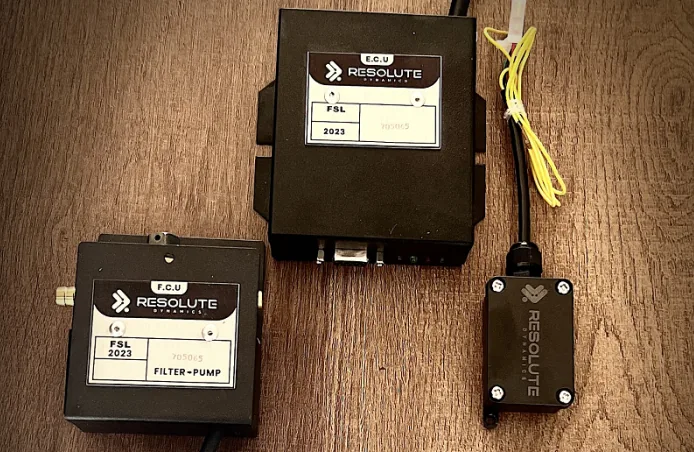
Singapore’s commercial fleet environment is unusually demanding for speed governance — vehicles move between the Central Business District, expressway stretches like the PIE and SLE, industrial parks, and school zones within a single shift. Fixed-speed limiters can’t handle that mix well, which is why dual-speed and multi-speed systems have become the LTA-preferred direction for many commercial classes.
For fleet operators evaluating LTA-approved speed limiters that support multiple cap thresholds, this article explains how dual and multi-speed systems actually work in Singapore’s specific conditions.
What Is a Dual or Multi-Speed Limiter?
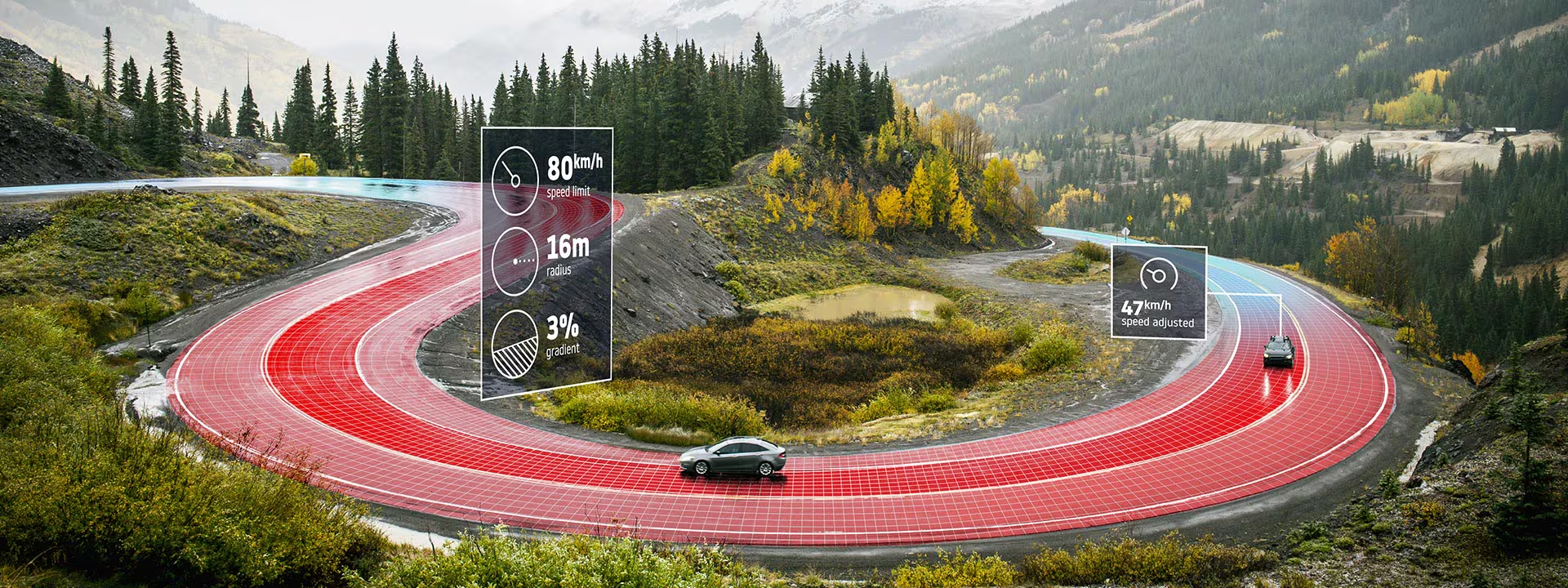
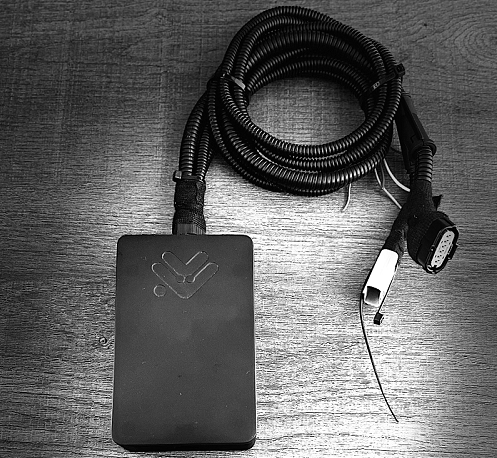
A dual-speed limiter is a system that lets a vehicle stick to two preset speed caps. Which one it uses depends on where the vehicle is or what kind of area it’s operating in. It’s all controlled by an onboard ECU.
Now, take that idea and stretch it out — that’s where the multi-speed limiter comes in. Instead of just two options, it can switch between several speed settings on the fly. It reads GPS data, checks for virtual boundaries (geofences), and adjusts the limit accordingly.
For fleet operators looking to enhance road compliance and safety, investing in professional speed limiter installation Singapore ensures these systems are correctly integrated and configured for local driving environments.
These systems aren’t just sitting there doing nothing. They’re active players in the safety game, wired into key parts of the vehicle—like the accelerator, engine controls, and GPS module.
Once hooked up, they talk to satellites to figure out the vehicle’s location. Based on that, they tweak the speed cap to match whatever zone the vehicle’s in.
How Do They Work in Practice?
Let’s say a logistics vehicle is configured with four speed profiles:
-
80 km/h on expressways
-
60 km/h in industrial areas
-
50 km/h near school zones during pickup hours
-
30 km/h in residential or pedestrian-heavy areas
As the vehicle crosses into new coordinates, the limiter checks its internal map and shifts speed limits on the spot. No button presses, no heads-up—the switch is seamless.
Behind the scenes, it reins in the throttle automatically, stopping it from pushing past whatever ceiling the system has locked in.
Some advanced versions go a step further—they factor in both location and time. Say a school zone caps speed at 40 km/h from 6:30 a.m. to 4:00 p.m. on weekdays.
Once the clock strikes 4:01 or the weekend rolls around, the cap lifts. The system handles the switch quietly, without the driver lifting a finger.
Integration with Fleet Telematics
Pair a limiter with telematics, and things get interesting. Fleet managers can track speed in real time, run compliance checks, and tweak limits remotely as rules or routes change.
That kind of flexibility matters in places like Singapore, where a single road might swing from express speeds to tight safety zones in minutes.
Why This Matters
Drivers are human—they can get distracted, misread signs, or simply forget. A multi-speed limiter removes those variables. It takes local laws, environmental context, and company policies, and bakes them directly into the vehicle’s behavior.
That means fewer violations, fewer accidents, and more consistent fleet performance.
This isn’t just speed control. It’s automated risk management, especially critical in countries like Singapore where road environments shift drastically within short distances.
Why Mixed-Speed Zones Are a Challenge
Singapore’s traffic zones are layered and complex. There are urban arteries, residential pockets, industrial areas, and central business hubs all packed into a small island. That makes velocity control more complicated than it sounds.
A delivery truck could go from a 70 km/h expressway to a 30 km/h school zone in a matter of minutes. One wrong judgment call, and there’s a safety violation—or worse. Manual speed control doesn’t work here. It’s inconsistent. And traffic officers can’t be everywhere.
That’s why vehicles need zone-responsive speed technology. Something smarter than stickers and signs.
Real-Time Adaptation: The Competitive Edge
Let’s say a taxi crosses from the East Coast Parkway to a residential estate in Bedok. The terrain changes, the risk factors change, and so should the speed. With a multi-speed limiter, it just happens. No delay. No driver error. The limiter switches to the programmed limit for that zone.
This tech doesn’t just obey posted signs—it reads the road dynamically. It reacts to GPS coordinates and predetermined maps. There’s no guesswork. It keeps vehicles consistent and compliant, even during unpredictable traffic shifts.
Think of it like cruise control—but location-based and automatic.
Traffic Efficiency: Not Just About Safety
Limiting speed doesn’t mean slowing things down. In fact, traffic flow improves when speed is managed smartly.
Here’s how:
-
Fewer speed violations = fewer sudden stops
-
Reduced harsh braking and acceleration = smoother vehicle movement
-
Consistent speeds = better fuel economy and lower emissions
-
Less road rage = fewer accidents
In zones where speeds vary wildly, controlling transitions prevents bottlenecks and collisions. It’s a simple fix to a messy problem.
Compliance with Singapore Regulations
Singapore doesn’t take road safety lightly—and rightly so. With one of the most disciplined traffic systems in the world, the Land Transport Authority (LTA) has put strict controls in place, especially for commercial vehicles, school buses, and public transport fleets.
One of the core mandates? Speed regulation. According to LTA requirements, all public service and commercial vehicles above a certain weight or passenger capacity must be fitted with certified speed limiting devices.
These devices aren’t optional. They’re part of regular inspections and licensing checks, and failure to comply can lead to heavy penalties, suspension of operation, or disqualification from tenders.
Why Traditional Speed Limiters Are Falling Behind
Old-school speed limiters are fixed. They set one top speed—say, 60 km/h—and that’s it. But Singapore’s roads are far more layered. A delivery van may travel through:
-
80 km/h expressways
-
50 km/h arterial roads
-
30 km/h school zones during pickup hours
A static limiter doesn’t meet this challenge. It either slows the vehicle unnecessarily or allows too much speed in sensitive areas. That’s not compliance—it’s a liability.
Where Dual and Multi-Speed Limiters Step In
Multi-speed limiters solve this by offering adaptive control based on GPS location and zone-based rules.
These devices are pre-programmed with maps, zone boundaries, and time-based triggers, making them highly suited for Singapore’s road structure.
They align perfectly with:
-
Vehicle Inspection Requirements: Devices must be tamper-proof and verifiable during routine LTA inspections.
-
School Transport Licensing: Speed control in designated school areas is mandatory.
-
Fleet Safety Audits: Many government-linked contracts demand real-time speed control records for tender eligibility.
By using a multi-speed limiter, fleet operators prove compliance without relying on driver behavior. The system enforces the law automatically and keeps real-time logs that can be submitted for audits or dispute resolution.
Legal and Financial Benefits for Operators
Let’s not forget the costs of non-compliance:
-
Fines exceeding SGD 5,000
-
Immediate demerit points for drivers
-
Risk of losing operational license
-
Blacklisting from government contracts
Compare that with the cost of installing an intelligent limiter—and it’s clear where the value lies.
Some insurers in Singapore even offer lower premiums for fleets using certified adaptive speed control, since it significantly reduces risk of speeding incidents.
A Must-Have for Modern Fleets
Whether you’re managing a logistics fleet or operating a school transport service, meeting LTA’s standards isn’t optional—it’s operational survival. A smart limiter is no longer a bonus feature. It’s a regulatory tool, a compliance shield, and a fleet performance enhancer all in one.
By installing a multi-speed limiter, you’re not just obeying the law—you’re building a future-proof, audit-ready fleet that’s safer, cleaner, and fully aligned with Singapore’s evolving transport ecosystem.
Use Cases in the Singapore
This isn’t theory—it’s already working in the field.
-
School Buses: Limit speed to 40 km/h in pickup zones, 60 km/h on highways
-
Logistics Fleets: Safe movement between Tuas Port and inland warehouses
-
Shuttle Services: Seamless compliance between airport roads and residential loops
-
Public Buses: Speed limiting during off-peak and school hours for safer navigation
With Singapore’s urban density and high vehicle diversity, multi-speed limiters fill a real gap in traffic technology.
Frequently Asked Questions
Q: Can drivers override the limiter?
No. Once installed and configured, these systems run independently of driver input.
Q: Do they work offline?
Yes. GPS modules store preset maps and speed rules. Internet isn’t required during use.
Q: Is the installation permanent?
Installations are fixed but can be adjusted or reprogrammed depending on new zone rules.
For a step-by-step LTA compliance walkthrough (including the phased 2024—2027 rollout for 3,501—12,000 kg lorries), see: Singapore LTA Speed Limiter Compliance Guide.

The Resolute Dynamics team designs and manufactures speed limiters (SLD), GPS tracking, and automotive safety systems used on 200,000+ vehicles across 20+ countries. We write about fleet compliance, road-safety regulation, and vehicle-safety technology, including Malaysia’s JPJ SLD mandate, UAE RTA rules, and global standards like UN R89, to help fleet operators and transport businesses stay safe and compliant.