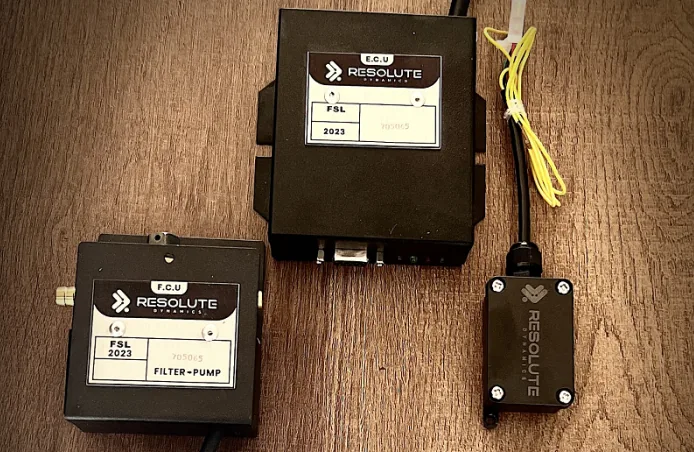
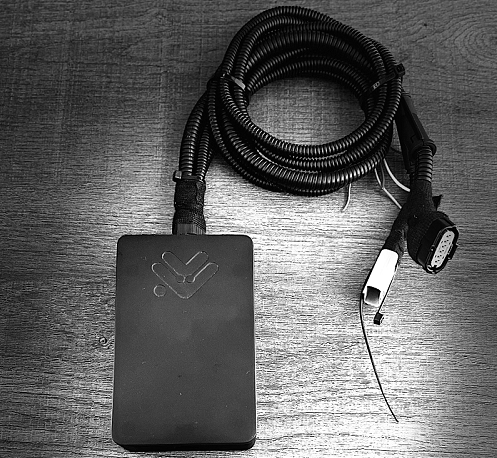
IoT sensors and AI systems now sit at the core of modern speed limiter devices. This guide covers how they actually work — the sensors involved, the decision-making layer, and how the data feeds back into fleet management platforms. For where the technology is heading in the coming decade, see our companion pillar: Future of Speed Limiter Technology.
How IoT Sensors Feed a Modern Speed Limiter
A connected speed limiter is no longer just a throttle-cap device. It ingests real-time data from a stack of on-vehicle sensors and, in fleet deployments, from external systems too.
On-Vehicle Sensor Inputs
- Wheel-speed sensors — primary ground-truth signal for actual vehicle speed.
- GPS module — secondary speed reference and location for geofence-based rules.
- Accelerometer / gyroscope — detects rapid deceleration, cornering forces, and impact events.
- Engine control unit (ECU) bus — RPM, throttle position, load, and fuel-map data.
- Optional cameras and lidar — used on Intelligent Speed Assistance (ISA) systems to read road signs.
External Data Feeds
- Cellular telematics — posted-speed lookups, geofence definitions, and remote configuration updates.
- Fleet-management platforms — driver identification, vehicle assignment, and event acknowledgement.
How the AI Layer Makes Decisions
Older devices applied a single hard cap. AI-enabled speed limiters apply contextual rules and adapt the cap based on the situation.
Rule-Based Decisions
The simplest AI layer is rule-driven: match current GPS position to a geofence table, look up the cap for that zone, apply. This is what powers dual and multi-speed limiter systems deployed on oilfield contractor fleets and municipal transport.
Machine-Learning Decisions
More advanced systems use ML models trained on driver behaviour, road conditions, and historical crash data to adjust the cap in real time. Examples of what these models actually decide:
- Lower the cap in wet-weather conditions detected via wiper activation and traction data.
- Tighten the cap on driver profiles with recent harsh-braking events.
- Relax the cap on empty highway stretches with good visibility.
Intelligent Speed Assistance (ISA)
The EU-mandated ISA implementation combines camera-read road signs with GPS-lookup posted speeds. The device warns or intervenes when the vehicle exceeds the current posted limit. This is a specific AI-plus-IoT pattern now standard on new EU vehicles.
Data Flow: From Device to Fleet Dashboard
In a fleet deployment, the device is one node in a much larger data pipeline:
- Sensors capture speed, position, engine data, and events.
- Onboard processor applies rules and any local ML inference; enforces the cap.
- Cellular uplink streams event data (overspeeds, hard braking, zone transitions) to the fleet backend.
- Fleet dashboard aggregates events per vehicle and per driver; flags outliers.
- Manager review handles coaching, disciplinary escalation, or configuration adjustment.
- Downstream integration feeds insurance telematics reports and compliance audit records.
Real-World Advantages of IoT + AI Integration
Contextual Safety
A single cap is a compromise. IoT+AI systems apply different caps in different contexts — school zones, industrial sites, highways — without driver action. Safety outcomes improve without productivity loss.
Fleet-Level Visibility
Every overspeed event is logged, timestamped, and attributed. Fleet managers see patterns invisible to a per-vehicle-only view: risky routes, risky times of day, risky drivers.
Predictive Maintenance
Sensor data reveals wear patterns before they become failures. Engine RPM trends, brake use frequency, and idle time all feed maintenance scheduling.
Compliance Automation
Regulatory audit trails are generated automatically from device logs. For fleets operating under RTA (UAE), JPJ (Malaysia), or UN R89 (EU) mandates, this replaces manual paperwork.
Challenges to Address in Deployment
Data Privacy and Driver Trust
Speed and location data is personal. Fleet operators need clear driver-consent policies and transparent use of the data — especially for cross-border operations subject to GDPR or equivalent frameworks.
Connectivity Gaps
IoT features degrade gracefully offline (the local rules still enforce the cap), but the fleet-visibility benefits require reliable cellular coverage. Remote-site operations need to plan for backhaul.
Integration Complexity
Connecting a speed limiter into an existing fleet-management stack often requires custom API work. This is where an in-house manufacturer relationship helps — firmware and API access can be tailored, not gated behind a third-party contract.
What to Look For in an IoT-Enabled Speed Limiter
- Sensor set that covers your operating environment (GPS for geofencing, accelerometer for event detection).
- Local decision logic that continues to enforce caps when connectivity drops.
- Open API for integration with your existing telematics and dispatch systems.
- Firmware ownership by the supplier — so behaviour can be adjusted without escalation to an overseas OEM.
- Local certification for your jurisdiction (ECAS/UAE, UN R89/EU, DAO/Philippines).
Ready to Modernise Your Fleet’s Speed Control?
Resolute Dynamics designs and manufactures IoT-connected speed limiter devices used on 200,000+ vehicles across 20+ countries. We handle sensor integration, geofence configuration, dashboard connectivity, and ongoing firmware support — end-to-end, as the manufacturer.
→ Request a fleet consultation or call +971 50 213 0225
→ Prefer email? sales@resolute-dynamics.com

The Resolute Dynamics team designs and manufactures speed limiters (SLD), GPS tracking, and automotive safety systems used on 200,000+ vehicles across 20+ countries. We write about fleet compliance, road-safety regulation, and vehicle-safety technology, including Malaysia’s JPJ SLD mandate, UAE RTA rules, and global standards like UN R89, to help fleet operators and transport businesses stay safe and compliant.