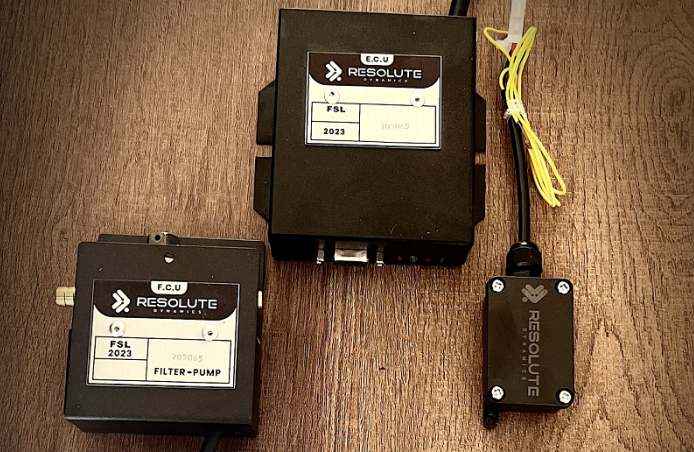
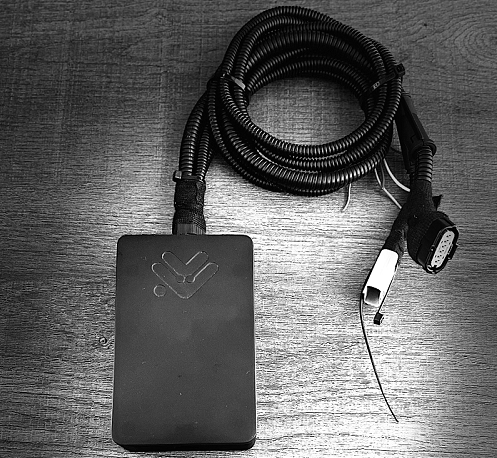
Road safety in Egypt has changed significantly in recent years — new highways, stricter enforcement, and digital traffic surveillance have reshaped how people drive. One of the most common questions from fleet managers and logistics operators researching speed limiters in Egypt is simple: are they actually mandatory?
The answer isn’t just yes or no. It depends on vehicle category, Traffic Law No. 66 of 1973, and how licensing authorities apply the rules in practice.
What Is a Speed Limiter?
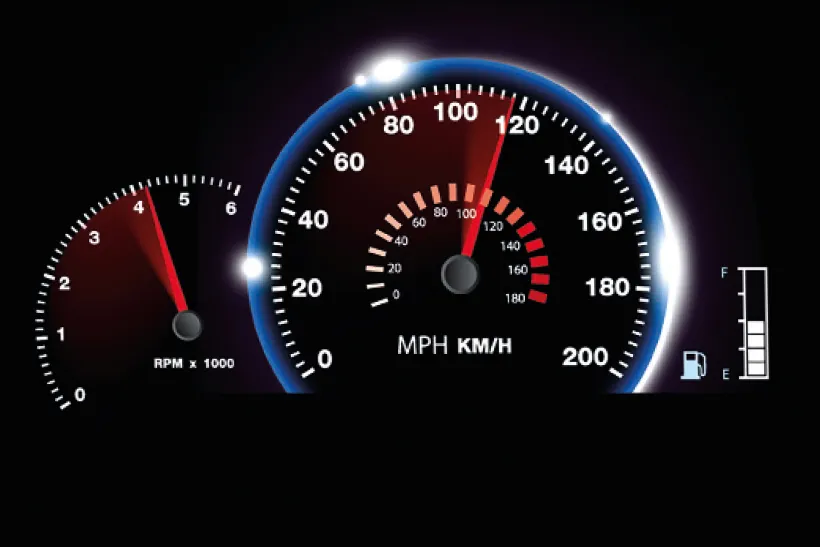
A speed limiter, also called a speed governor Egypt or vehicle speed control device, is a system that restricts how fast a vehicle can travel. Once the vehicle reaches a pre-set speed, the system prevents it from accelerating further.
Unlike cruise control, which maintains a chosen speed, a speed limiter sets a maximum threshold that cannot be exceeded.
Types of Speed Limiters
Over the years, this technology has evolved from mechanical restrictions to intelligent digital systems.
1. Mechanical Speed Limiters
These are older systems that physically restrict fuel flow or throttle movement. They are simple but less precise.
2. Electronic Speed Limiters
Modern vehicles use ECU-integrated (Engine Control Unit) systems. These are more accurate and tamper-resistant.
3. GPS-Based & Adaptive Speed Limiters
These are advanced systems that use:
-
GPS tracking
-
Digital road mapping
-
Telematics integration
They can adjust speed automatically based on road zones. This is often called Intelligent Speed Assistance (ISA) in international regulations.
These systems are especially useful for fleet compliance and commercial transport.
Egypt’s Speed Limits and Traffic Enforcement System
To truly understand whether speed limiters are mandatory in Egypt, I always start with the foundation: how speed laws actually work on the ground.
Speed regulation in Egypt is not random. It follows a structured legal framework under Egyptian Traffic Law No. 66 of 1973 (as amended), supported by executive regulations and digital enforcement systems. Over the past decade, the country has shifted toward a more centralized and technology-driven traffic governance model.
Let’s break this down clearly.
Official Speed Limits in Egypt
Speed limits in Egypt are determined by road classification, traffic density, and infrastructure design. They are not uniform across all roads.
1. Urban Roads (داخل المدن)
In most cities such as Cairo, Giza, Alexandria, and other governorates:
-
40 km/h in densely populated or residential areas
-
50–60 km/h on wider urban arteries
These limits are designed to reduce pedestrian risk and intersection collisions. Urban roads typically have:
-
Traffic lights
-
Pedestrian crossings
-
Commercial zones
-
High vehicle congestion
Because of these variables, speed control in cities is stricter and more actively monitored.
2. Rural Roads (الطرق الإقليمية)
On regional or agricultural roads connecting towns and villages:
-
The average speed limit is around 80 km/h
These roads often lack median barriers and may include:
-
Agricultural vehicle crossings
-
Animal movement
-
Limited lighting
Although traffic volume is lower than in cities, visibility risks increase at night.
3. Highways & Desert Roads (الطرق السريعة والصحراوية)
Egypt has invested heavily in highway infrastructure in recent years. On major highways and desert expressways:
-
Passenger cars: 100–120 km/h
-
Buses and heavy trucks may have lower limits depending on vehicle classification
These roads include:
-
Multi-lane carriageways
-
Divided medians
-
Long-distance freight corridors
However, even on highways, speed limits may be adjusted based on:
-
Road curvature
-
Construction zones
-
Weather conditions
-
Accident-prone segments
Digital signboards sometimes display temporary speed reductions.
How Speed Is Enforced in Egypt

Speed enforcement in Egypt has evolved from manual policing to a hybrid model combining human oversight with digital automation.
1. Radar Guns (Portable Speed Detection)
Traffic officers use handheld radar devices to measure instantaneous speed. These are often deployed:
-
On highways
-
At city entry points
-
Near accident-prone zones
This method allows immediate roadside enforcement.
2. Fixed Speed Cameras (كاميرات السرعة الثابتة)
Fixed cameras are installed at strategic locations, including:
-
Ring roads
-
Major intersections
-
High-traffic corridors
These systems capture:
-
Vehicle speed
-
License plate number
-
Date and time stamp
The violation is then digitally recorded.
3. Average Speed Cameras (Section Control)
Some road segments use average speed monitoring systems, also known as sectional speed enforcement.
Instead of measuring speed at one point, these systems:
-
Record the time a vehicle enters a zone
-
Record the time it exits
-
Calculate the average speed across the distance
This method prevents drivers from slowing down only at camera points and speeding afterward.
4. Automatic Traffic Monitoring Systems
Egypt has increasingly integrated:
-
Smart surveillance networks
-
Centralized traffic databases
-
Real-time violation processing
These systems link directly to the national vehicle registration database. When a violation is recorded, it is automatically assigned to the vehicle owner.
This digitalization reduces administrative delay and increases enforcement consistency.
5. Patrol Enforcement
Traffic patrol vehicles still play an important role. Officers may stop vehicles for:
-
Excessive speeding
-
Reckless driving
-
Sudden lane weaving
In cases involving dangerous driving behavior, enforcement may go beyond standard fines.
Digital Violation Registration System
One of the most significant developments in Egypt’s traffic ecosystem is the digitization of violation records.
When a speed violation occurs:
-
The camera captures plate data.
-
The system verifies registration details.
-
The violation is logged into the central database.
-
The fine becomes payable through official channels.
Drivers can check violations online or at traffic units.
This digital infrastructure strengthens enforcement and reduces loopholes.
Penalties for Speeding in Egypt
Speeding penalties vary based on:
-
The degree of excess speed
-
Road type
-
Whether the violation caused danger or damage
Here’s how consequences typically unfold.
1. Monetary Fines
Fines increase progressively depending on how much the driver exceeded the speed limit.
Minor exceedances result in lower fines. Extreme speeding leads to significantly higher penalties.
The exact fine amount can vary based on amendments and enforcement updates.
2. Black Points System (نظام النقاط المرورية)
Egypt applies a traffic points system.
When a driver commits violations:
-
Points are deducted from their record.
-
Accumulating too many points can lead to administrative penalties.
The points system acts as a behavioral correction mechanism rather than just financial punishment.
3. License Suspension
In severe cases, such as:
-
Excessive speeding
-
Repeated violations
-
Speeding combined with reckless maneuvers
Authorities may suspend the driving license temporarily.
This is more likely if the violation endangered public safety.
4. Vehicle Impoundment
In extreme scenarios involving:
-
Dangerous driving
-
Racing on public roads
-
Severe risk creation
The vehicle may be impounded.
This measure is not routine but reserved for high-risk cases.
Escalation in Cases of Reckless Driving
If speeding results in:
-
Property damage
-
Bodily injury
-
Fatal accidents
The issue moves beyond traffic violation and may enter criminal liability territory.
At that point, consequences may include:
-
Court proceedings
-
Criminal charges
-
Compensation claims
This highlights why speed regulation is treated seriously within the legal framework.
Are Speed Limiters Mandatory in Egypt?
This is the core question. And it deserves a precise, legally grounded answer.
As of 2026, speed limiters are not mandatory for private passenger vehicles in Egypt under the general provisions of Egyptian Traffic Law No. 66 of 1973 (as amended). There is no nationwide article that requires every privately owned car to install a speed governor as a condition for registration, renewal, or road use.
When a private vehicle undergoes periodic inspection (الفحص الفني), authorities typically examine:
-
Brake system efficiency
-
Lighting systems
-
Tire condition
-
Exhaust emissions
-
Chassis integrity
There is currently no universal requirement stating that a private sedan or SUV must have an installed speed limiter device to pass inspection.
So for individual car owners, the answer is clear:
A speed limiter is optional, not legally mandatory.
However, stopping here would oversimplify the situation. The regulatory landscape becomes more intricate when we move from private vehicles to commercial transport.
Commercial Vehicles and Regulatory Oversight

This is where the conversation changes.
While Egyptian law does not impose a blanket mandate on all vehicles, commercial and high-risk transport categories operate under stricter regulatory supervision. These vehicles are often subject to additional safety compliance standards that go beyond private car requirements.
1. Public Transport Buses
Public buses that transport passengers within or between governorates fall under tighter scrutiny. These vehicles carry high human density, which increases risk exposure.
Authorities may impose safety conditions such as:
-
Operational speed control policies
-
Fleet monitoring requirements
-
Periodic compliance audits
-
Technical inspection protocols beyond standard passenger vehicles
Even if the law does not explicitly state “speed limiter mandatory,” transport operators are often expected to implement preventive safety mechanisms to reduce road fatalities and liability risks.
In many cases, tender contracts and public transport operating licenses require documented safety systems — and speed limiters become part of that safety architecture.
2. Heavy Trucks and Freight Transport
Heavy goods vehicles (HGVs), articulated trucks, and long-haul transport vehicles represent another sensitive category.
These vehicles:
-
Travel long intercity routes
-
Operate at high mass and kinetic energy
-
Pose significant infrastructure risk if speeding
For logistics companies, petroleum carriers, construction fleets, and cross-governorate freight operators, speed governance is often embedded into internal compliance policies.
While a private pickup truck owner may not need a limiter, a commercial fleet transporting goods across desert highways may be required — contractually or operationally — to integrate speed regulation systems.
In practice, many companies adopt speed limiters to:
-
Reduce accident liability
-
Protect commercial insurance coverage
-
Meet contract eligibility standards
Here, the mandate may not be purely statutory — it can be contractual or regulatory through licensing bodies.
3. School Transport Vehicles
School buses operate under heightened child-safety expectations. Because they transport minors, authorities and educational institutions often demand stricter safety measures.
Although not universally mandated by a single national clause, speed restriction systems may be:
-
Required by private school operators
-
Imposed in transportation service agreements
-
Verified during safety compliance audits
In this context, speed limiters function as a risk mitigation instrument rather than a direct legal imposition.
Regulatory Reality: Law vs. Enforcement Practice
This is where nuance matters.
Egypt’s regulatory framework functions on multiple layers:
-
Statutory law (Traffic Law No. 66)
-
Ministerial decrees
-
Licensing authority requirements
-
Public transport authority oversight
-
Insurance underwriting standards
-
Contractual compliance clauses
Even when a device is not explicitly mandated in statutory text, it may become practically required due to:
-
Licensing approval conditions
-
Fleet operator audits
-
Corporate governance standards
-
Insurance risk assessments
This creates a regulatory gray zone.
For private car owners, the rule is simple: no mandatory speed limiter requirement exists.
For commercial fleet operators, the answer depends on:
-
Vehicle category
-
Operating region
-
Contract obligations
-
Regulatory authority supervision
Why Regulatory Scrutiny Is Stronger for Fleets
Commercial fleets are viewed differently from private vehicles for one reason: systemic risk.
A single speeding private vehicle affects limited parties. A speeding bus or heavy truck can cause:
-
Multi-vehicle collisions
-
Public infrastructure damage
-
Mass casualty incidents
From a risk-governance perspective, fleet vehicles represent higher exposure. As a result:
-
Authorities monitor them more closely
-
Insurers assess them more strictly
-
Corporate clients demand higher compliance standards
This explains why many fleet operators install speed limiters even without an explicit nationwide mandate.
It is not always about legal obligation. It is about regulatory prudence and risk containment.
Practical Reality for Businesses
In real-world operations, companies often discover that speed limiter installation becomes necessary when:
-
Applying for certain transport licenses
-
Bidding for logistics contracts
-
Working with multinational partners
-
Securing favorable insurance premiums
-
Undergoing compliance audits
In these contexts, a speed limiter transitions from “optional equipment” to a compliance expectation.
This is especially true for:
-
Oil & gas transport fleets
-
Corporate shuttle operators
-
Construction logistics fleets
-
Intercity passenger transport providers
The regulatory environment may not label it as mandatory in black-and-white statutory language, but operationally, it becomes indispensable.
How Egypt Compares to International Regulations
Globally, speed limiter laws vary.
For example:
-
The European Union mandates Intelligent Speed Assistance (ISA) in new vehicles.
-
Some Gulf countries require speed governors for heavy transport fleets.
-
The UK has long required limiters for certain commercial vehicles.
Egypt has not yet implemented ISA as a universal requirement. However, with rising focus on road safety and digital governance, the regulatory direction suggests increasing integration of smart compliance systems.
Why Fleet Operators in Egypt Install Speed Limiters
Even without a full legal mandate, many fleet owners voluntarily install speed limiters.
From experience in transport and mobility sectors, the reasons are practical.
1. Road Safety Enhancement
Speed is one of the main causes of road fatalities worldwide. Limiting maximum speed:
-
Reduces crash severity
-
Improves braking response
-
Enhances driver discipline
It creates a controlled driving environment.
2. Fuel Optimization
Excessive speed increases fuel consumption exponentially due to aerodynamic drag. A speed limiter:
-
Reduces fuel wastage
-
Improves fleet efficiency
-
Lowers operational costs
For logistics companies, this creates measurable savings.
3. Insurance Benefits
Insurance providers often view speed-regulated fleets as lower risk. In some cases, this may positively influence underwriting decisions.
4. Corporate Compliance and Reputation
Many companies adopt speed governors as part of ESG (Environmental, Social, and Governance) frameworks. It shows commitment to public safety.
How Speed Limiters Support Legal Compliance
Although not universally mandatory, speed limiters function as preventive compliance tools.
Instead of reacting to fines after violations, businesses take a proactive approach.
A limiter ensures that:
-
Drivers cannot exceed regulatory speed ceilings
-
Violations are minimized
-
Fleet data can be audited
When integrated with telematics systems, speed data becomes traceable and transparent.
This digital footprint supports operational accountability.
Installation and Certification in Egypt
If choosing to install a speed limiter, proper calibration and certification matter.
Professional Installation
Speed limiter devices must:
-
Integrate correctly with the ECU
-
Be sealed to prevent tampering
-
Be calibrated to approved speed thresholds
Improper installation may cause malfunction or legal complications.
Certification Considerations
Some regulatory bodies or contracts may require:
-
Installation certificates
-
Device serial number documentation
-
Compliance verification
Fleet managers should ensure that installations are performed by qualified providers and that documentation is preserved for audits.
Common Questions About Speed Limiters in Egypt
Will speed limiters become mandatory in the future?
There is no confirmed nationwide mandate yet. However, global trends toward Intelligent Speed Assistance suggest that Egypt may gradually strengthen digital compliance frameworks.
Do private car owners need a speed limiter?
Currently, private vehicles are not required by law to install one. It remains optional.
Are speed limiters only for trucks?
No. They can be installed in passenger cars, buses, vans, and heavy transport vehicles. However, commercial fleets are the most common users.
Can a speed limiter be removed?
Tampering with safety devices may create legal liability and void warranties. It is strongly advised to follow regulatory and manufacturer guidelines.
The Broader Road Safety Ecosystem in Egypt
These devices are only one part of a larger system that includes:
-
Smart traffic lights
-
Roadside radar networks
-
Vehicle inspection programs
-
Driver awareness campaigns
Egypt is gradually shifting toward digitized transport governance. In this ecosystem, speed regulation technology plays a preventive role rather than a punitive one.
Final Verdict: Are Speed Limiters Mandatory in Egypt?
Here is the clear answer:
-
No, speed governors are not universally mandatory for all vehicles in Egypt as of 2026.
-
Yes, they are increasingly important for commercial fleets and safety-focused organizations.
The legal requirement may not apply to everyone today. But from a compliance, safety, and operational perspective, speed-limiting devices are becoming a strategic asset rather than a regulatory burden.
For fleet operators, logistics firms, and safety-conscious drivers, installing a speed limiter is less about obligation and more about foresight.
In a road network that is becoming smarter and more monitored, proactive compliance always outperforms reactive penalties.
For a deeper compliance-and-certification guide, see: Egypt Speed Limiter Laws & Certification Requirements. For Egypt fleet services, see our Egypt speed limiter solutions.

The Resolute Dynamics team designs and manufactures speed limiters (SLD), GPS tracking, and automotive safety systems used on 200,000+ vehicles across 20+ countries. We write about fleet compliance, road-safety regulation, and vehicle-safety technology, including Malaysia’s JPJ SLD mandate, UAE RTA rules, and global standards like UN R89, to help fleet operators and transport businesses stay safe and compliant.